Ancient Greece grew a well-defined set of crops that anyone familiar with modern Mediterranean farming will recognize: barley, wheat, olives, grapes, legumes, and a range of garden vegetables. The mix was not accidental. Every major crop choice was a direct response to the climate, the rocky and often thin soils, and the limited water supply across the Greek landscape. About four-fifths of Greece is not arable at all, so Greek farmers were pragmatic by necessity, choosing crops that could survive dry summers and make use of whatever moisture winter rains brought.
What Crops Did Ancient Greece Grow by Region and Climate

Samuel Rourke
17 Apr 2026
What 'ancient Greece' actually means for crop history
When historians talk about ancient Greek agriculture, they are usually referring to a span from roughly the 8th century BCE (the Archaic period) through the Classical and into the Hellenistic periods, ending around the 1st century BCE. That is a long time, and crop systems did shift within it. Archaeobotanists, who study plant remains recovered from excavation sites alongside texts like Hesiod's Works and Days and Theophrastus' botanical treatises, have pieced together what was actually in the ground rather than just what ancient writers mentioned.
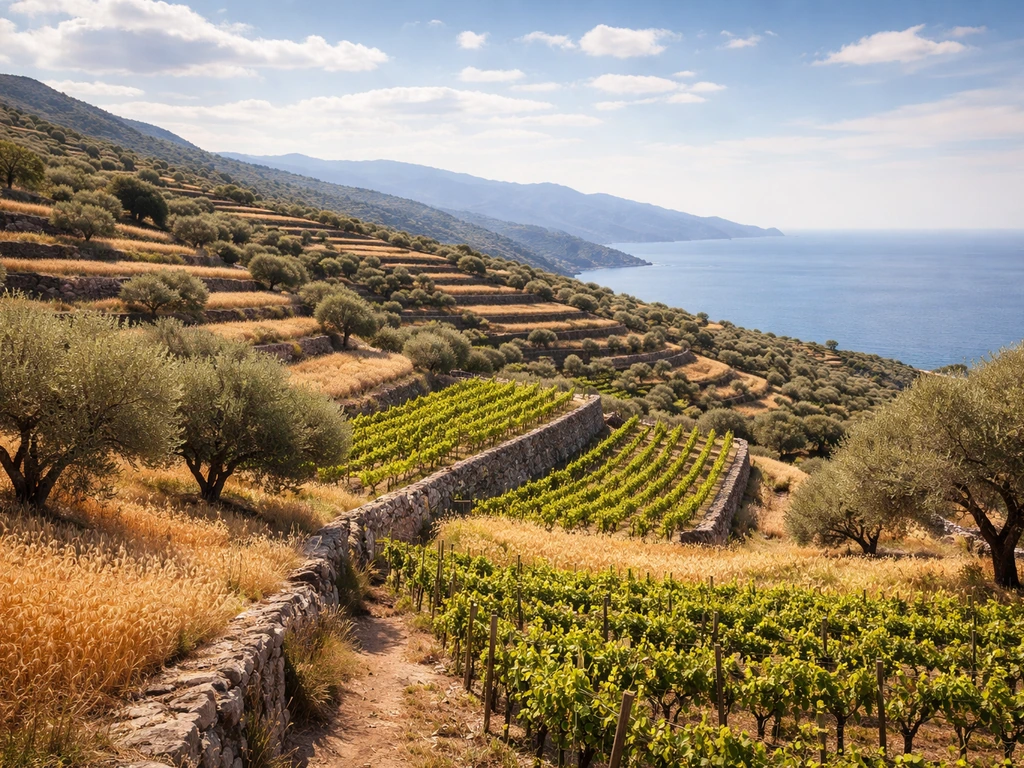
Geography matters here as much as time period. 'Ancient Greece' was not one place. It included the rocky mainland, the Aegean and Ionian islands, coastal city-states, and inland regions like Thessaly, Epirus, and Macedonia. Coastal and island zones had the warmest, driest Mediterranean conditions ideal for olives and vines. Inland and upland areas were cooler, sometimes wetter, and better suited to cereals and legumes. The Aegean islands tended to be drier than the Ionian archipelago, which influenced what farmers there could rely on. Comparing what grew at a site like Olynthos in northern Greece versus a southern island is genuinely different agricultural territory.
Grains: barley first, wheat second
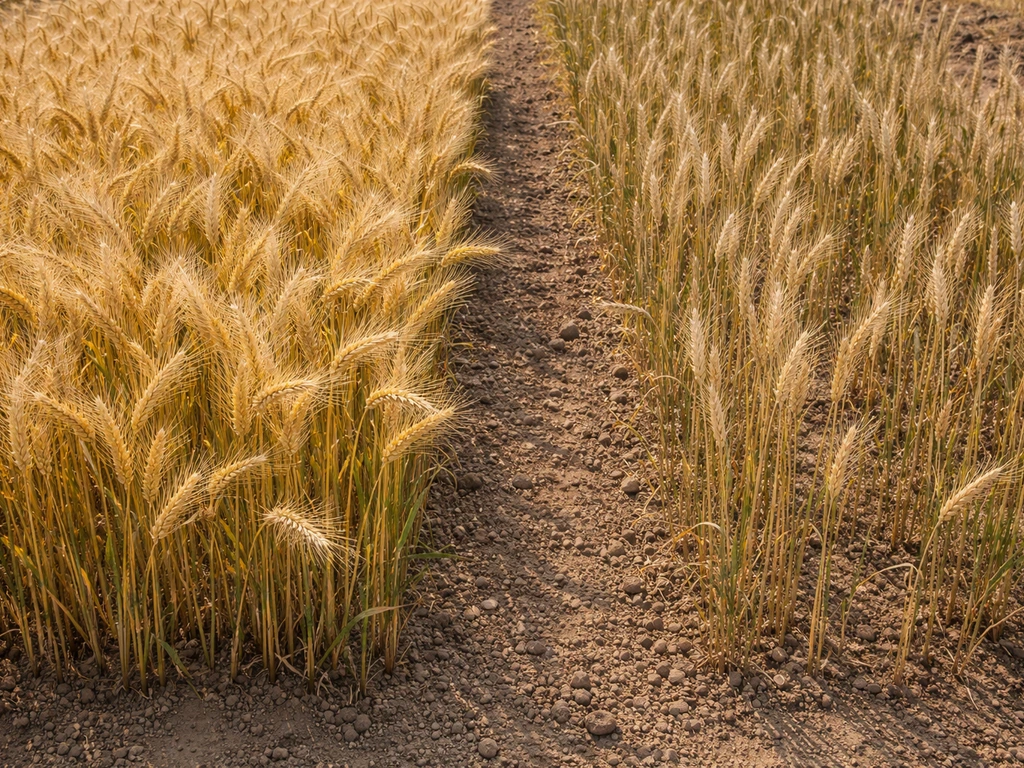
Barley was the dominant grain in ancient Greece, and the reason is simple: it performs better than wheat on the thin, poor soils that cover much of the Greek landscape. Wheat demands more from the ground, more moisture and more nutrients. Barley does not. It was the grain that made Greek bread and porridge possible across a wide range of conditions, from coastal plains to highland terraces.
Wheat was still grown and prized, but the types changed across the periods. Earlier cultivation leaned on glume wheats, specifically emmer and einkorn, which are hulled varieties that need processing before milling. By the Iron Age and into the Classical period, free-threshing 'naked' wheat varieties increasingly replaced emmer and einkorn as the main wheat crop alongside barley. This shift shows up clearly in archaeobotanical datasets from sites like Olynthos and Sikyon, where cereal assemblages document this transition in real charred grain evidence. Xenophon, writing in his Oeconomicus, even describes a typical field sown with a mixture of barley, wheat, and pulse, which matches the archaeobotanical picture well.
Hesiod's Works and Days, written around 700 BCE, gives the practical side of this: he ties ploughing and sowing to the heliacal rising of the Pleiades (around late May) and the setting of Orion for the autumn ploughing, a seasonal rhythm built entirely around winter-wet, summer-dry Mediterranean conditions. That same rhythm still drives dryland grain farming in the region today.
Olives and grapes: the two crops that defined Greek agriculture
Olives and grapes were not just important crops in ancient Greece. They were the economic and cultural backbone of the agricultural system. Olive oil functioned as cooking fat, lamp fuel, and a tradeable commodity. Wine from grapes was central to diet, religion, and commerce. Together, they are what most people think of when they picture Greek farming, and that reputation is well earned.
Olive cultivation was strongly tied to coastal and lowland Mediterranean zones. There is no archaeobotanical evidence of olive pips in inland and highland regions such as Thessaly, Epirus, Macedonia, and Thrace, which tells us that olive growing was genuinely geographically restricted. Where the tree could not grow, olive oil was imported or simply unavailable as a local product. Theophrastus discussed olive cultivation and its regional conditions in his Historia Plantarum, which remains one of the key sources for understanding where and how olives were managed in antiquity.
Grapes show a similar but slightly broader distribution. Archaeobotanical grape seed evidence, including blank" rel="noopener noreferrer">grape pressings from northern Greece, provides some of the earliest material proof of deliberate grape-juice extraction and inferred wine production in the Aegean. By the Hellenistic period, both olive and grape remains appear consistently in habitation levels across multiple regions, suggesting sustained and widespread production. Viticulture research in Greece, including analysis from sites like the Archaeological Park of Livithra, continues to use grape-pip evidence to trace how vine cultivation evolved from small household plots toward more specialized production.
Legumes: the underrated workhorses of Greek farming
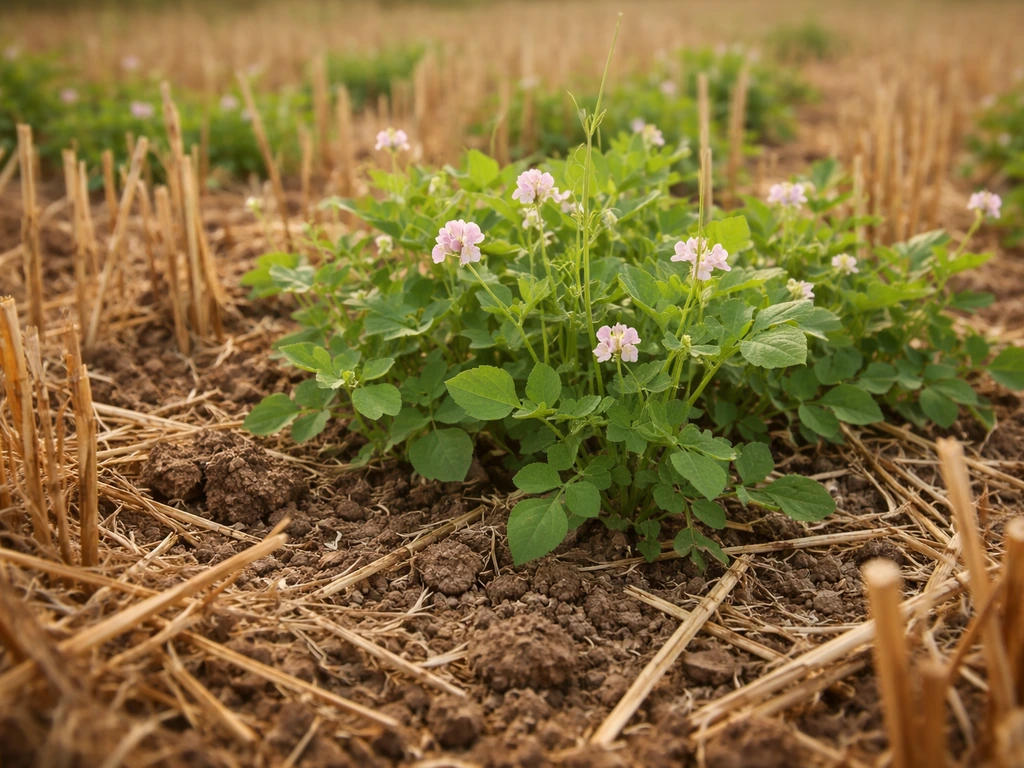
Legumes were not a secondary crop in ancient Greece. They were essential, both as food and as a way to maintain soil fertility without the synthetic inputs modern farmers use. Lentils, grass pea, bitter vetch, peas, and broad beans all appear in archaeobotanical records from Greek sites, with lentils showing up consistently from some of the earliest farming datasets in the region.
Archaeobotanical results from Olynthos and Sikyon specifically list grass pea, lentil, and bitter vetch among the pulse crops in those plant assemblages. Lentils were a dietary staple for most of the population. Bitter vetch and grass pea, while edible for humans in limited quantities, were also used as animal fodder. Broad beans and peas rounded out the legume portfolio for wealthier or more favorable growing contexts. Ancient Greek cuisine relied heavily on pulses as a protein source alongside cereals, and the scholarly synthesis in Hesperia on legumes in ancient Greece makes clear that these crops played both nutritional and agronomic roles across the farming system.
If you want to understand the logic of ancient Greek crop rotation, legumes are the key. Interplanting or rotating legumes with cereals would have helped maintain soil nitrogen at workable levels across fields that received little or no organic amendment beyond animal manure.
Vegetables and orchard fruits in everyday Greek life
Vegetables were grown in household gardens rather than field-scale plots, which is partly why they show up less in archaeobotanical records. Highly perishable plant material like leafy greens rarely survives in charred assemblages, so the absence of a vegetable in the archaeological record does not mean it was not grown. Textual sources fill in the gap here. Evidence from Attica mentions cabbage, garlic, onions, and lentils as household crops, while broader ancient sources add cucumbers, lettuce, and various salad-type greens to the picture.
Orchard fruits had a presence too, though the evidence is patchier. Pomegranate seeds have been recovered from archaeobotanical analysis at the Heraion of Samos, linking that fruit to at least ritual and local consumption contexts. Almonds were another well-attested orchard crop, mentioned by Theophrastus in the context of appropriate planting near beehives, which suggests they were a recognized part of diversified farm holdings. Figs, though sometimes underrepresented in the written record, were almost certainly a common household and garden fruit given their ease of cultivation in Mediterranean conditions.
Fiber, forage, and specialty crops
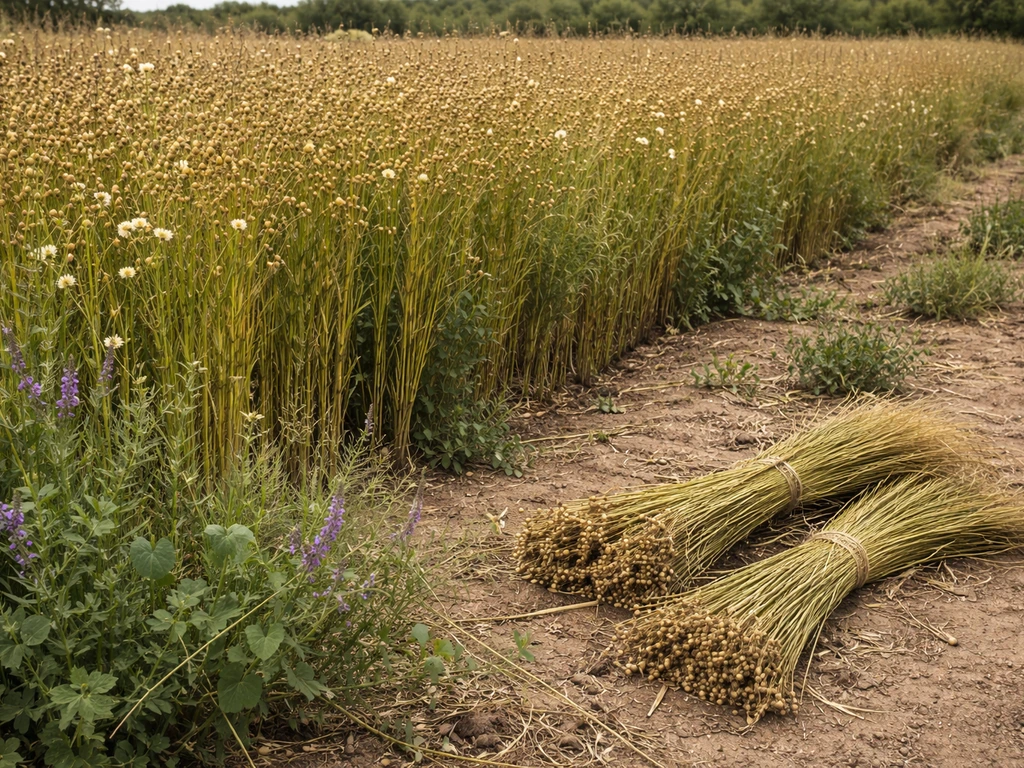
Beyond food crops, ancient Greek farmers grew flax for fiber and oil. Flax appears repeatedly in Aegean and broader Mediterranean archaeobotanical datasets alongside cereals and pulses, and it is included among the foundational crops that underpin ancient Mediterranean agricultural systems. Linen production from flax was important for clothing and other textiles, making it a genuinely practical field crop rather than a specialty.
Forage crops were also part of the picture. Bitter vetch and grass pea doubled as animal feed, and various vetches were grown to support livestock that in turn provided traction, manure, and food. Medicinal and aromatic plants round out the picture on the specialty side. Theophrastus' Historia Plantarum and the broader tradition of ancient Greek plant knowledge, which fed into later works like De Materia Medica, suggest that cultivated herbs and medicinal plants were part of the agricultural landscape, even if they are hard to quantify from surviving remains.
Poppies also appear in the archaeobotanical record, including at the Heraion of Samos, suggesting cultivation for oil or other uses. The overall picture is a farming system that was more diverse than just the 'big three' of grain, olive, and grape, even if those three dominated in both area and economic importance.
A quick crop comparison by region
| Region | Primary Crops | Notable Limits |
|---|---|---|
| Coastal mainland and Attica | Olives, barley, wheat, grapes, vegetables, legumes | Limited arable land; water scarce in summer |
| Aegean islands | Grapes, olives, barley, legumes | Driest conditions; soil often thin and rocky |
| Ionian islands | Olives, grapes, cereals, legumes | Slightly wetter; more crop diversity possible |
| Northern Greece (Olynthos area) | Barley, wheat, pulses (lentil, vetch, grass pea), some grapes | Cooler; olives less dominant than in south |
| Inland/upland (Thessaly, Epirus) | Barley, wheat, legumes, forage crops, flax | No olive cultivation; livestock farming more prominent |
| Macedonia and Thrace | Cereals, legumes, flax, some vines | No archaeobotanical evidence of olive pips |
How ancient crop choices map to modern Mediterranean farming
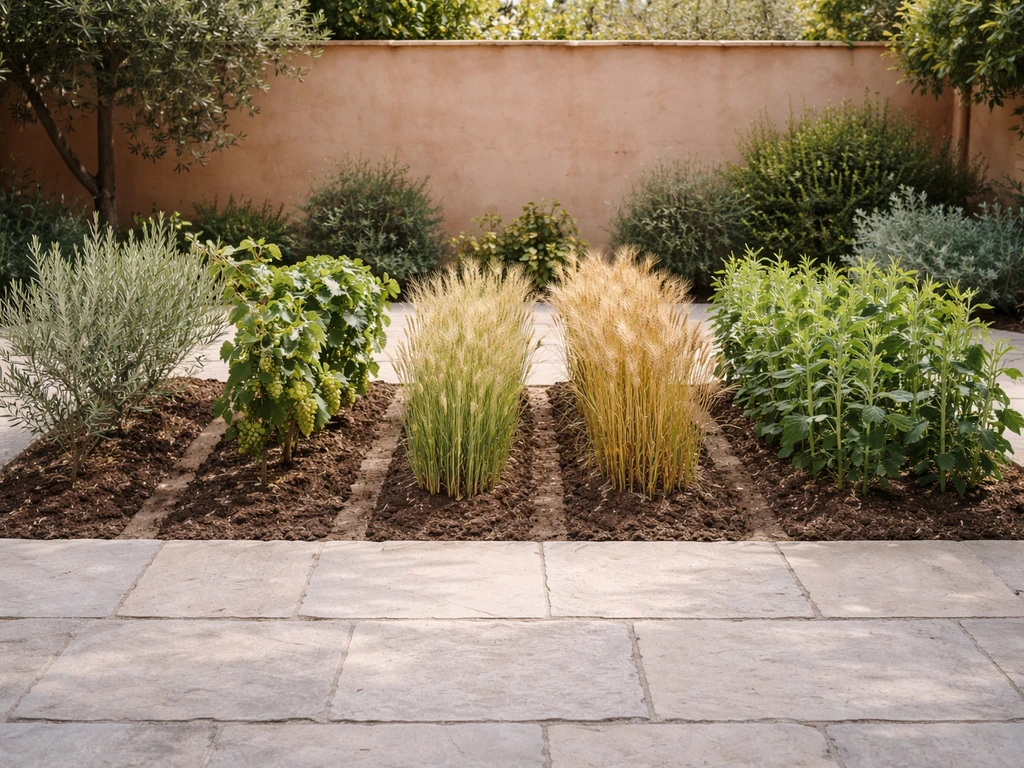
The good news for anyone trying to apply ancient Greek crop logic today is that the functional overlap is strong. Modern Mediterranean agriculture in Greece, Turkey, southern Italy, and similar climates still relies on olives, grapes, wheat, barley, and legumes as the backbone of the farming system. If you are a gardener or small farmer in a Mediterranean-climate region, the ancient Greek crop list is essentially a validated planting guide for your conditions.
There are some important caveats though. Modern botanists often struggle to match the specific plants described by Theophrastus to exact modern varieties or species. Ancient 'wheat' was not the same as modern bread wheat. Ancient 'olives' may have included semi-wild forms that differ from today's cultivated varieties. So while the crop categories translate well, the specific genetics do not always align cleanly. Irrigation is another big variable: modern drip and channel irrigation allows crops in areas that would have been too dry in antiquity, so the ancient geographic restrictions on olives and grapes were more binding than they are today.
Seasonality also shifted when modern calendar-based farming replaced the stellar-event timing Hesiod used. His system keyed sowing to the Pleiades rising around late May and autumn ploughing to Orion's position, markers that still roughly align with Mediterranean seasons but no longer match how most farmers schedule their work. Understanding that ancient timing was not arbitrary, but was climatically anchored, helps explain why the crop calendar held up as well as it did for centuries.
If you want to explore how neighboring ancient civilizations handled similar agricultural challenges, it is worth looking at what crops Mesopotamia grew, where river-irrigated systems produced a very different crop mix than rain-dependent Greek farming. The contrast is instructive for understanding why Greek farmers were so dependent on barley and legumes rather than the more water-intensive crops that thrived between the Tigris and Euphrates.
Practical next steps for students and growers
For students writing about ancient Greek agriculture, the most reliable approach is to combine archaeobotanical evidence with literary sources. Texts like Hesiod and Theophrastus give you the farming logic and the crop names; excavation data from sites like Olynthos, Sikyon, and Samos give you the physical confirmation. When you see a modern article claim a specific crop was grown in ancient Greece, check whether it is backed by both types of evidence, because texts alone can reflect ideals rather than everyday practice.
For gardeners and farmers in Mediterranean-climate regions, the ancient Greek crop list works as a practical baseline. Barley and durum-type wheats, olive trees, wine grapes, lentils, fava beans, garlic, onions, and flax are all crops that modern Mediterranean farms still grow for exactly the same climate-based reasons that ancient Greek farmers did. You can also look at what crops ancient India grew for comparison, since India's diverse regional climates produced a crop portfolio that overlaps with Greece in legumes and some cereals but diverges sharply on oil and fiber crops.
If you are interested in tracing the even earlier agricultural roots behind Greek farming, what crops were grown in the Neolithic age covers the foundational crop set, including emmer, einkorn, hulled barley, and lentils, that ancient Greek farmers inherited and refined over millennia. And for a regional comparison closer in geography and time, what crops ancient Egypt grew shows how a Nile-flood-dependent system solved similar food security challenges with a partially overlapping but distinctly different toolkit.
The Sumerians, who farmed some of the world's earliest irrigated fields, also relied on barley as their primary grain. Reading about what crops the Sumerians grew alongside ancient Greek agriculture highlights just how universal barley's dominance was in early complex societies, and why it showed up again and again wherever soils were marginal or water unpredictable. For an even broader Mesopotamian perspective, what the Mesopotamians grew covers the full crop range across that civilization, while what the ancient Egyptians grew provides the North African parallel that traded and interacted with the Greek world throughout the Classical period.
FAQ
Were ancient Greeks growing the same crops in every period, or did the mix change over time?
They were mostly dryland, not irrigated farming by default, so the headline crops had to tolerate winter-wet, summer-dry conditions. Irrigation changes the answer: with reliable water, farmers could grow a wider range of vegetables and more water-demanding crops than the rain-dependent landscape allowed.
Why do some sources list olives and grapes as “Greek staples,” yet the archaeobotanical record looks uneven?
Yes, olives and grapes were strongly tied to climate and suitable soils. Even within Greece, olive presence drops in cooler or higher inland regions, and grape production tracks areas where vine cultivation and sustained dry summers are workable, so “Greek crops” varies by region rather than being one universal list.
If barley was dominant, did wheat disappear completely?
Barley is often emphasized because it performs well on poorer, thinner soils, while many wheats need richer ground and more consistent moisture. In practice, farmers could still plant wheat where conditions allowed, but barley was the safer insurance crop across marginal fields.
What does “wheat” mean in ancient Greek agriculture, compared with modern bread wheat?
“Ancient wheat” does not map neatly to a single modern variety. Emmer and einkorn were hulled types requiring processing, while later periods increasingly used free-threshing naked wheats, so two people can both say “wheat” and mean quite different cereals.
Did ancient Greek farmers practice crop rotation, or is that an overstatement?
Legumes mattered in two ways, food and soil management. Pulses reduced reliance on fallowing, and rotating or interplanting legumes with cereals helped maintain soil nitrogen, which was especially important given limited organic inputs beyond manure.
If vegetables are missing from the archaeological plant record, can we assume they were not grown?
Vegetables were likely grown often at the household level, but many never survive archaeobotanical recovery because soft, perishable greens preserve poorly. So absence in charred seed or plant remains does not reliably mean the crop was not eaten or grown.
Why do some crops appear frequently in excavations while others that were likely eaten do not?
Not always. Broad-spectrum consumption and small-scale growing could still mean a crop was common, but archaeobotanical “visibility” depends on how plants were processed and what parts survive. Grains and processing byproducts (like charred seeds) tend to show up more than garden produce like leaves and stems.
How confident can we be about which fruits grown on ancient Greek farms and in gardens?
Orchard and tree crops are more spotty in the evidence than annual field crops. For example, pomegranate and almond have clearer archaeological or textual signals in particular contexts, but the overall “tree fruit list” is harder to reconstruct site by site than grains, pulses, and viticulture.
Beyond grain, olives, and grapes, what other crops had real economic roles?
Most of the “big three” story is about what dominated land use and trade value, not the only things farmers grew. Flax for fiber and oil, various forage and fodder plants, and medicinal or aromatic herbs also fit the agricultural landscape, even if their economic weight varied.
How should I verify a claim that a specific crop was grown in ancient Greece for a paper or project?
A common mistake is trusting one line of evidence. For school or research writing, the safest approach is to cross-check plant remains (archaeobotany) with farming descriptions (texts). Texts can reflect ideals or recommended practices, while excavations show what was actually present at a location.
How do I translate ancient Greek planting timing into modern gardening dates?
Yes, modern schedules can shift even if the underlying Mediterranean climate rhythm is similar. Ancient sowing tied to stellar events, like the Pleiades and Orion, so gardeners using calendar dates should treat those markers as guidance for seasonal timing rather than copy them exactly.
If I live in a Mediterranean-climate region, will planting the same crops guarantee similar results to ancient agriculture?
Not in a one-to-one way. A crop list that fits Mediterranean rain-fed constraints may not match a modern farm with irrigation or different soil amendments. If you are trying to replicate ancient “logic,” prioritize water availability and soil thinness constraints over the exact modern crop varieties.
How can I spot weak or overgeneralized “ancient Greece grew X” claims?
If you see a claim like “ancient Greeks grew X” and it is based only on a generic Mediterranean comparison, double-check that X appears in Greek-specific datasets or Greek-focused textual references. Broader Mediterranean parallels can be helpful, but they can also misattribute crops across neighboring regions.
Next Articles
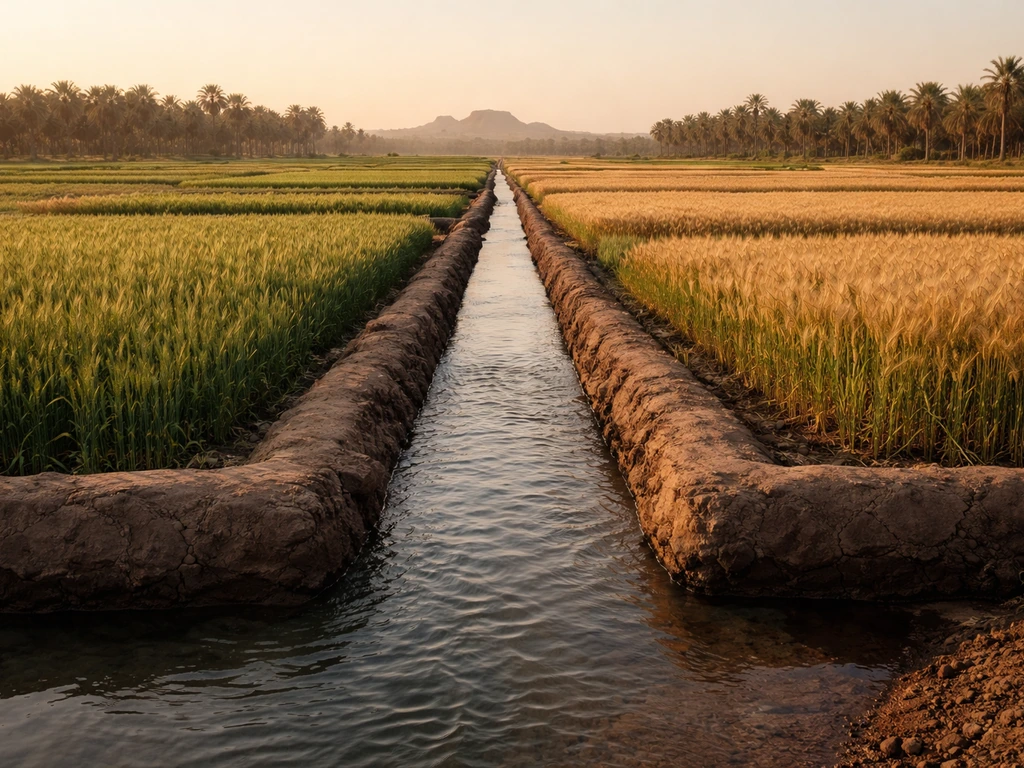
What Crops Did the Mesopotamians Grow? Staple List and Evidence
Staple grains, legumes, oilseeds, fibers, fruit and orchard crops, plus how irrigation shaped Mesopotamian farming and e
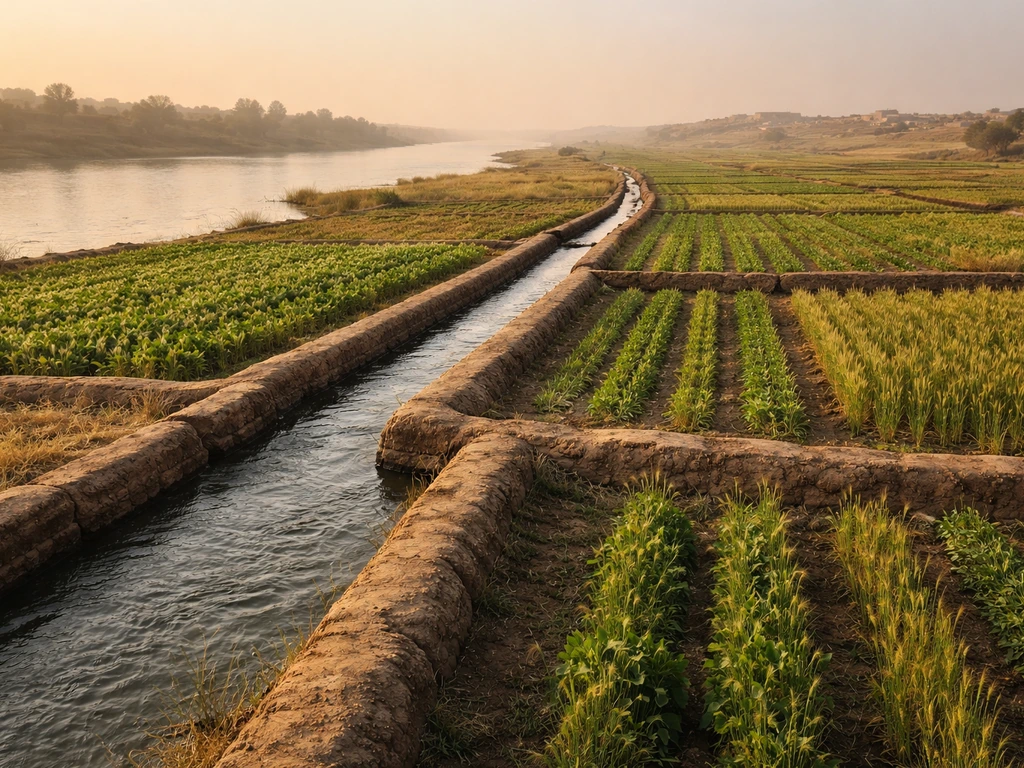
What Crops Did Mesopotamia Grow? List and Why It Worked
Mesopotamia crop list plus why they grew: irrigation, fertile river soils, cereal-legume mix, and regional differences.
What Did the Ancient Egyptians Grow and Why
Ancient Egypt crops: grains, vegetables, legumes, fruits and non-food plants, and how Nile floods and irrigation shaped