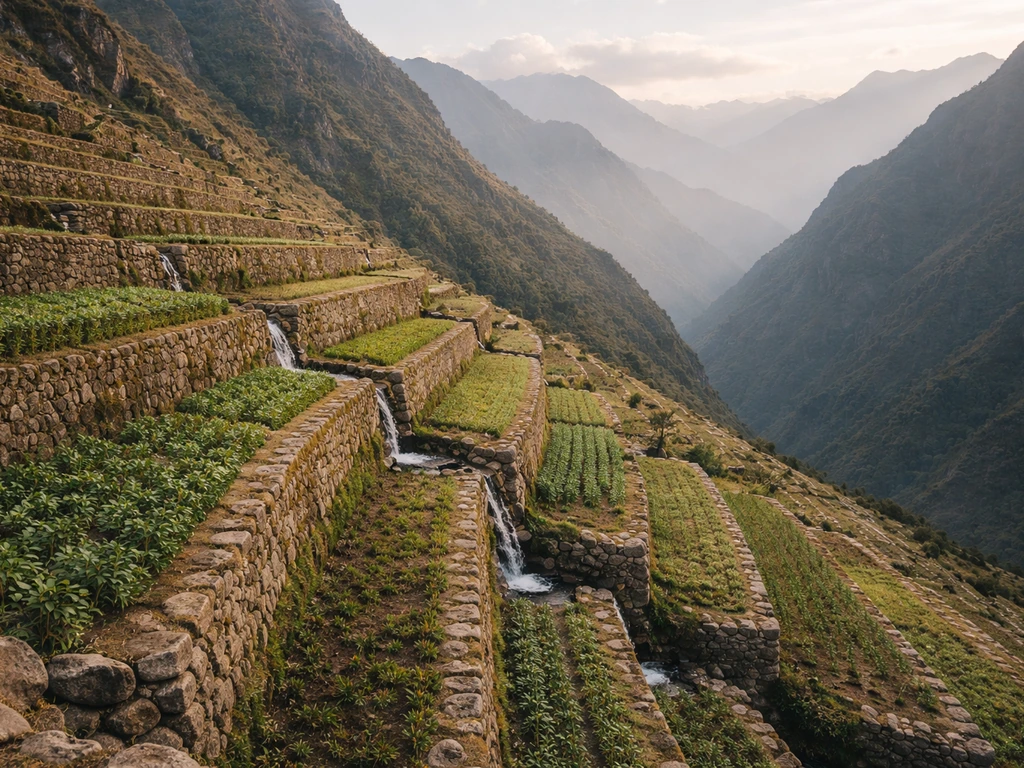
The Incas grew crops in the mountains by reshaping the landscape entirely: they cut flat terraces into steep slopes, built layered stone walls to hold soil in place, channeled water from springs and snowmelt through stone canals, and matched specific crops to specific elevation bands. It was a system built from the ground up to deal with thin air, frost, steep gradients, and unpredictable rain, and it worked well enough to feed one of the largest empires in the ancient Americas.
How Did the Incas Grow Crops in the Mountains

Samuel Rourke
23 Apr 2026
Mountain farming problems and what the Incas had to overcome
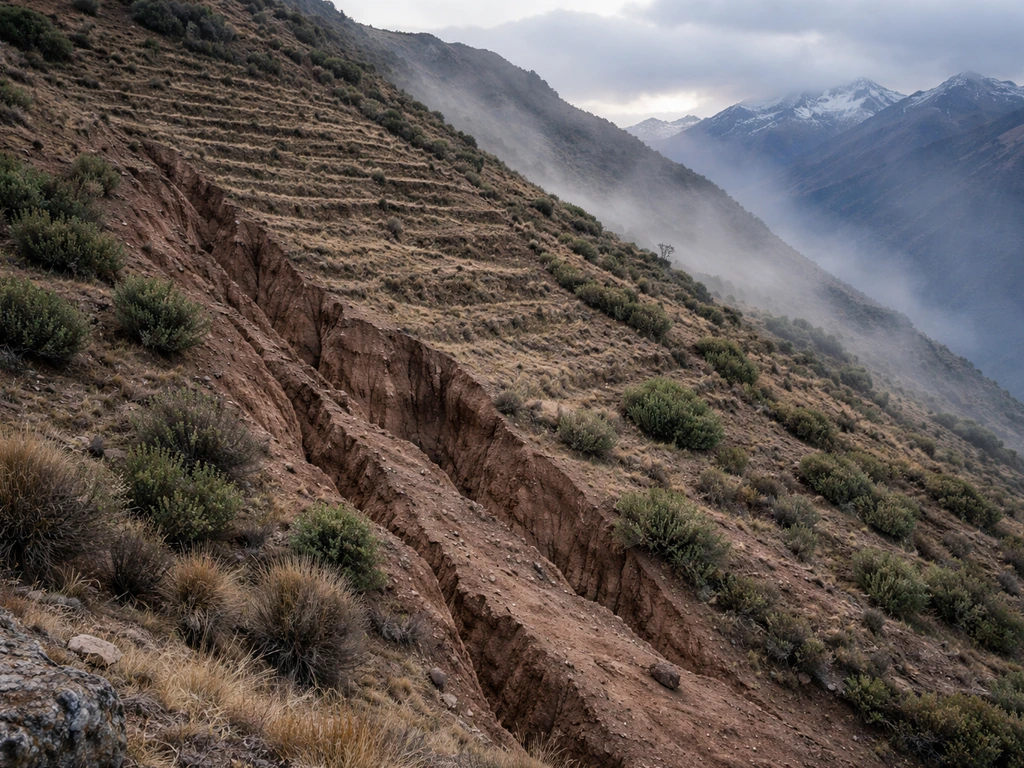
Farming the Andes is not like farming flat plains. The terrain throws multiple serious problems at you all at once. Slopes are steep enough that rainfall simply runs off, taking topsoil with it. High altitude means shorter growing seasons, hard overnight frosts even in summer, and thinner air that stresses plants. In some Andean zones, seasonal rainfall can be intense enough to dump close to 76 inches (193 cm) of water per year, which sounds like a lot until you realize that on a steep slope it mostly rushes downhill and causes erosion rather than soaking into the ground. Meanwhile, other seasons can be extremely dry. Landslide risk is real on saturated slopes. And at the highest elevations where Andean communities lived, the soils are thin and nutrient-poor to begin with.
The Incas were not the first people in the Andes to tackle these problems, but they scaled the solutions up dramatically. They inherited terrace-building and water-management traditions from earlier Andean cultures and then expanded them across the empire with organized labor. Understanding why the problems were so serious helps explain why the engineering responses were so thorough.
Terraces and slope engineering
Andean terraces, called andenes, are essentially a series of flat steps cut into a hillside, each held up by a stone retaining wall. The wall does the structural work: it bears the weight of the soil behind it and prevents the whole terrace from slumping downhill. Inca retaining walls used dry-stone masonry, fitting large stone blocks together without mortar. The large base stones were critical to stability because they resisted the lateral pressure of wet, heavy soil.
What makes Inca terraces genuinely sophisticated is what's inside them, not just the wall facing outward. A typical terrace was built in layers from the bottom up: large rocks at the base for drainage, then progressively smaller gravel, then a sand-like layer, and finally productive topsoil on top. Stone drainage outlets were also built directly into the retaining walls so that excess water could escape rather than build up pressure behind the wall. This internal drainage design protected both the crops (roots don't drown) and the structure itself (waterlogged soil is far heavier and more likely to push a wall over).
The combined effect of terrace systems on a hillside was transformational. Flat planting surfaces replaced impossible-to-farm steep slopes. Surface runoff slowed dramatically because water had to travel across flat terraces rather than straight downhill. Soil stayed where it was put. And the total area of farmable land on a given hillside increased significantly. You could essentially take a mountainside and turn it into a stacked sequence of productive fields.
Water control: irrigation, canals, and seasonal storage
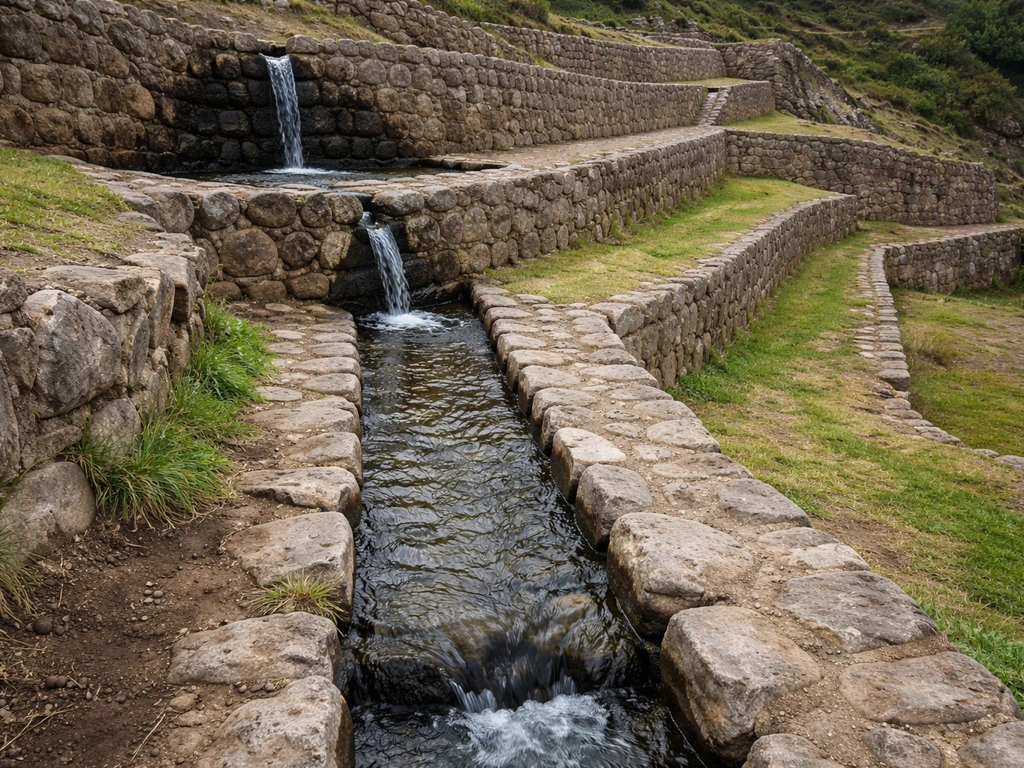
Building the terraces solved the erosion and slope problem, but water supply was a separate challenge. Inca engineers designed canal networks to capture water from springs, rivers, and snowmelt and route it to terraced fields. At sites like Machu Picchu, the water system combined springs, carved stone canals, and a sequence of fountains, all engineered to distribute water predictably across the agricultural zones.
Drainage received just as much engineering attention as water delivery. At Machu Picchu alone, researchers have counted around 130 drainage outlets built into walls and structures, designed to carry excess rainfall out of the terraces and prevent waterlogging. The logic was straightforward: the rainy season delivers intense, concentrated rainfall, so any system that didn't actively route the surplus water away would quickly turn terraces into swamps and destabilize the walls.
Seasonal storage was the third piece of the water strategy. High-altitude nights in the Andes drop below freezing reliably in winter, which the Incas turned to their advantage. Harvested tubers, especially potatoes, were left outside overnight to freeze, then pressed to remove moisture, and freeze-dried repeatedly over several days during June and July. The result, called chuño, is a lightweight, shelf-stable product that could be stored for years. This was not just a preservation trick but a hedge against bad harvests, a way of storing the water and nutrients in a crop for use long after the rainy season ended.
Soil fertility and erosion protection practices
Terrace construction physically prevents most erosion, but keeping soil fertile over generations requires active management. Archaeological soil studies of Andean terrace systems show evidence of repeated organic additions: household waste and kitchen scraps composted or spread directly on fields (a practice called middening), and manure from corralled animals applied as fertilizer. Llamas and alpacas were the primary livestock, and their manure was a key resource for maintaining soil nitrogen and organic matter on terraces that would otherwise deplete quickly under continuous cropping.
The internal layered structure of the terraces also contributed to long-term soil health. The gravel and rock drainage layers below the topsoil prevented salt accumulation and waterlogging, which are chronic problems in irrigated mountain soils. Roots could grow deep into a well-aerated profile rather than sitting in compacted or waterlogged ground. Over time, with regular organic additions, the topsoil on a well-maintained Inca terrace could be substantially richer than the surrounding natural mountain soil.
Slope orientation also played a role in soil management. South-facing and north-facing slopes in the Andes receive dramatically different amounts of sunlight and hold moisture differently, and Inca farmers selected slope aspects for specific crops partly on that basis, reducing the stress on soil from extreme drying or waterlogging depending on which direction a terrace faced.
Altitude and microclimates: matching crops to elevation
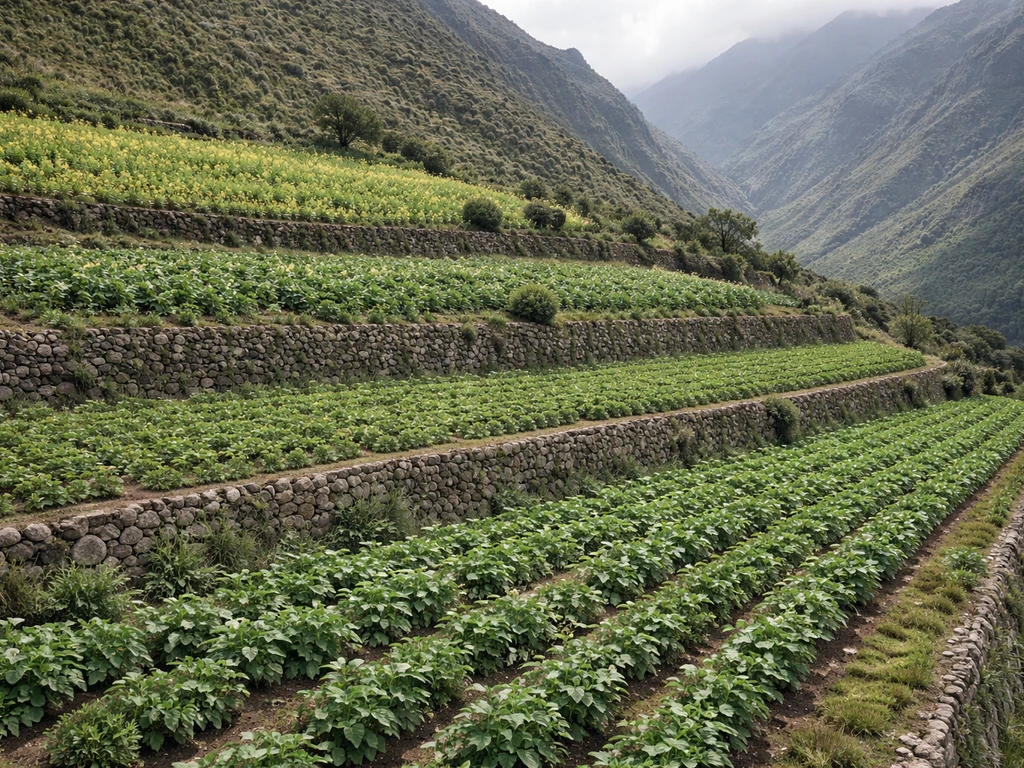
This is where Inca agriculture gets genuinely clever as an ecological system. Rather than trying to grow everything everywhere, Andean communities organized their farming around what each elevation band could reliably support. The Incas operated what researchers call a vertical archipelago model: communities maintained access to multiple elevation zones, each producing different crops, and resources moved between zones to create a complete food supply.
The FAO has documented three core altitude-based agricultural zones still recognized in the Peruvian Andes today, which map closely to Inca practice:
| Elevation Zone | Approximate Altitude | Primary Crops |
|---|---|---|
| Maize zone | 2,800 to 3,300 m (9,200 to 10,800 ft) | Maize (corn), squash, beans, peppers |
| Potato zone (suni) | 3,300 to 3,800 m (10,800 to 12,500 ft) | Potatoes, quinoa, oca, ulluco, native tubers |
| High-altitude zone | 3,800 to 4,500 m (12,500 to 14,800 ft) | Quinoa, cañihua, hardy tubers, alpaca/llama pasture |
Maize was a prestige crop, used in ceremonies and stored in large quantities, but it requires warmer temperatures and longer frost-free seasons, so it stayed in the lower, sheltered valleys. Potatoes are native to the Andes and bred over centuries into varieties tolerant of high altitude and cold, so they dominated the middle and upper bands. In modern Peru, many of the Andes staples like potatoes remain central, alongside crops suited to lower and higher elevations what crops does Peru grow. Quinoa and cañihua, which are grain-like seeds rather than true grains, can handle elevations and temperatures that would kill maize outright, making them critical at the highest farming zones. The Incas also stored large quantities of dried maize, chuño (freeze-dried potato), and quinoa in their qollqa storehouses along road networks, creating a buffer against regional crop failures.
Aspect and local topography created microclimates within each elevation band. A sheltered, south-facing pocket might support maize a few hundred meters higher than the typical limit. A frost-prone hollow might fail with potatoes that would succeed on a nearby ridge. Inca farmers read and exploited these microclimatic differences at a fine scale, which is part of why their terrace systems look the way they do: fields are placed precisely where the combination of slope, aspect, drainage, and altitude favors a particular crop.
Crop choices and field organization
Inca mountain farming was not monoculture. Fields were managed with a variety of crops in rotation-like patterns, and different crop types were deliberately distributed across the terrace landscape rather than concentrated in single blocks. This spread the risk: if frost or drought hit one crop hard, other crops at slightly different elevations or on terraces with different aspects might still produce. Andean farmers cultivated a remarkable number of potato varieties alone, many with different maturation times, cold tolerances, and cooking properties, which effectively staggered the harvest and reduced the chance that one bad weather event would wipe out the entire yield.
Maize, quinoa, and tubers like oca and ulluco were grown alongside potatoes in the middle zones where conditions allowed. Legumes such as beans fixed nitrogen and improved soil when included in field rotations. Plots were likely rested periodically as part of managing soil fertility across the broader terrace landscape. The vertical organization meant that a single community or ayllu (extended family group) might manage fields at several different elevations simultaneously, with labor and food moving between them seasonally.
This multi-zone, multi-crop approach is closely related to what the Incas did with crops across their broader empire. Many of those same highland crops and cultivation strategies, including staples like maize, potatoes, and quinoa, are also what the Maya are known to have grown what crops the Maya grew. If you're interested in what specific crops the Inca grew beyond their mountain terrace systems, the range of cultivated plants across the empire is a separate but related topic worth exploring. If you are also comparing other ancient civilizations, a related question is what crops did the aztec grow. Those crops included major staples like maize, potatoes, and quinoa, selected for different elevations and growing conditions what the Inca grew. If you're curious about the exact list of crops the Incas grew, it helps to look at how they matched plants to altitude across different zones what specific crops the Inca grew.
Modern takeaways: adapting Inca mountain methods today
If you're working with a steep hillside garden or a mountain farm plot today, the Inca toolkit is more practical than it might sound. You don't need an empire's labor force to apply the core principles, though you do need to be realistic about the work involved. Terrace maintenance is genuinely labor-intensive, and some Andean terrace systems were abandoned historically precisely because upkeep became impossible. Plan for ongoing work, not just initial construction.
Here are the principles that translate most directly to modern hillside growing:
- Build flat planting surfaces on steep slopes using retained terraces, even small ones. A terrace doesn't need to be large to dramatically reduce erosion and improve water retention compared to farming directly on a slope.
- Layer your terrace fill: coarse drainage material at the base, finer material in the middle, rich topsoil on top. This internal structure is what makes a terrace functional rather than just decorative.
- Integrate drainage into retaining walls. Leaving drainage gaps at the base of stone or timber walls prevents pressure buildup from saturated soil, which is the primary cause of terrace wall failure.
- Match your crops to your elevation and microclimate. In the Andes, this meant testing which crops survived at which altitude. On your hillside, it means paying attention to frost pockets, sheltered warm spots, slope aspect, and how long each zone stays frost-free.
- Use animal manure and compost consistently. The Incas had llamas; you may have chickens, goats, or simply access to finished compost. Regular organic additions to terrace topsoil are what keep productivity up over years and decades.
- Diversify crops across your planting zones rather than consolidating everything in one place. Spreading different crops across terraces at varying elevations or aspects reduces the risk of a single weather event causing total crop failure.
- Consider crop preservation at harvest. If you're at high altitude with cold nights, the chuño principle applies: freeze-drying and dehydration of tubers and grains extends storage dramatically and reduces waste.
The elevation-based zoning concept is also directly usable for planning what to grow where. If you know your hard frost dates at different parts of your land, you can map your planting decisions the same way Andean farmers mapped theirs: maize and warm-season crops in your warmest, most sheltered low spots, potatoes and cold-tolerant greens in the middle zones, and the hardiest crops at your highest or most exposed positions. This is exactly the logic behind the Inca vertical archipelago, just scaled to a hillside farm or large garden rather than an entire mountain range.
What made the Inca system exceptional was not any single technique but the combination: terrain engineering, water control, soil building, and crop-to-climate matching, all working together and maintained across generations. Modern hillside farmers who apply even two or three of these principles consistently will see the difference. Start with the terraces and the drainage, because those two things alone change what's possible on a steep slope.
FAQ
How did the Incas prevent terraces from collapsing during heavy rains?
They used dry-stone retaining walls built to resist sideways pressure from saturated soil, plus built-in drainage outlets inside the terrace structure so excess water could escape instead of building up behind the wall. Without that drainage path, the soil becomes heavier and pushes harder on the stonework.
Did the Incas rely only on rainfall, or did they irrigate mountain fields too?
They did both, but they planned for water extremes. Canal systems delivered water from springs, rivers, and snowmelt to terrace zones, and separate drainage systems removed surplus during intense rainy periods, so crops were not forced to “survive” both drought and waterlogging at once.
How did crop planting avoid frost damage on high mountain terraces?
They matched crops to elevation and local microclimates, using frost-tolerant varieties in colder zones and placing fields where slope aspect and shelter reduced frost risk. They also staggered timing by using multiple crop varieties (especially potatoes) with different maturation schedules, so one frost event would not ruin the entire harvest.
Were the Incas farming one crop at a time on each terrace?
Usually no. They distributed different crops across the terrace landscape and relied on mixed plantings and variety choice rather than monoculture. That approach reduced risk because a problem in one crop often did not affect all crops equally at slightly different elevations or aspects.
What role did soil fertility maintenance play in how they grew crops on mountains?
Terracing alone did not guarantee long-term yields. They repeatedly added organic matter, for example from household waste (middening) and manure from corralled animals, which helped replace nutrients removed by continuous cropping and improved soil structure for roots.
How did the layered terrace construction help with soil problems like waterlogging?
The internal layers were designed as a drainage system, with rock and gravel below the topsoil to keep water from pooling. That reduces waterlogging and helps prevent issues like salt buildup that can happen when irrigated mountain soils stay too wet for too long.
Why did slope direction (aspect) matter for what crops could be grown?
Aspect controls how much sunlight a slope receives and how quickly it dries, which affects both growth rate and frost risk. Inca farmers used that by selecting terrace placements for crops that match the expected warmth and moisture, rather than treating all slopes at the same elevation as equal.
How did they handle the fact that mountains have both very wet and very dry seasons?
They engineered water delivery and drainage for the wet season, and they used storage and processing to buffer scarcity afterward. Chuño made from freeze-dried tubers provided a shelf-stable reserve after harvest, reducing dependence on fresh crops during drier periods.
Did the Incas store crops to reduce losses from bad weather?
Yes. They stored staples such as dried maize, freeze-dried potatoes (chuño), and quinoa in purpose-built storehouses. That created a buffer when one area experienced lower yields, especially important in a system where climate could vary across zones.
Is it realistic to copy Inca terrace farming today on a small plot?
The core principles are transferable, but terrace maintenance is labor-intensive. Many historical terrace systems were abandoned when upkeep could not be sustained, so a small-scale approach works best if you can commit to ongoing repairs, drainage upkeep, and periodic soil replenishment.
If I want to apply the “vertical archipelago” idea on my land, what should I do first?
Start by mapping your land into micro-zones using elevation, sun exposure, slope steepness, and frost exposure (not just elevation alone). Then plan crop choices by zone, focusing first on drainage and planting placement, similar to how Inca systems matched crops to reliable conditions.
How did they manage irrigation and drainage so channels did not cause erosion?
They used stone canals to guide water predictably and designed outlets and drainage structures to safely carry away excess water. The key is that water delivery and water removal must be engineered together, otherwise irrigation can intensify slope erosion or weaken terrace walls.
Next Articles
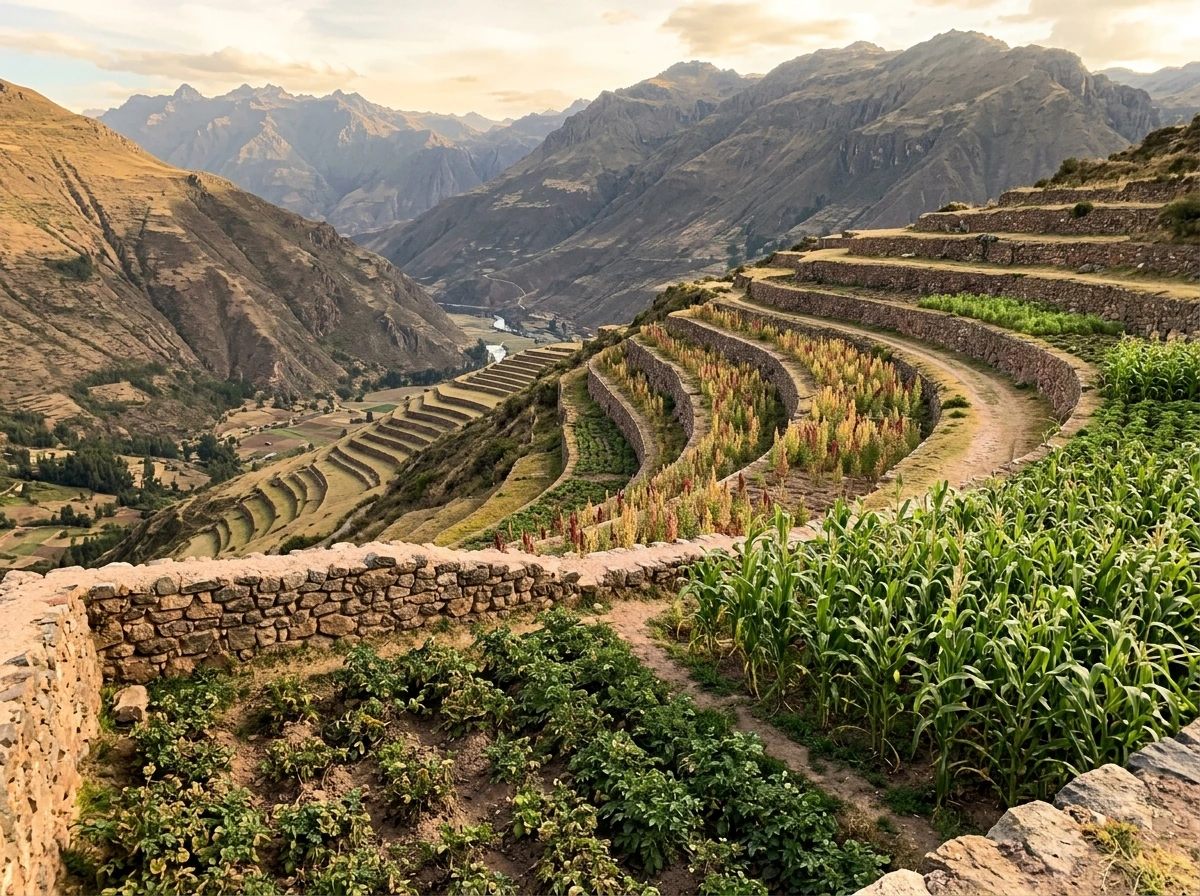
What Crops Did the Inca Grow: Staples by Region
Inca staples by region: potatoes, maize, quinoa, beans, plus fruits and tubers adapted to Andes valleys and coast.
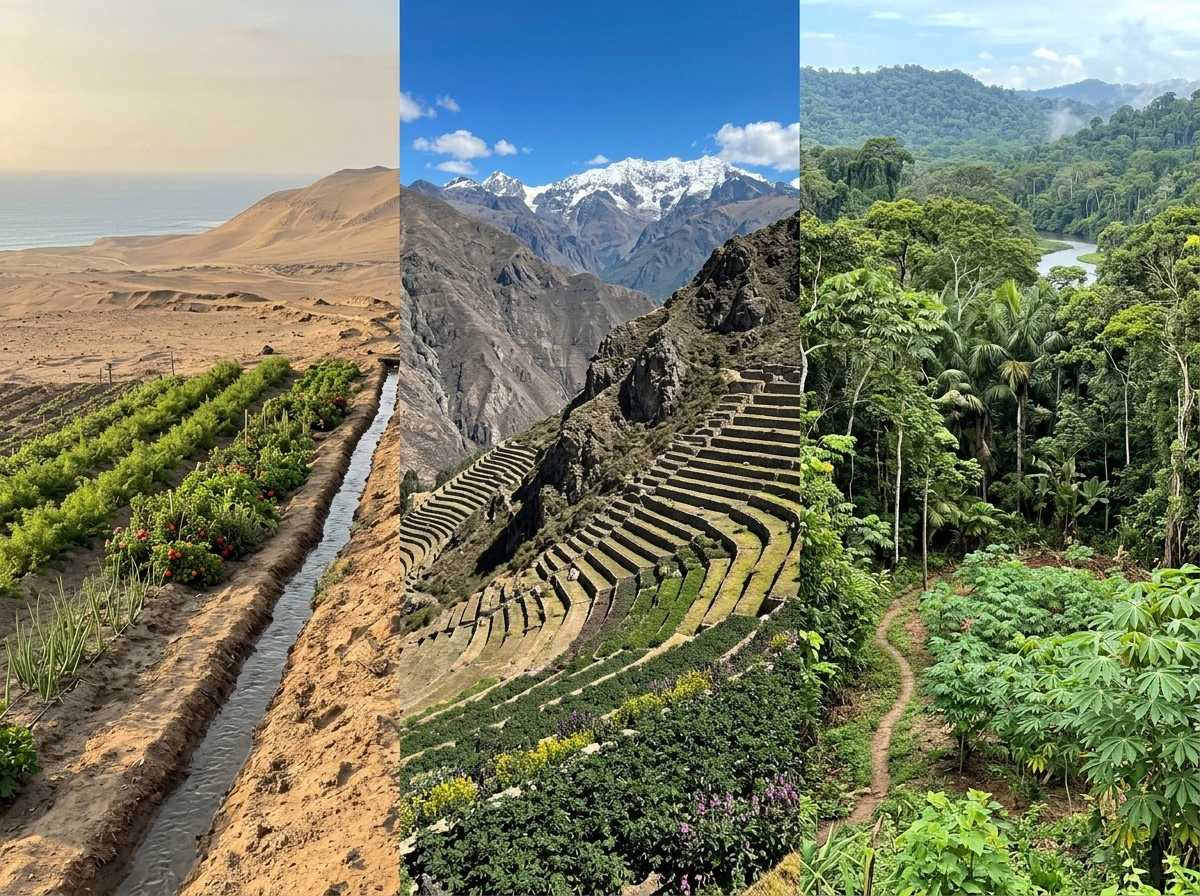
What Crops Does Peru Grow by Region Coast Andes Amazon
Discover what crops Peru grows by region coast, Andes, and Amazon, with climate and elevation tips to predict local prod
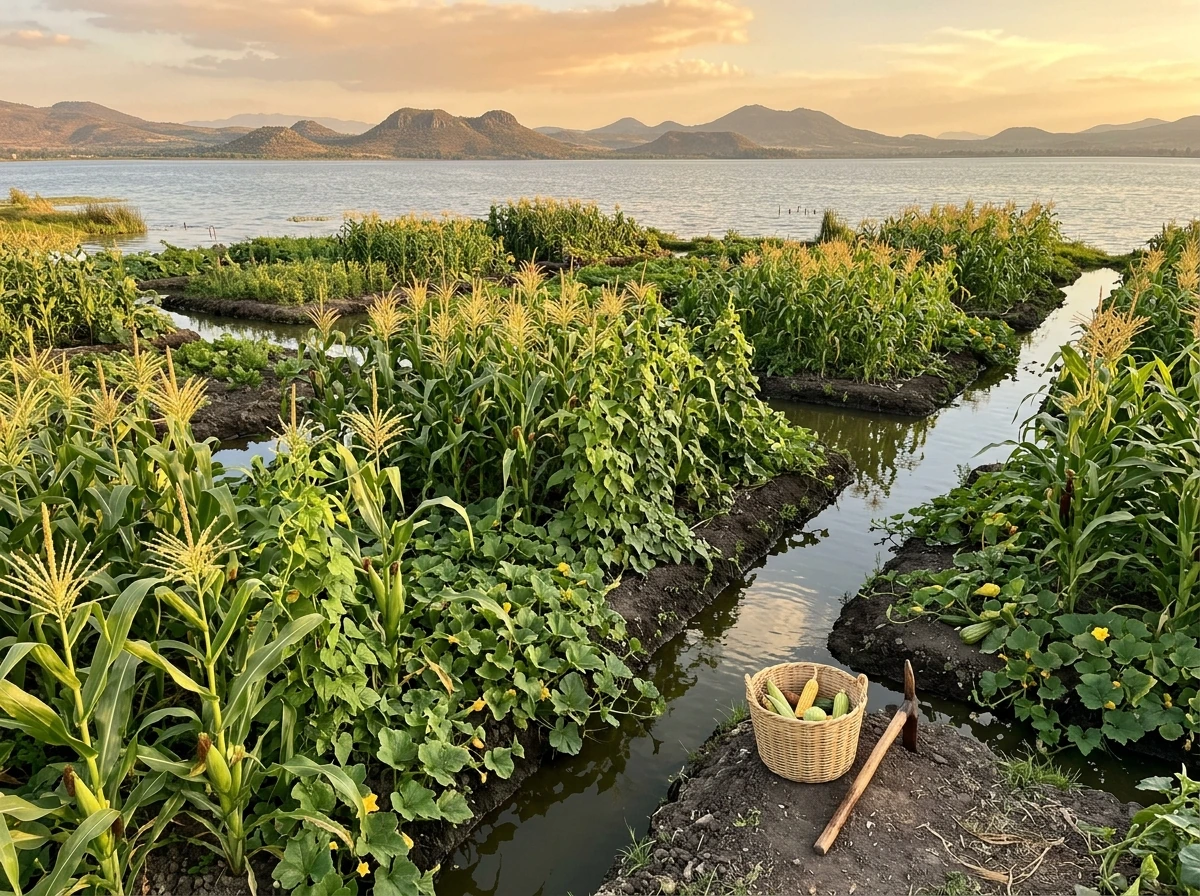
What Crops Did the Aztecs Grow and How They Cultivated Them
Aztec staple crops like maize and beans, plus how they grew them using chinampas, irrigation, and local soils