The Aztecs grew maize (corn), beans, squash, and chili peppers as their core food crops, alongside amaranth, chia, tomatoes, and a variety of fruits and tubers. Maize was the absolute foundation of the diet, but the full picture is much richer than that single crop. They farmed using sophisticated systems including chinampas (raised island fields on lakes), irrigated terraces, and mixed-planting techniques that would impress any modern gardener. Here is a clear breakdown of what they grew, how they grew it, and why the geography of central Mexico shaped every decision.
What Crops Did the Aztecs Grow and How They Cultivated Them

Samuel Rourke
24 Mar 2026
The Short Answer: Key Aztec Crops at a Glance
If you need a quick reference, here are the main crops the Aztecs cultivated for food:
- Maize (corn) — the single most important staple
- Beans — multiple varieties, a critical protein source
- Squash — grown alongside maize and beans as part of the milpa system
- Chili peppers — used in virtually every dish
- Amaranth — a grain crop grown at scales comparable to maize
- Chia — harvested for seeds, used in food and drinks
- Tomatoes — cultivated and eaten regularly
- Cacao — grown and used as a beverage ingredient and trade good
- Nopales (prickly pear cactus pads) — eaten as a vegetable
- Jicama — a starchy root vegetable
- Avocado, guava, and other native fruits
The Codex Mendoza, a 16th-century pictorial manuscript, records tribute payments from provinces that included bins of maize, amaranth seed, beans, chia, chile, melons, and jicama. blank" rel="noopener noreferrer">That tribute record is one of the clearest windows we have into what was actually being farmed at scale across the empire.
The Staple Crops: Maize, Beans, Squash, and Chilies
Maize: The Crop Everything Else Orbited
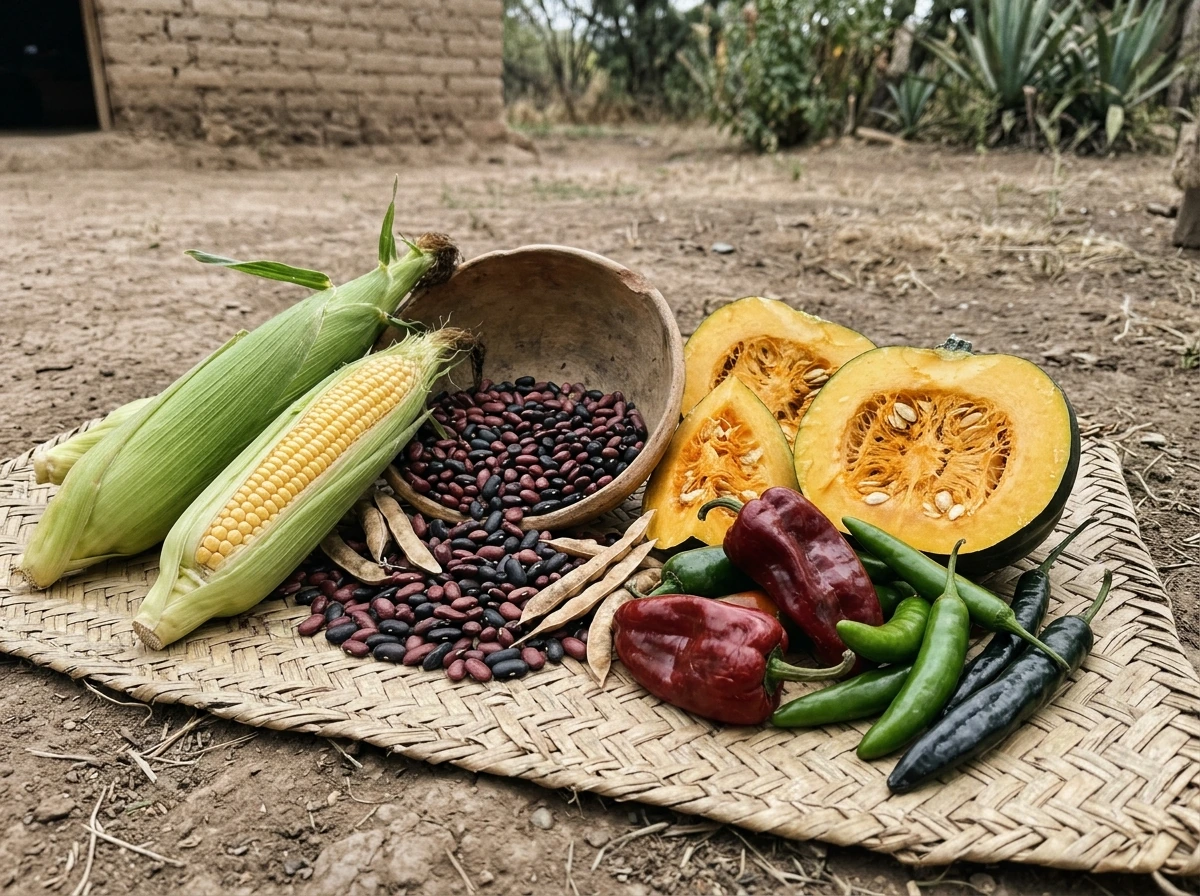
Maize was not just the most important Aztec crop. It was the organizing principle of the entire food system. It was ground into dough and used to make tortillas and tamales, fermented into drinks, and processed into atole (atolli), a warm maize-based porridge-drink that was a dietary staple for people across all social levels. When the Aztecs called maize centli, they were naming the crop that fed cities. Everything else in the agricultural system was built around supporting or supplementing maize production.
Beans: The Protein Partner
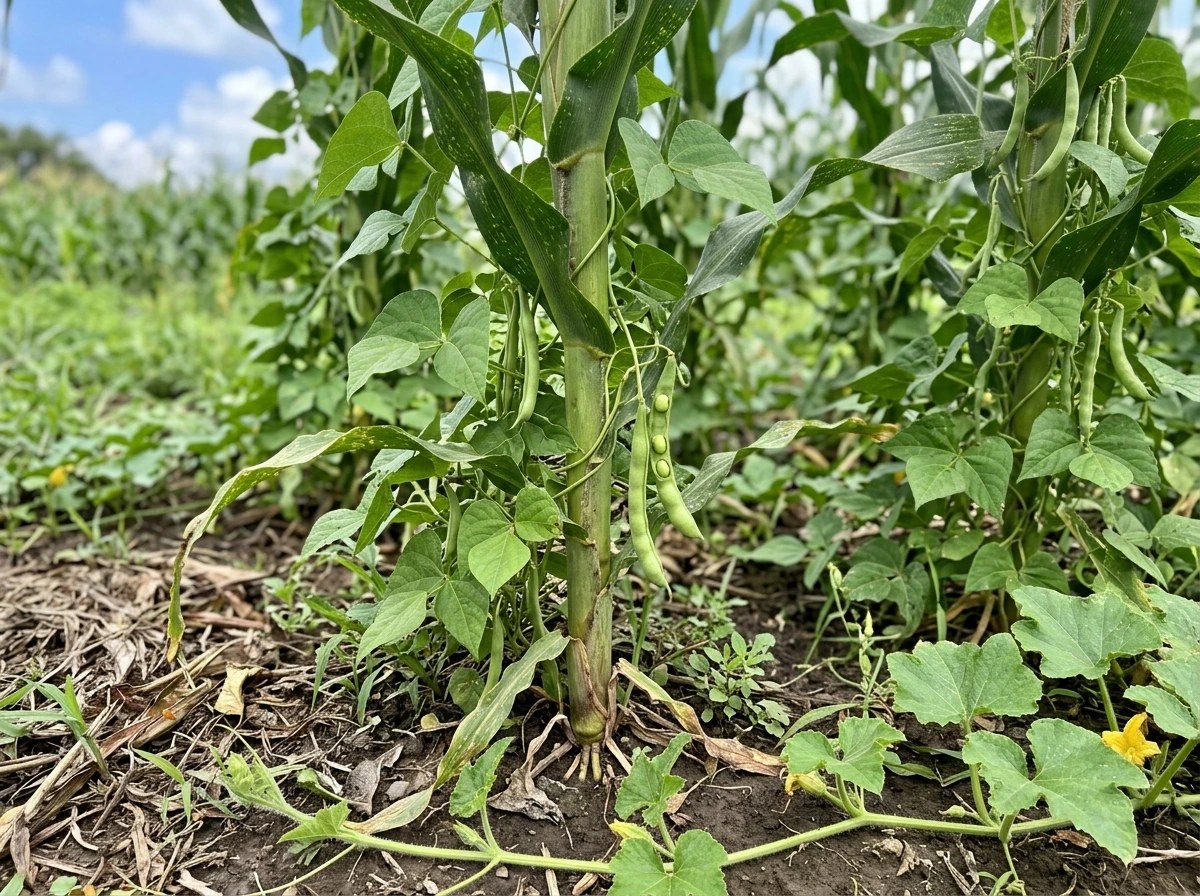
Beans were grown in abundance and in multiple varieties. Their role in the milpa system was not just nutritional but agricultural: bean plants fix nitrogen in the soil, which directly benefits the maize growing next to them. Without beans, intensive maize farming in the same fields year after year would have exhausted the soil much faster. Tribute records confirm beans were collected from provinces at significant scale, placing them firmly in the category of major staple crops rather than garden supplements.
Squash: The Ground Cover That Kept Fields Healthy
Squash completed the classic trio known today as the Three Sisters (maize, beans, squash). Planted together in the milpa system, squash vines spread across the ground between maize stalks, shading out weeds and reducing water evaporation from the soil. Squash was eaten as a vegetable and its seeds were consumed as a food source. The USDA National Agricultural Library describes the milpa arrangement precisely this way: maize as the vertical structure, beans climbing it, and squash interspersed at ground level.
Chili Peppers: In Every Meal, Every Region
Chili peppers were not a side crop. They were a constant in Aztec cuisine, appearing in foods across all social classes and geographic zones. Multiple varieties were grown, and they appear in tribute lists alongside maize and beans, confirming they were produced at scale. Scientific research on the milpa system confirms that peppers (Capsicum spp.) were commonly intercropped alongside maize, beans, and squash, blending into the same fields rather than requiring separate cultivation space.
Other Crops the Aztecs Grew
Amaranth: The Underrated Grain
Amaranth deserves much more attention than it typically gets in casual discussions of Aztec agriculture. According to the National Academies Press, approximately 20,000 tons of amaranth grain were sent annually as tribute to Tenochtitlan for the emperor Montezuma. Wikipedia notes that amaranth was cultivated in quantities comparable to maize in pre-Hispanic times. It was eaten as a grain, ground into flour, and also shaped into ceremonial figures after being mixed and pressed. The Aztecs clearly valued it both as food and as a culturally significant plant.
Chia: More Than a Modern Trend
Chia seeds were an important Aztec food crop long before they appeared in health food stores. The Codex Mendoza records chia as a tribute item, and the Florentine Codex (the major Nahua cultural record compiled by Fray Bernardino de Sahagún) references it as part of the agricultural and food landscape. Chia was consumed directly and likely mixed into drinks and food preparations.
Tomatoes, Cacao, Nopales, and Root Vegetables
Tomatoes were cultivated and eaten regularly, often combined with chilies in sauces that would be recognizable to anyone familiar with Mexican cooking today. Cacao was grown primarily in lower-elevation, tropical zones under Aztec influence and was used to make a prized beverage as well as serving as a medium of economic exchange. Nopales (cactus pads) were eaten as a vegetable, and jicama was grown as a starchy root. Avocados, guavas, and other native fruits were also cultivated or gathered from managed landscapes.
How the Aztecs Actually Grew These Crops
The Milpa System: Planting Together for Maximum Yield
The milpa was the foundational cropping method: maize, beans, and squash planted together in the same field, each supporting the others biologically. Amaranth, tomatoes, chilies, and other plants were added to the mix depending on the region and season. This was not random intercropping. It was a refined system developed over centuries that reduced pest pressure, maintained soil fertility, and produced a nutritionally balanced harvest from a single plot of land.
Chinampas: The Engineering Achievement That Fed a City
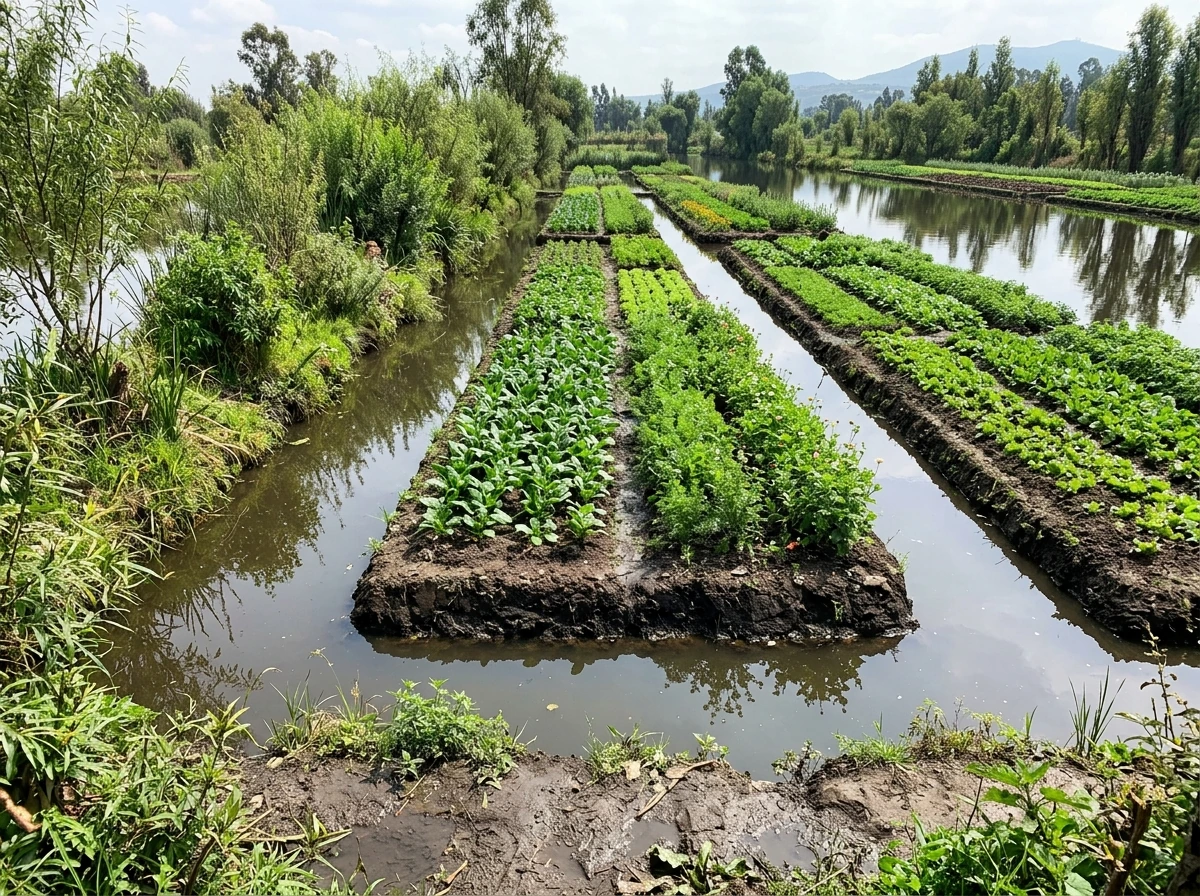
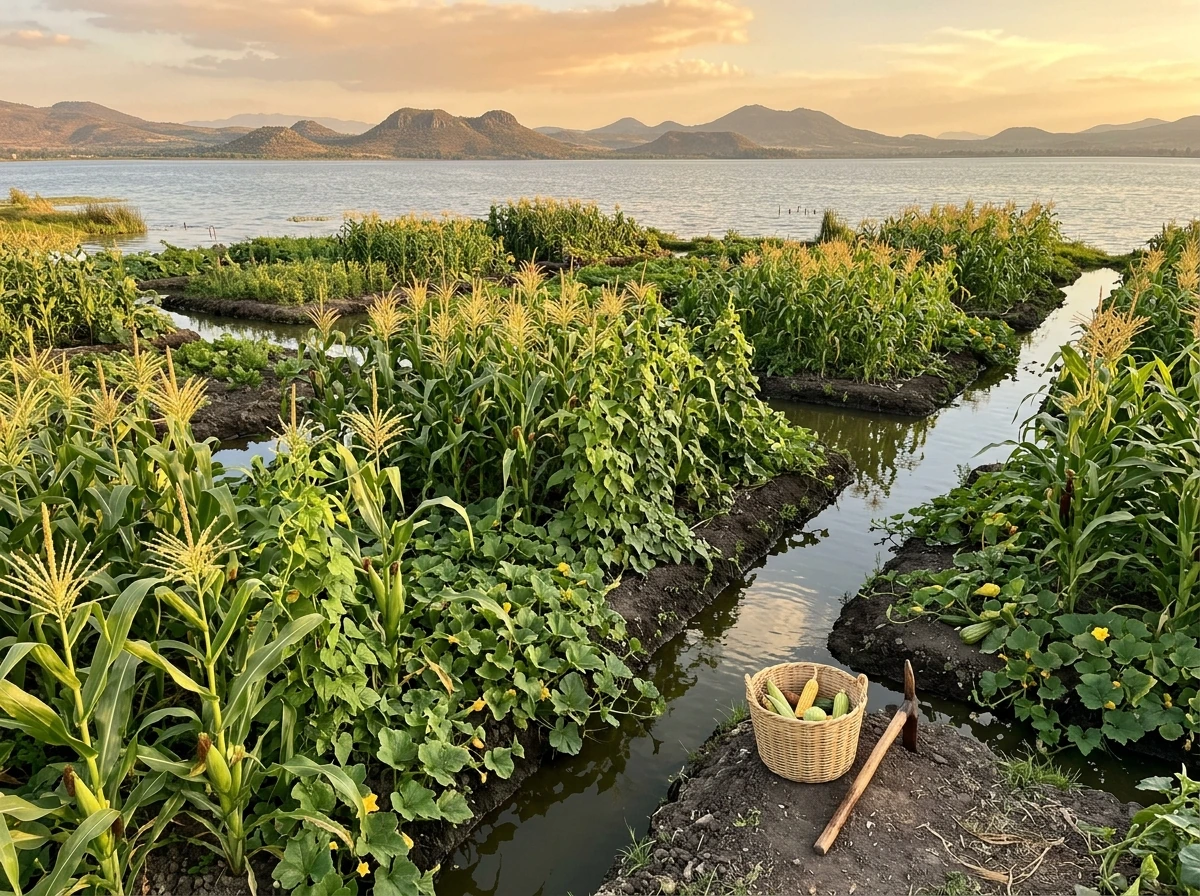
The chinampa system is one of the most impressive agricultural innovations in the ancient world. Britannica defines chinampas as small, stationary artificial islands built on freshwater lakes, constructed by layering aquatic vegetation, dirt, and mud until the surface rose above water level. A peer-reviewed palynological study confirmed that chinampa surfaces were built to sit approximately 30 cm above the waterline, and that soil from older chinampas could be reused in building new ones.
The World History Encyclopedia notes that after a chinampa mound reached sufficient height, the top layer of soil was left to dry for several weeks before planting began. This was precise water and soil management, not improvised farming. Seedlings were germinated on floating reed seedbeds first and then transplanted onto the chinampa plots, giving crops a head start and extending the effective growing season. The center of this system was Xochimilco, where shallow waters and freshwater springs created ideal conditions. Chinampas supplied a consistent flow of fresh produce directly to the markets of Tenochtitlan.
Water Control: Dikes, Canals, and Irrigation
The Aztecs did not simply farm next to water. They actively managed water at a landscape scale. The Valley of Mexico contained a system of interconnected lakes, including Chalco, Xochimilco, and Texcoco, and the saline water of Lake Texcoco posed a serious threat to chinampa agriculture. To solve this, the engineer-king Nezahualcoyotl built a massive dike (the Albarradón de Nezahualcoyotl) around 1445 to 1449. According to an MDPI Water study, this structure was approximately 16 km long, connecting Tepeyac hill to the Santa Catalina Mountain range, and it functioned to separate fresh and saline lake water, protecting the chinampa zones and the city of Tenochtitlan from flooding.
Beyond the lake basin, Aztec engineers constructed irrigation canals in upland and valley regions. The Tecoatl irrigation system in the Tehuacán Valley (Puebla) is one example of a major prehistoric canal network used to bring water to crops in drier, non-lake terrain. Terraced hillside farming was also used in areas where flat land was limited, a practice that appears across Mesoamerica and connects to similar systems used by the Inca in the Andes. The Inca, in the Andes, also selected crops carefully to match elevation and climate, cultivating staples like potatoes and grains alongside other high-altitude foods practice that appears across Mesoamerica.
Planting Calendars and Seasonal Timing
The Aztecs used a structured calendrical system that tied agricultural activities to ritual cycles and seasonal rhythms. Planting and harvest timing was not arbitrary. Maize planting, for example, followed the rainy season onset in the Valley of Mexico, which typically brought reliable rainfall from May onward. The chinampa system extended the effective growing season by providing consistent moisture and allowing seedbed germination before transplanting, giving farmers more control over timing than open-field farmers in rain-dependent areas.
Why Crop Choices Varied by Location
The Aztec empire was not a single climate zone. The Valley of Mexico, sitting at roughly 2,200 meters elevation, had a cool, semi-arid highland climate with a distinct wet season. The lake basin provided water access that the surrounding hills did not. Coastal and lowland areas under Aztec influence had tropical climates where crops like cacao thrived but where highland maize varieties would have struggled.
This is exactly why the tribute system recorded in the Codex Mendoza shows such variety across provinces. Different regions produced different crops based on their local soils, rainfall, and elevation. Maize and beans were grown almost everywhere, but cacao came from the lowlands, cotton from specific warm regions, and certain varieties of chilies were regional specialties. The Aztec agricultural system was essentially a continent-spanning supply chain that moved food and tribute goods from diverse ecological zones into Tenochtitlan.
Water availability was the single biggest variable shaping crop choices. In the lake basin, chinampas allowed intensive year-round production. On hillsides, terracing and rainfall timing dictated what could be grown and when. In drier valleys, canal irrigation systems like the Tecoatl network made the difference between viable agriculture and bare land. Understanding that geography drove crop selection helps explain why no single list of Aztec crops tells the whole story. If you are comparing Aztec agriculture to <span data-article-id="38FC86E6-66FF-4064-8D55-09D0EAC259CD">how did the incas grow crops in the mountains</span> or Maya farming systems, you will find this same principle at work: local water and terrain determined what got planted. how did the incas grow crops in the mountains
Comparing the Major Aztec Crops by Role
| Crop | Primary Role | Farming Method | Scale of Importance |
|---|---|---|---|
| Maize (corn) | Core dietary staple; processed into tortillas, tamales, atole | Milpa fields, chinampas, irrigated plots | Highest — empire-wide |
| Beans | Protein source; soil nitrogen fixer | Intercropped with maize in milpa | Very high — tribute item |
| Squash | Vegetable and seed food; ground cover in milpa | Intercropped with maize and beans | High — grown empire-wide |
| Chili peppers | Flavor and nutrition in all meals | Intercropped in milpa, garden plots | Very high — tribute item |
| Amaranth | Grain and ceremonial food | Dedicated fields and mixed plots | Very high — 20,000 tons/year tribute |
| Chia | Seed food and drinks | Dedicated cultivation | High — tribute item |
| Tomatoes | Sauce base and vegetable | Mixed plots, garden cultivation | Moderate to high |
| Cacao | Beverage and trade currency | Tropical lowland cultivation | High in trade; regional |
| Nopales (cactus) | Vegetable | Managed wild and cultivated plots | Moderate |
| Jicama | Root vegetable | Garden and field cultivation | Moderate — tribute item |
Where to Go Next for Reliable Research
If you are a student, gardener, or history enthusiast who wants to go deeper, here are the most useful primary and secondary sources available today:
- The Florentine Codex (Historia general de las cosas de Nueva España) by Fray Bernardino de Sahagún: This is the foundational primary source on Nahua culture including agriculture and food. It is available digitally through the World Digital Library. Start here if you want original documentation.
- The Codex Mendoza: A pictorial 16th-century manuscript with detailed tribute lists showing foodstuffs by province. The Bodleian Library in Oxford holds it, and high-resolution images are available online. It is the best visual record of what crops moved through the empire.
- The Matrícula de Tributos: Another tribute roll tradition that overlaps with Codex Mendoza content. Useful for cross-referencing which crops were province-level staples versus luxury goods.
- National Academies Press, 'Amaranth: Modern Prospects for an Ancient Crop' (1984): Freely available online. Gives solid data on amaranth's historical scale and role in Aztec agriculture. Excellent for students writing papers.
- Britannica and World History Encyclopedia entries on chinampas: Both are well-sourced and give clear explanations of chinampa construction. Good starting points before moving to peer-reviewed literature.
- Scientific Reports (2021) milpa system research: Search for peer-reviewed milpa intercropping studies if you want modern agronomic analysis of how the Three Sisters system actually functions biologically.
- Frances F. Berdan's scholarship on the Aztecs: Berdan is a leading researcher on Aztec economics and agriculture. Her work covers staple crops, marketplace production, and the range of foods in the Aztec system.
If you are a gardener interested in growing these crops yourself, the milpa combination of maize, beans, and squash is entirely practical in a modern garden bed and has been documented to improve yield and reduce weeding labor compared to monoculture plots. Amaranth and chia are both available as seed and grow well in warm temperate and subtropical climates. Chilies and tomatoes need no introduction to any gardener. The Aztec crop list is, in many ways, the foundation of modern Mexican and Southwestern cuisine, and most of these plants are available at any good seed supplier today.
For broader context on how other ancient American civilizations managed agriculture, it is worth comparing Aztec methods with what the Maya grew in their lowland forest environments and how the Inca solved the challenge of farming at high elevation in the Andes. Those comparisons reveal just how creative pre-Columbian farmers were in adapting to radically different geographies, each building sophisticated systems from the crops and landscapes available to them. what crops did the mayans grow. what crops did the inca grow
FAQ
What is the most accurate short list when someone asks what crops the Aztecs grew?
The simplest answer is maize, beans, squash, and chili peppers, but the Aztecs also grew other staples and region-specific crops. If you want a more complete “everywhere in the empire” list, include amaranth, chia, tomatoes, cacao (lowlands), jicama, and nopales (cactus pads), since these show up in tribute and regional records.
Did the Aztecs plant all their crops together in one field, or did they use different arrangements?
In most Aztec farming, maize was the core crop in the milpa, while beans and squash were commonly interplanted to support the system. Other crops like amaranth and tomatoes were added depending on season and locality, so they were not always present in every field at the same density.
Did the Aztecs rely on chinampas for all their farming?
Not necessarily. Many crops were grown without needing chinampas, using rainfall timing, terraces, and upland irrigation canals. Chinampas were especially valuable in lake areas like Xochimilco, where they enabled intensive, near year-round production.
How should I think about chinampas, are they literal floating farms?
Chinampas did not just mean “floating plants.” They were built up into durable raised planting surfaces, then managed with seedling production on protected seedbeds (often reed-based) before transplanting. If you are trying to recreate the idea in a modern garden, focus on consistent moisture and short-start seedlings, not on literal floating gardens.
When did the Aztecs typically plant and harvest maize?
Maize planting was tied to the rainy season onset in the Valley of Mexico, with timing that balanced moisture availability and crop maturation. Chinampa fields could extend effective growing time because water access was steadier, letting farmers control planting more precisely than purely rain-dependent fields.
Were chili peppers grown everywhere in the Aztec empire, or were they only in certain regions?
Chili peppers were widely grown, but “all the same chili” is a misconception. Multiple pepper types were cultivated, and certain varieties were known as regional specialties, so the exact chili mix depended on province, elevation, and local climate.
Was amaranth grown and eaten the same way as chia?
Amaranth and chia were important foods, but they were not identical in how they show up in the diet. Amaranth was treated as a grain-like staple that could be ground into flour and also used in ceremonial preparations, while chia was commonly used for its seeds in foods and likely in drink preparations.
How did water quality and salinity affect what the Aztecs could grow?
A major practical distinction is irrigation tolerance and soil needs. In the lake basin, they protected chinampas from saline water (especially from Lake Texcoco), and in uplands they relied on canals and terraces. That means crop choice often shifted based on whether water was freshwater, how reliable rainfall was, and whether salt intrusion was an issue.
Why do different sources sometimes give different answers to what crops the Aztecs grew?
If you are comparing “what crops” lists across sources, remember that tribute records reflect what provinces supplied, not a single universal farm menu. Some highland areas would emphasize maize and beans, while lower tropical zones would contribute crops like cacao, so any one list will look incomplete without context.
If I want to grow Aztec crops today, what is the easiest combination to start with?
For a modern garden version of an Aztec-inspired system, the most transferable base is milpa-style interplanting of maize with climbing beans and a ground-covering squash. If you try to include amaranth or chia, treat them as additional rotations or “extra blocks,” because their spacing and growth habits are usually harder to match perfectly inside a small milpa bed.
Next Articles
What Crops Did the Tainos Grow? List and Uses in the Caribbean
Main Taíno crops in the Caribbean, what they were used for, how we know, and where they grew.
What Crops Did the Mayans Grow, and How They Cultivated Them
Discover what crops the Mayans grew and how they farmed them, including key staples and planting and water methods.
What Did the Delaware Colony Grow: Crops, Uses & Legacy
Colonial Delaware’s main crops, grains, hay, flax, fruits, vegetables, livestock, why they thrived and how they were sold.