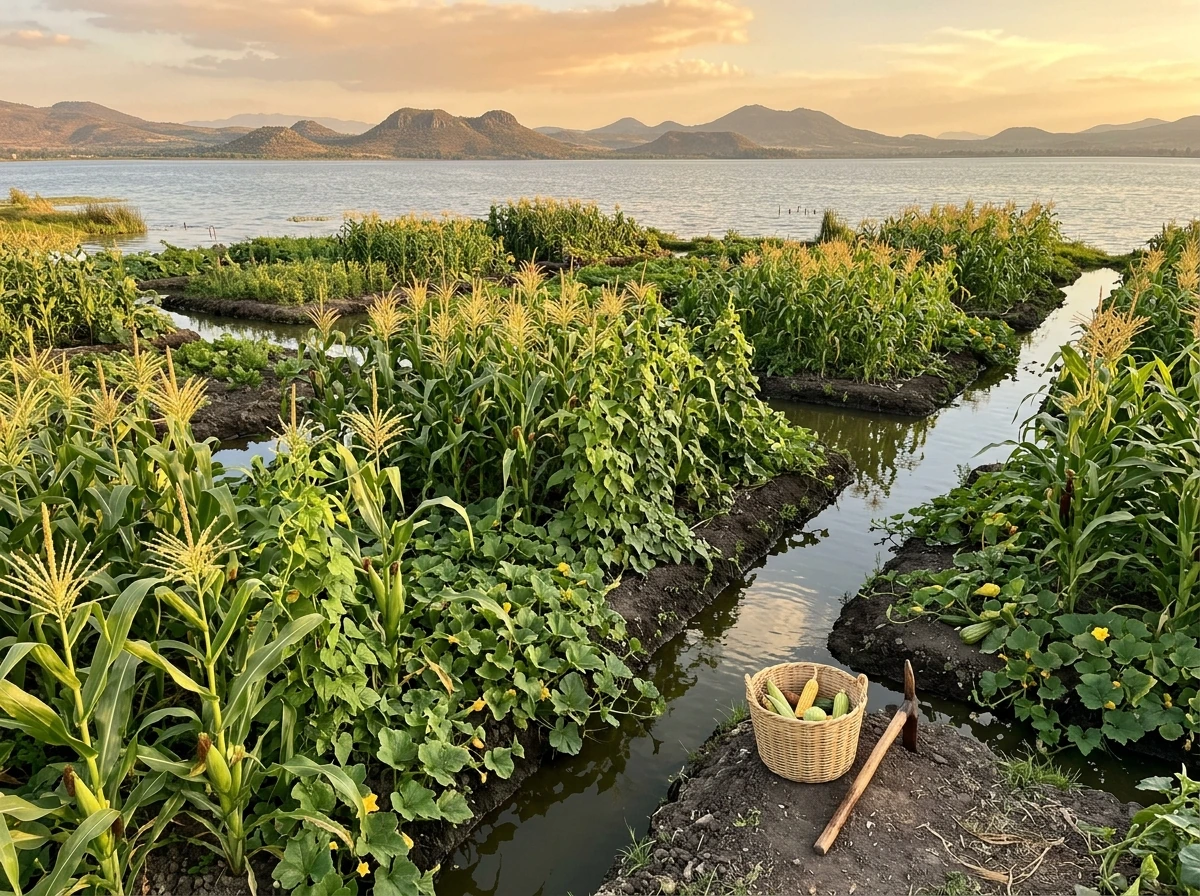
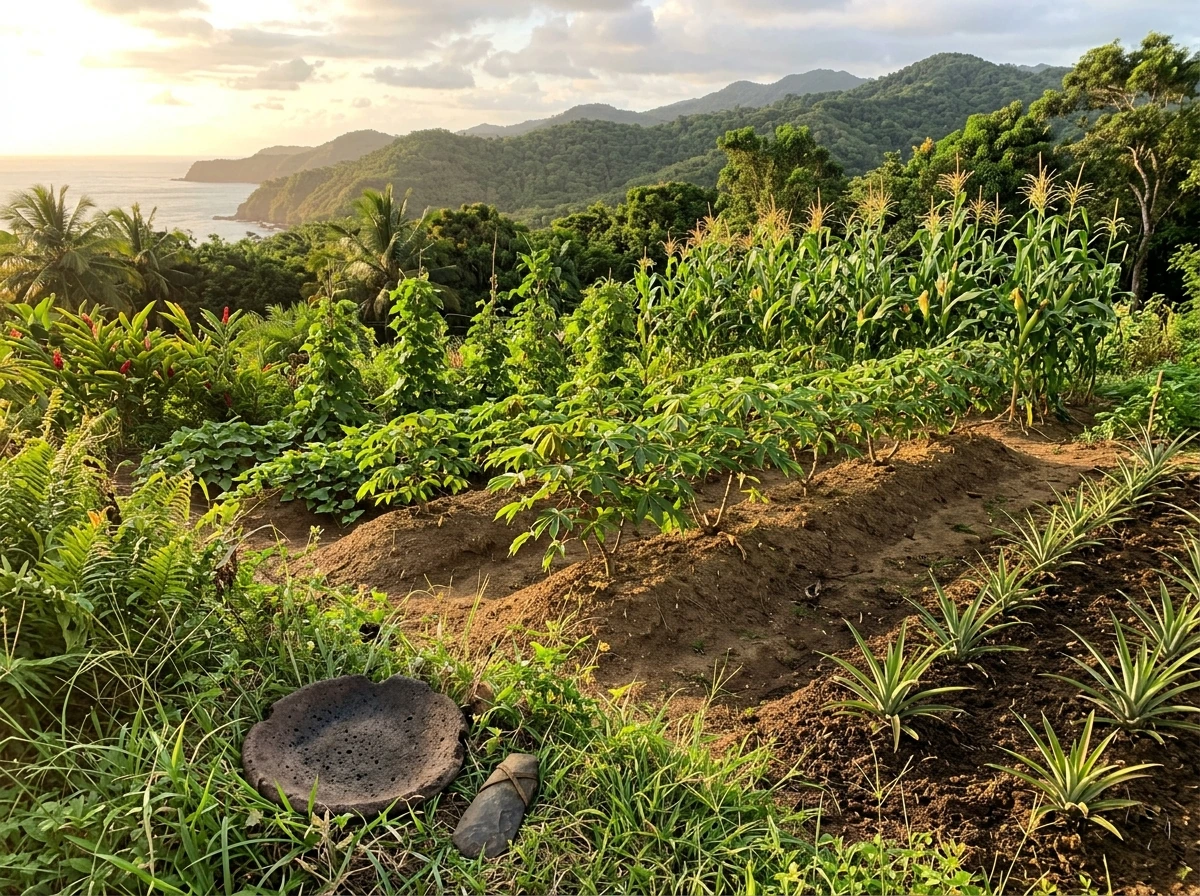
- Potatoes (many varieties, including bitter frost-resistant types for high altitudes)
- Maize (the prestige crop, grown in warmer valleys)
- Quinoa (a cold-tolerant Andean grain-like seed)
- Oca, ulluco, and mashua (other Andean tubers)
- Kiwicha/amaranth (a high-protein grain crop)
- Cañihua (a quinoa relative suited for the highest elevations)
- Tarwi/lupine (a legume with high protein content)
- Beans and squash (common across lower elevations)
- Coca (cultivated and economically significant, especially for elites)
- Peppers (ají), tomatoes, and other vegetables in warmer zones
That's the core inventory. The rest of this article explains how altitude sorted these crops across the Inca world, what they actually ate day to day, and what any of this means if you're a modern gardener or farmer inspired by Andean agriculture.
High-altitude farming: matching crops to the Andes
The Inca didn't just grow crops wherever they felt like it. Altitude drove almost every agricultural decision in the Andes, because temperature, frost risk, rainfall, and soil conditions change dramatically as you move up or down the mountains. Understanding that logic makes the whole crop list make sense.
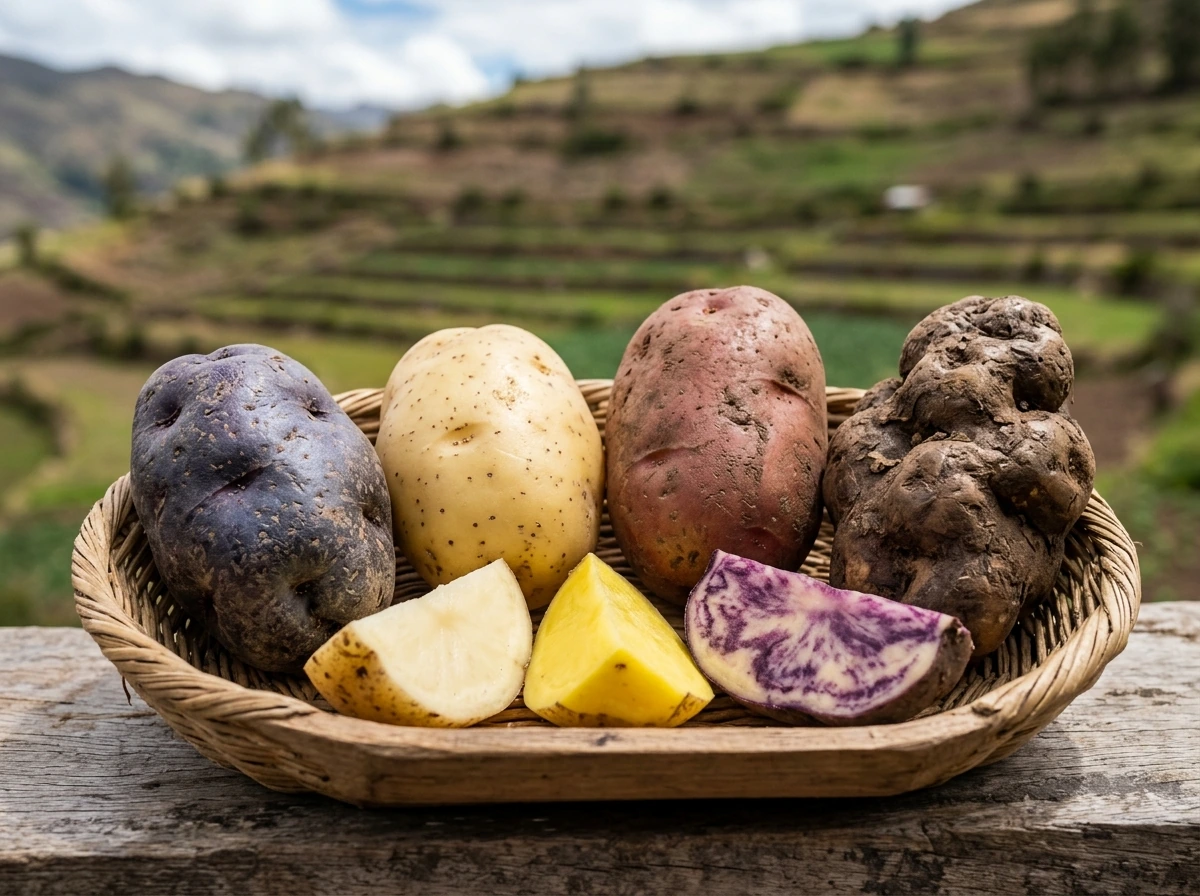
Potatoes are the anchor of high-altitude Inca farming. They can be grown anywhere from about 1,000 meters up to roughly 3,900 meters above sea level, which makes them extraordinarily versatile across Andean terrain. At the upper end of that range, the Inca relied heavily on bitter potato varieties that are naturally frost-resistant. They turned those bitter, frost-tolerant types into chuño: a freeze-dried preservation product made by exposing tubers to freezing overnight temperatures and drying them under intense daytime sun across repeated nights. Storehouse data from the site of Wanuku Pampa suggests that 50 to 80 percent of the storage facilities there held dried potatoes and other root crops, which tells you just how central the potato was to Inca food security.
Quinoa thrives in the 2,300 to 3,900 meter range, putting it right in the highland sweet spot. It tolerates soils that many crops can't handle, from pH 4.5 (quite acidic) up to pH 9 (quite alkaline), and it performs best in temperatures around 15 to 20 degrees Celsius. Cañihua, a close relative of quinoa, grows even higher: rarely cultivated below 3,800 meters, but it can survive up to 4,400 meters, making it one of the most cold-tolerant food crops cultivated anywhere in the ancient world.
Maize occupies a different niche. It was the Inca prestige crop, used in ceremonies, chicha (fermented corn beer), and elite feasting, but it needed warmth. Maize generally topped out around 3,200 meters, though it could push to about 3,500 meters in particularly favorable sheltered valleys. Below maize altitude, the Inca also grew kiwicha (a type of amaranth) above roughly 2,500 meters, and tarwi (Lupinus mutabilis, a protein-rich Andean lupine) from as low as 800 meters up to well above 3,000 meters.
Llamas and alpacas made much of this high-altitude farming possible in a practical sense. Research using nitrogen isotopic analysis has confirmed that llama dung was applied as fertilizer to Inca fields, and it appears to have been a key factor in allowing crops like maize to succeed at elevations where the growing window is short and soils are nutrient-poor. The Inca weren't just planting crops and hoping for the best: they were managing soil fertility with the livestock they also herded.
Fruits, vegetables, and the broader Inca plate
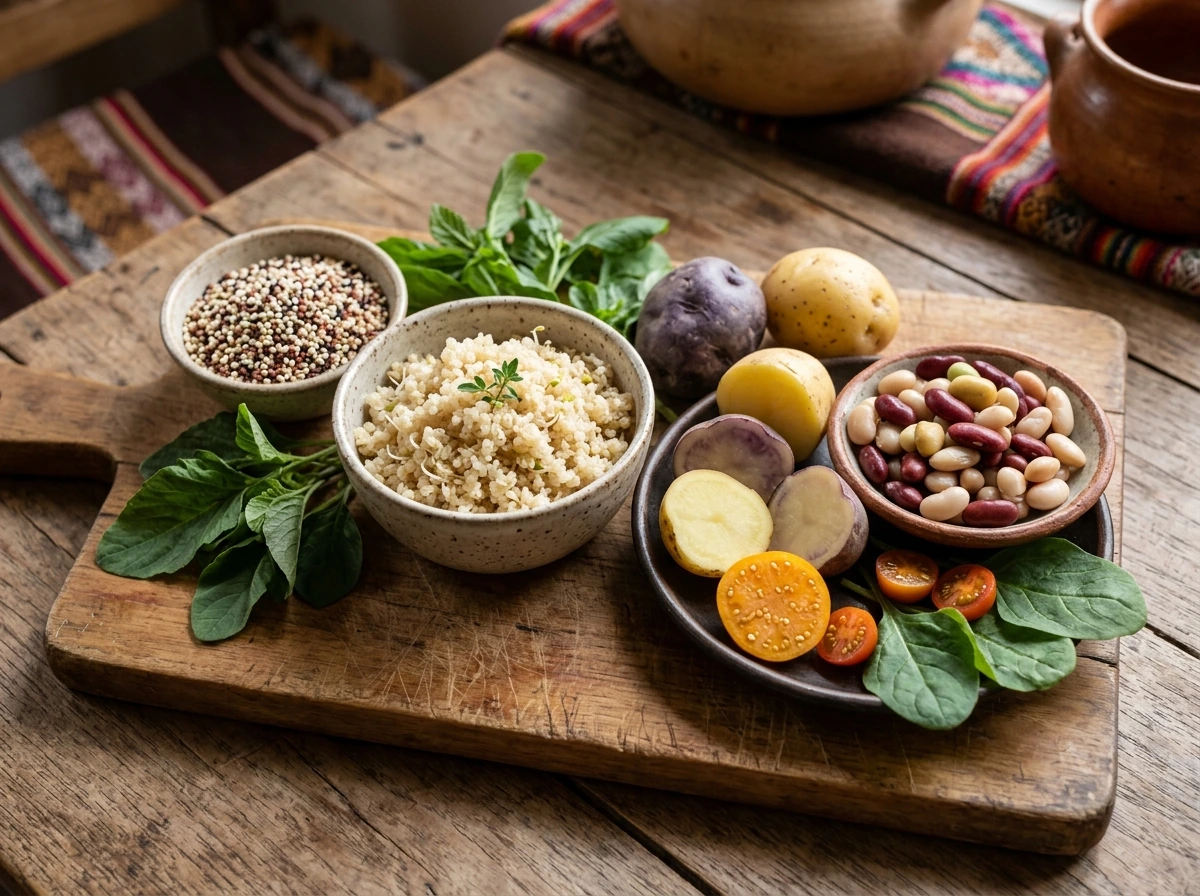
Beyond the staple grains and tubers, the Inca cultivated a range of vegetables, fruits, and other food plants, mostly at lower and mid elevations where temperatures allowed for more crop diversity. In the warmer valleys and coastal regions, they grew ají peppers, tomatoes, beans, squash, and sweet potatoes. The World History Encyclopedia notes that Inca crops included maize, coca, beans, grains, potatoes, sweet potatoes, ulluco, oca, mashwa, pepper, tomatoes, squash, and quinoa Inca crops like ají peppers, tomatoes, beans, squash, and sweet potatoes. The Pacific coast also gave access to abundant fish, which formed a significant part of the diet for coastal populations.
Coca deserves its own mention. It wasn't a food crop in the caloric sense, but it was one of the most economically and culturally significant plants the Inca cultivated. National Geographic's reporting on Inca coca use draws heavily on 16th and 17th century chronicles, which describe coca as sacred and central to religious ceremony, elite distinction, and daily ritual. Coca cultivation was tightly managed, and access to it was a marker of status. Guaman Poma de Ayala's 1615 illustrations even depict people tending coca plants, confirming it was actively cultivated and not just gathered wild.
Other notable cultivated crops include oca, ulluco, and mashua, three Andean tubers that are still grown in highland communities today. They are starchy, cold-tolerant, and well-suited to the same altitudes as potatoes, making them logical companions in the Inca cropping system. Modern communities in the Andes still manage dozens of native potato varieties alongside oca and ulluco, which reflects the same agrobiodiversity logic the Inca used: spreading risk across many varieties suited to slightly different microclimates.
What the Inca actually ate: crops vs. what they herded
The Inca diet was built primarily around plant foods, with meat playing a secondary role. Day-to-day meals for most people centered on potatoes, quinoa, maize, and other starchy crops, prepared as stews, porridges, and dried/preserved foods like chuño. Archaeological excavations in six Inca storehouses in the Xauxa region recovered major prehistoric highland crop taxa, including maize, quinoa, potatoes, and lupine six Inca storehouse excavations in the Xauxa region recovered major highland crops. Meat was eaten, but less frequently and more as a supplement than a daily staple.
The main meat sources were cuy (guinea pig), llama, and alpaca. Guinea pigs were domesticated and bred specifically as a meat source, and they remain important in Andean cuisine today. Llamas and alpacas were dual-purpose: they provided meat, but they were also pack animals and fiber sources, so slaughtering them wasn't taken lightly. Ducks were also domesticated and eaten. Coastal communities added fish and seafood as a significant protein source.
It's worth noting that cassava and arrowroot, which people sometimes associate with ancient American civilizations, do not appear prominently in Inca storehouse or staple records. Archaeological and chronicle evidence points firmly to potatoes, maize, and quinoa as the imperial staples, with cassava more associated with lowland groups like the Tainos (who cultivated it as a central crop). If you've read about what the Aztecs or Mayans grew, you'll notice the Inca crop list looks quite different, shaped almost entirely by Andean altitude and cold-weather adaptation rather than tropical growing conditions. what crops did the aztec grow
How the Inca matched crops to their three main regions
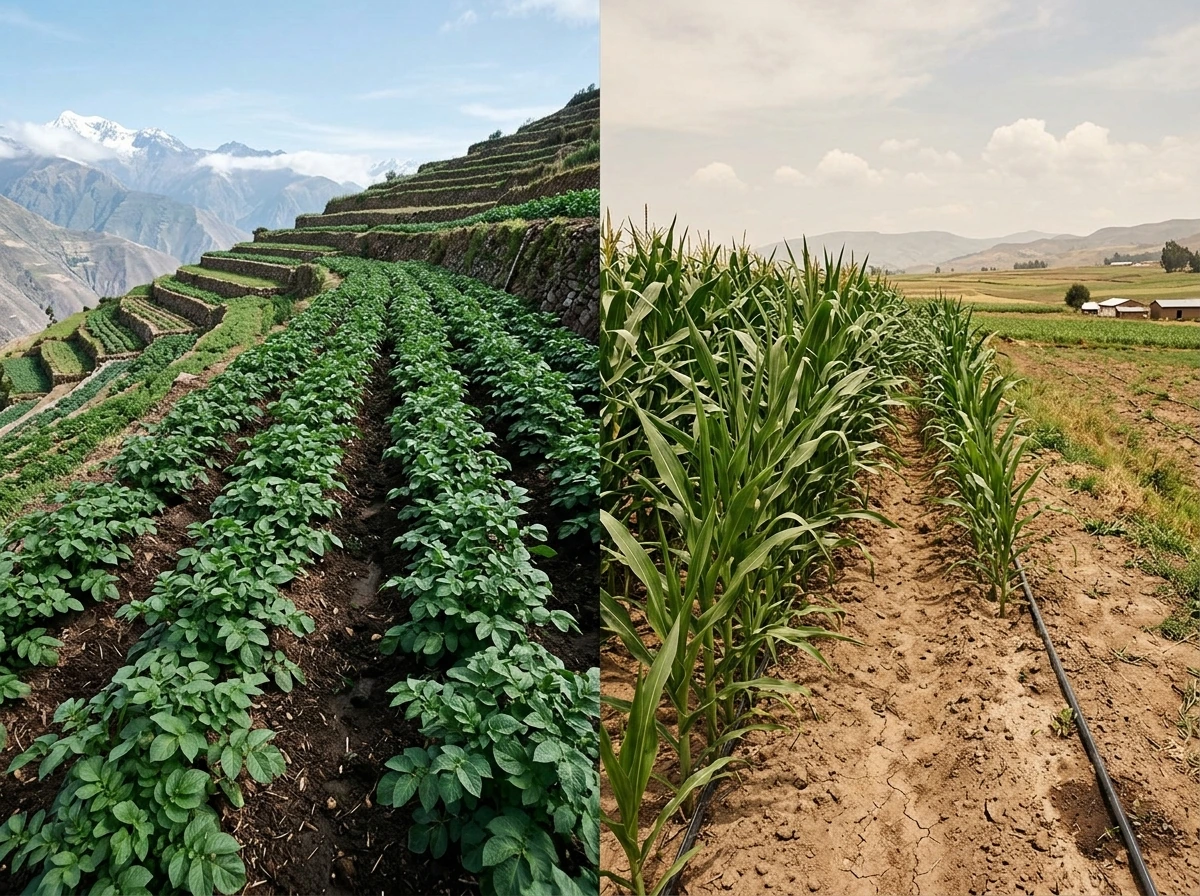
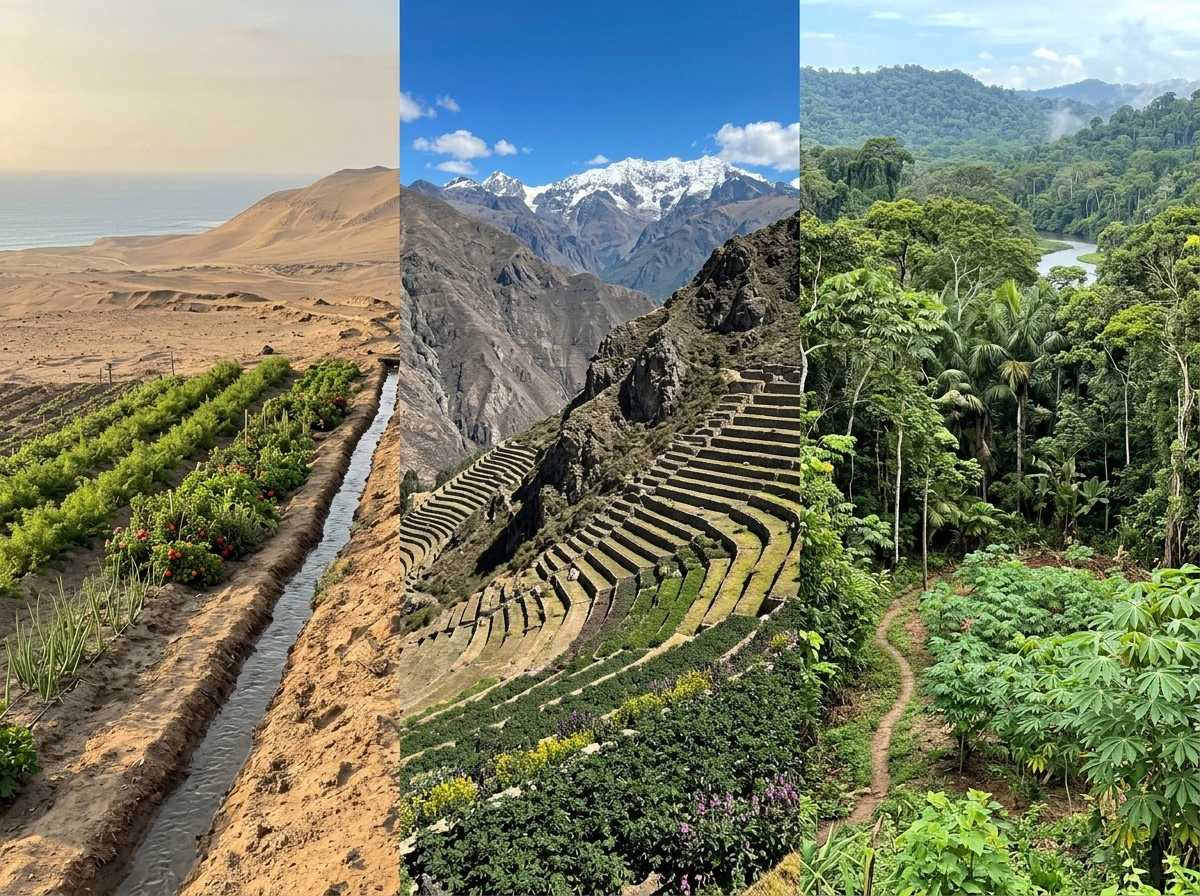
The Inca empire ran from the dry Pacific coast up through the high Andean plateau and down into the edges of the Amazon lowlands. That's an enormous range of environments, and the Inca managed it by treating each zone as its own agricultural system.
| Region | Elevation Range | Key Crops | Notes |
|---|
| Pacific coast | Sea level to ~1,000 m | Sweet potatoes, cotton, ají peppers, squash, fish (not a crop, but dietary staple) | Dry climate; irrigation was essential; maize also grown where water was available |
| Andean valleys and slopes (maize zone) | ~2,800–3,300 m | Maize, beans, squash, kiwicha, tarwi | Warmer and more sheltered; terracing (andenes) extended arable land |
| High plateau (potato and quinoa zone) | ~3,300–3,900 m | Potatoes, quinoa, oca, ulluco, mashua | Core Inca agricultural heartland; chuño produced here |
| Altiplano and puna (livestock and cold-crop zone) | ~3,800–4,500 m | Cañihua, quinoa, high-altitude potatoes; llama and alpaca herding | Too cold for most crops; camelid herding dominates; cañihua is the main cultivated plant |
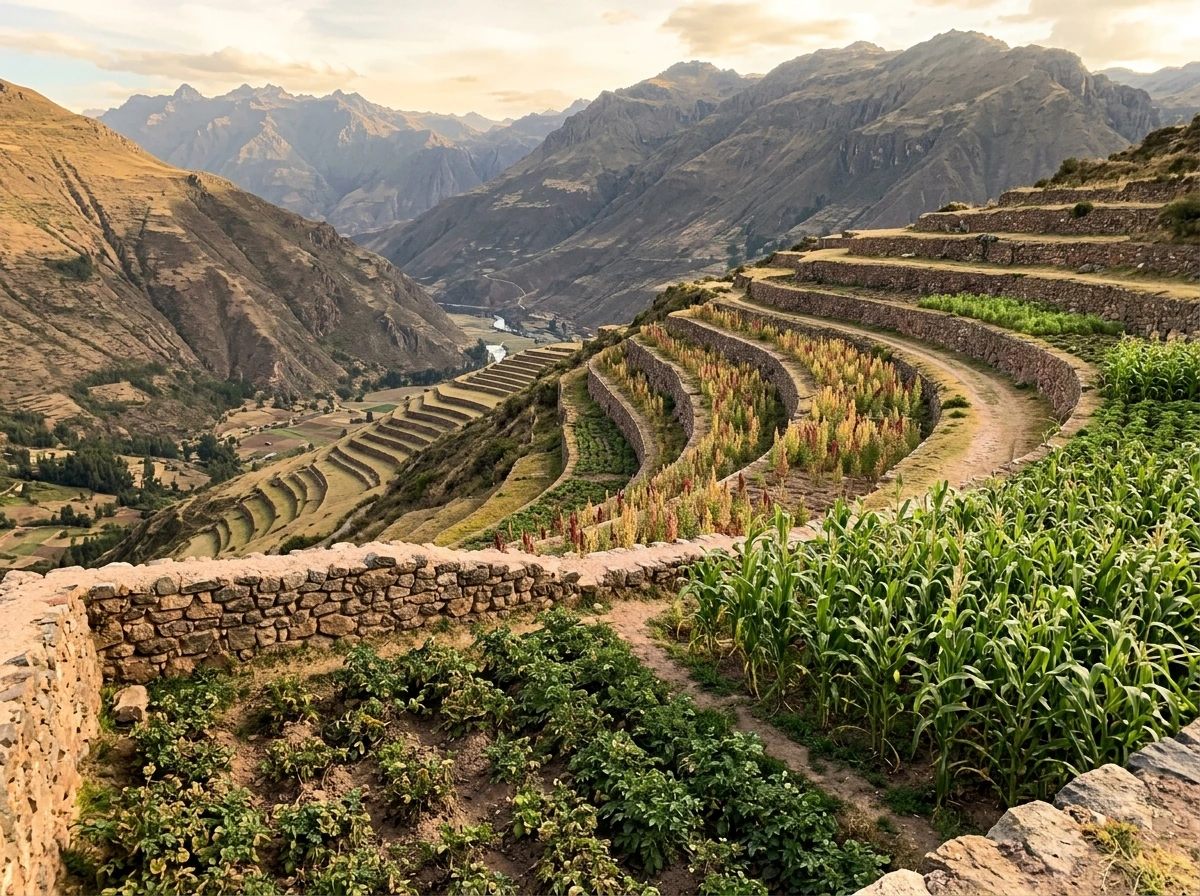
Terracing was the Inca's single biggest engineering response to this geography. The Smithsonian has documented how Inca terraces (andenes) functioned as a system of stacked flat platforms cut into steep hillsides, conserving water from rain and irrigation canals and preventing soil erosion. Each terrace could hold a slightly different microclimate and soil mix, allowing farmers to grow crops that the raw slope would never support. The Inca also used raised field systems called waru-waru in flood-prone lowland areas near Lake Titicaca, where channels between raised planting beds helped regulate soil moisture and reduce flood damage to crops.
The Inca also moved agricultural workers (mitmaqkuna) to specific regions to manage particular crops and storehouses, which means their agricultural system wasn't just about what grew naturally. It was an actively managed, state-organized production network. That's part of why their storehouse system (qullqa) was so well-stocked: the state directed labor and crop production across zones, then redistributed food through those storehouses.
Growing Inca crops today: what's practical and where
Several Inca crops have made their way into modern farming and gardening with real success, and others are being rediscovered as climate-resilient alternatives to conventional vegetables. Here's a practical breakdown of what's accessible and what you should know before trying any of them.
Quinoa
Quinoa is the easiest Inca crop to grow outside the Andes today, and it's now cultivated from sea level to over 4,000 meters in various parts of the world. It does best in cool temperatures (15 to 20 degrees Celsius), tolerates poor and alkaline soils, and handles drought reasonably well once established. In North America, it grows well in the Pacific Northwest, parts of the Rockies, and northern high-altitude zones. It struggles in humid, hot climates. If you're in USDA zones 4 through 8 with cool summers, quinoa is worth trying.
Potatoes (including native Andean varieties)
You can grow standard potatoes almost anywhere with a temperate climate, but if you want to experiment with Inca-style agrobiodiversity, seek out native Andean potato varieties (sometimes called "fingerlings" or sold under names like Papa Amarilla or Huayro). These varieties perform best in cool climates, are often more tolerant of poor soils, and some bitter varieties are specifically adapted to frost conditions above 3,000 meters. For most U.S. gardeners, any well-draining soil and a cool growing season works for standard potato cultivation.
Oca, ulluco, and mashua
These three tubers are still relatively niche outside the Andes but are gaining interest among adventurous gardeners. They prefer cool, moist climates similar to those of their native highlands. Oca (Oxalis tuberosa) is the most widely grown of the three outside South America, with New Zealand being a notable adopter. In the U.S., they tend to do best in the Pacific Northwest or other areas with mild, cool summers. All three are day-length sensitive, so in many North American climates, tubers form late in the season after days shorten, requiring a long frost-free growing period.
Kiwicha (Andean amaranth)
Kiwicha is closely related to grain amaranth varieties already grown commercially in the U.S. and Europe. It does well above 2,500 meters in its native range but adapts to lower elevations. It's a warm-season crop that grows quickly, tolerates some drought, and produces high-protein grain. In the U.S., it performs well in the Southwest and Great Plains. It's one of the Inca crops most transferable to modern farming conditions.
Tarwi (Andean lupine)
Tarwi (Lupinus mutabilis) is a legume with impressive protein content, comparable to soybeans, and it grows across a wide altitude range from about 800 meters up to 3,500 meters or more. It isn't widely commercially available in North America yet, but it's under active research as a potential food crop for temperate regions with cool growing seasons. If you can source seeds, it grows similarly to other lupines and fixes nitrogen in the soil, making it a useful cover crop as well.
If you're interested in the full picture of Andean agriculture, including the engineering systems that made all of this work, If you're interested in the full picture of Andean agriculture, including the engineering systems that made all of this work, our article on how the Inca grew crops in the mountains goes deeper on terracing, irrigation, and raised-field techniques. And if you want to compare the Inca approach to how other ancient civilizations farmed, the articles on Aztec crops and Mayan crops cover the tropical and subtropical counterparts to the Inca's high-altitude system. If you're interested in the full picture of Andean agriculture, including the engineering systems that made all of this work, our article on how the Inca grew crops in the mountains goes deeper on terracing, irrigation, and raised-field techniques. And if you want to compare the Inca approach to how other ancient civilizations farmed, the articles on Aztec crops and Mayan crops cover the tropical and subtropical counterparts to the Inca's high-altitude system. Peru's modern crop profile is another useful reference for understanding which of these ancient crops are still commercially significant today.
The main takeaway for modern growers: Inca crops were selected for resilience in cold, high-altitude, and often nutrient-poor conditions. That makes many of them genuinely interesting candidates for gardeners and farmers dealing with short growing seasons, marginal soils, or climate variability. The FAO has documented more than 20 food crop species from Andean systems still under cultivation today, which shows just how deep and practical this agricultural heritage really is.