The Taíno were skilled farmers. Their agriculture centered on a handful of root crops, grains, legumes, fruits, and useful plants that were perfectly suited to the tropical Caribbean climate. Cassava (manioc/yuca) was their number-one staple, with sweet potato and maize close behind. Beyond those three, they cultivated beans, peanuts, squash, peppers, pineapple, and a range of secondary plants including cotton and tobacco. Here is a clear breakdown of what they grew, where they grew it, and how confident archaeologists actually are about each crop.
What Crops Did the Tainos Grow? List and Uses in the Caribbean

Samuel Rourke
24 Mar 2026
The Core Taíno Crop List at a Glance
Archaeological starch-grain and microbotanical analyses from Hispaniola, Puerto Rico, and Cuba consistently point to the same core group of cultivated plants. These are not just foods that were eaten or foraged; the evidence points specifically to cultivation and processing.
| Crop | Scientific Name | Primary Use | Evidence Confidence |
|---|---|---|---|
| Cassava (yuca) | Manihot esculenta | Starch staple, flatbread (casabe) | Very high — starch grain residues on griddles, multiple sites |
| Maize (corn) | Zea mays | Food grain, cooked/boiled | Very high — starch grains, phytoliths, isotopic data |
| Sweet potato | Ipomoea batatas | Root vegetable, carbohydrate | High — starch and paleodietary evidence |
| Common bean | Phaseolus vulgaris | Protein, legume | High — starch and coprolite DNA evidence |
| Peanut | Arachis hypogaea | Protein, oil-rich food | Moderate-High — coprolite and ethnohistoric record |
| Zamia (marunguey) | Zamia spp. | Starch (processed carefully) | Moderate — microbotanical evidence, requires processing |
| Cocoyam | Xanthosoma sp. | Root vegetable | Moderate — starch grain identification |
| Squash | Cucurbita spp. | Food, seeds | Moderate — ethnohistoric and botanical record |
| Chili pepper | Capsicum spp. | Flavoring | Moderate — ethnohistoric accounts, botanical analogy |
| Pineapple | Ananas comosus | Fruit | Moderate — ethnohistoric and regional botanical record |
| Cotton | Gossypium spp. | Fiber for cloth and hammocks | High — Spanish accounts, regional archaeobotany |
| Tobacco | Nicotiana tabacum | Ritual, medicinal smoking | High — Spanish accounts, widespread Caribbean record |
| Annatto (bixa) | Bixa orellana | Body paint, food coloring | Moderate-High — starch/microbotanical record |
Staples and Major Food Crops
Cassava: The Crop That Defined Taíno Agriculture
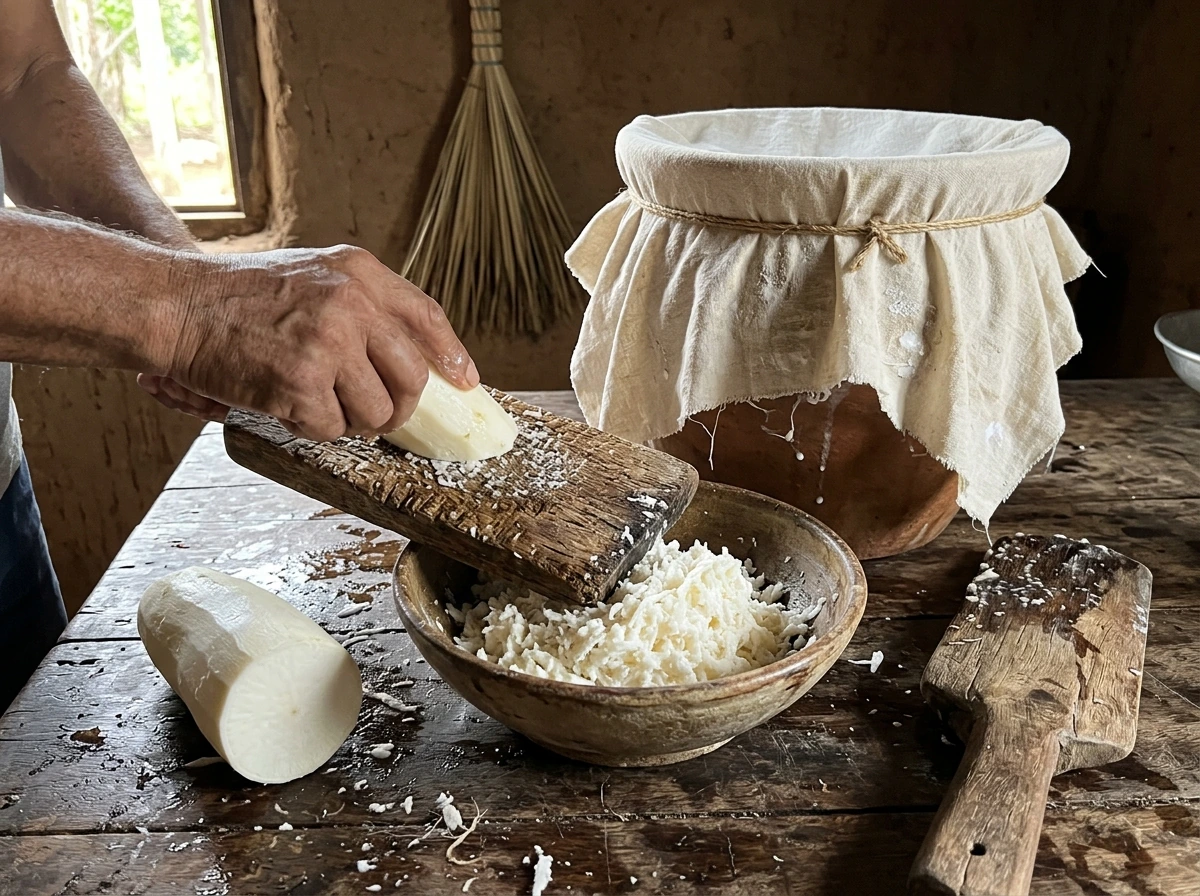
Cassava (Manihot esculenta), also called yuca or manioc, was the foundation of the Taíno diet. Starch-grain residue studies on ceramic griddles from multiple northern Caribbean sites, including Hispaniola, have confirmed manioc as the dominant cultigen in food-production contexts. The Taíno processed bitter cassava (which contains toxic compounds) into a flat, shelf-stable bread called casabe by grating, pressing, and baking the root. This processing knowledge made cassava an incredibly practical crop: it tolerates thin tropical soils, stores in the ground until needed, and survives drought better than most grains. There is no serious debate about cassava as a Taíno staple. The archaeological evidence is as strong as it gets.
Maize: Eaten, But Not Bread-Baked Like the Mainland
Maize (Zea mays) is well-documented in the Greater Antilles through starch grains, phytoliths, and isotopic data. At El Flaco in northern Hispaniola, phytolith and starch analysis has confirmed C4 plant consumption consistent with maize. Cuban sites like Canímar Abajo in Matanzas also show starch and isotopic signatures of maize use. One important distinction: unlike the Aztec or Maya (who built much of their food culture around ground maize), Taíno communities appear to have boiled or eaten maize in other forms rather than baking it into tortillas or tamales the way mainland Mesoamerican groups did. One important distinction: unlike the Aztec or Maya (who built much of their food culture around ground maize), Taíno communities appear to have boiled or eaten maize in other forms rather than baking it into tortillas or tamales the way mainland Mesoamerican groups did. If you are comparing Taíno agriculture with what the Aztec or Maya grew, maize was significant in all three cultures but the preparation traditions differed considerably.
Sweet Potato: The Other Major Root
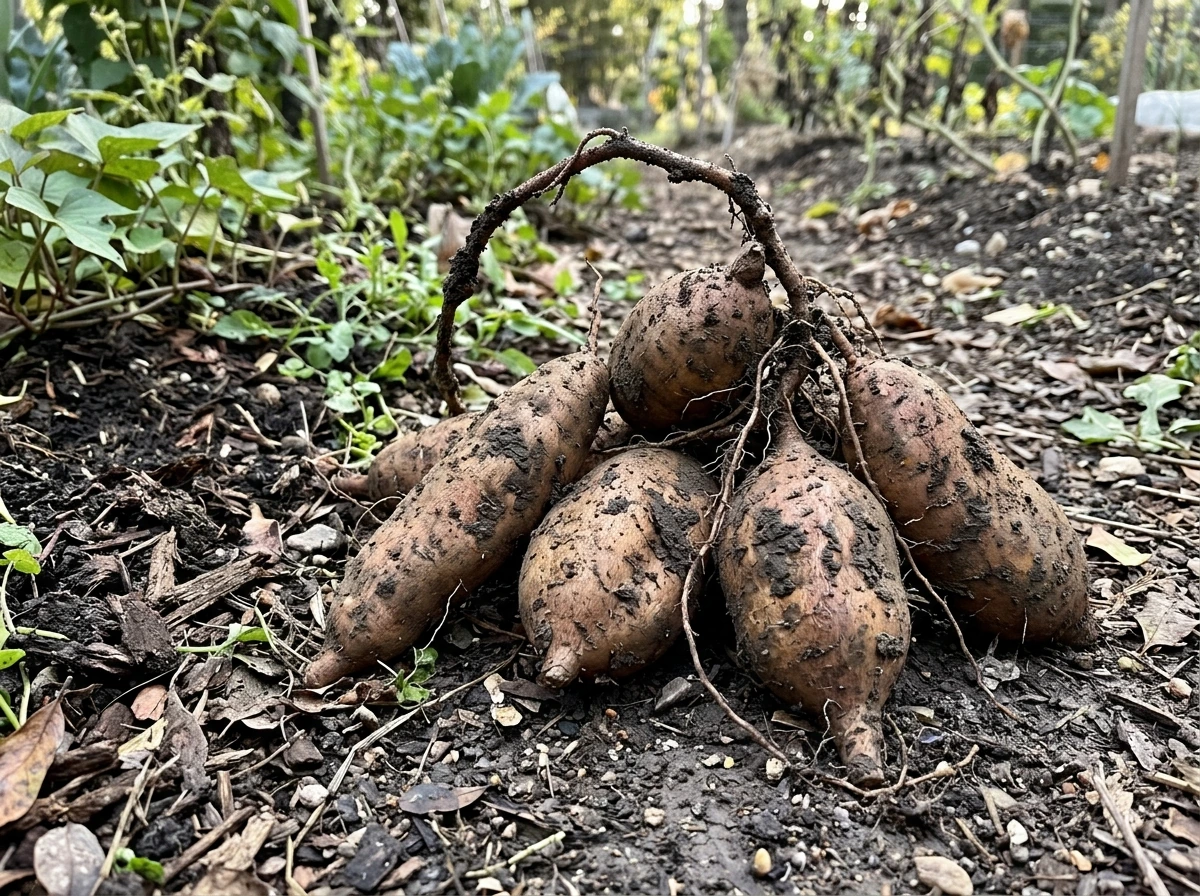
Sweet potato (Ipomoea batatas) is the third pillar of Taíno starchy-food production. Paleodietary reconstruction work from precolonial Hispaniola identifies it alongside cassava as a key cultivated C3 plant, and coprolite studies from Puerto Rico highlight it as a significant part of agricultural economies across the island. Sweet potato is easy to grow in well-drained tropical soils, produces reliably in the wet-dry seasonal pattern of the Caribbean, and stores reasonably well. It likely served as a dietary complement to cassava, providing variety in flavor and nutrition.
Beans, Legumes, and Other Protein Sources
Common bean (Phaseolus vulgaris) appears in coprolite DNA studies from precolonial Puerto Rico and in starch analysis from Cuban sites. Jack bean (Canavalia sp.) also shows up in the Cuban archaeological starch record at Canímar Abajo. Peanuts (Arachis hypogaea) are mentioned in both the coprolite studies and ethnohistoric accounts. Together, these legumes provided the protein and fat that root-crop-heavy diets need to stay nutritionally complete. The confidence level is solid, though the coprolite DNA method does carry a known bias toward raw or lightly processed foods, so some legume use may be underrepresented.
Fruits, Nuts, and Secondary Foods
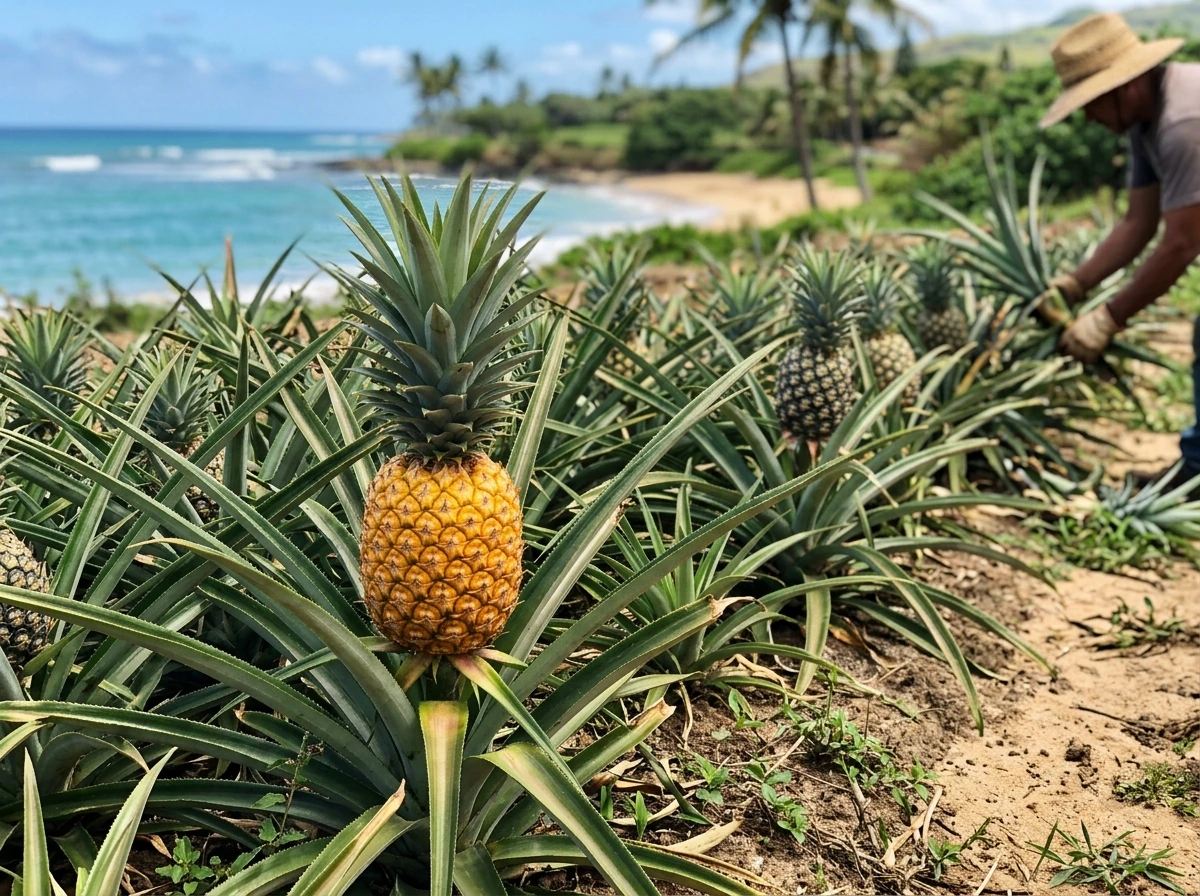
Beyond the staples, the Taíno cultivated and managed a broader range of food plants. Pineapple (Ananas comosus) is among the most reliably documented, supported by ethnohistoric accounts from early Spanish observers and by the plant's clear origin in the tropical Americas. Squash (Cucurbita spp.) also appears in the ethnohistoric and botanical record, though direct archaeobotanical confirmation in the Caribbean is less systematic than for cassava and maize.
Zamia, sometimes called marunguey or coontie, deserves special mention. A Florida International University repository entry for a Zamia-focused paper supports research attention to Zamia species in Puerto Rico Zamia, sometimes called marunguey or coontie. Several Zamia species are native to the Caribbean, and their starchy roots were used as a food source after careful processing to remove toxins, similar to the work needed for bitter cassava. Microbotanical evidence from Caribbean sites supports this. Cocoyam (Xanthosoma sp.) also appears in the starch-grain record at multiple island sites, suggesting it was another cultivated or at least managed root crop. Neither zamia nor cocoyam is as confidently documented as cassava or maize, but both fit the agronomic and botanical profile of the region well.
Fibers, Flavorings, and Useful Plants
Not every crop is about calories. The Taíno grew plants for fiber, ritual, medicine, and flavoring, and several of these are as well-documented as their food crops.
- Cotton (Gossypium spp.): Grown for fiber to make cloth, nets, and the hammock (hamaca, a Taíno word that passed directly into Spanish and then English). Spanish accounts and regional archaeobotany both support cotton cultivation across the Greater Antilles.
- Tobacco (Nicotiana tabacum): Widely cultivated across the Caribbean for smoking in ceremonial and ritual contexts. Early Spanish accounts are detailed on this point, and the evidence is very strong. The word 'tobacco' itself may derive from a Taíno term.
- Chili pepper (Capsicum spp.): Used as a flavoring and condiment. Supported by ethnohistoric accounts and consistent with broader Caribbean/Mesoamerican agricultural patterns, though direct archaeobotanical confirmation from Taíno-specific sites is less thorough.
- Annatto (Bixa orellana): A small shrub whose seeds produce a vivid red-orange pigment. Used for body paint and food coloring. Starch and microbotanical evidence from Caribbean archaeological contexts supports its presence, and it remains a widely used natural food colorant today.
- Calabash/Gourd (Lagenaria siceraria): Used more as a container than as food, the bottle gourd was cultivated or at least managed for practical use throughout the Americas, and the Caribbean was no exception.
Where These Crops Were Grown
The Taíno were concentrated across the Greater Antilles: Hispaniola (modern Haiti and Dominican Republic), Puerto Rico, Cuba, Jamaica, and the Bahamas. Each island has somewhat different soils and rainfall patterns, but all share the core tropical climate that made these crops viable.
Hispaniola is where much of the strongest archaeobotanical evidence comes from. Sites like El Flaco in the northern Dominican Republic have produced phytolith, starch, and paleoecological data that directly document maize, cassava, and other cultigens under cultivation. The northern coast receives substantial rainfall, and its valley soils supported intensive horticulture. Puerto Rico's archaeological record is similarly rich, with microbotanical studies confirming manioc, maize, sweet potato, beans, cocoyam, zamia, and annatto. Cuban sites, particularly Canímar Abajo in Matanzas province, have added starch-grain and isotopic evidence for maize, sweet potato, and beans, showing that the same core crop complex extended westward.
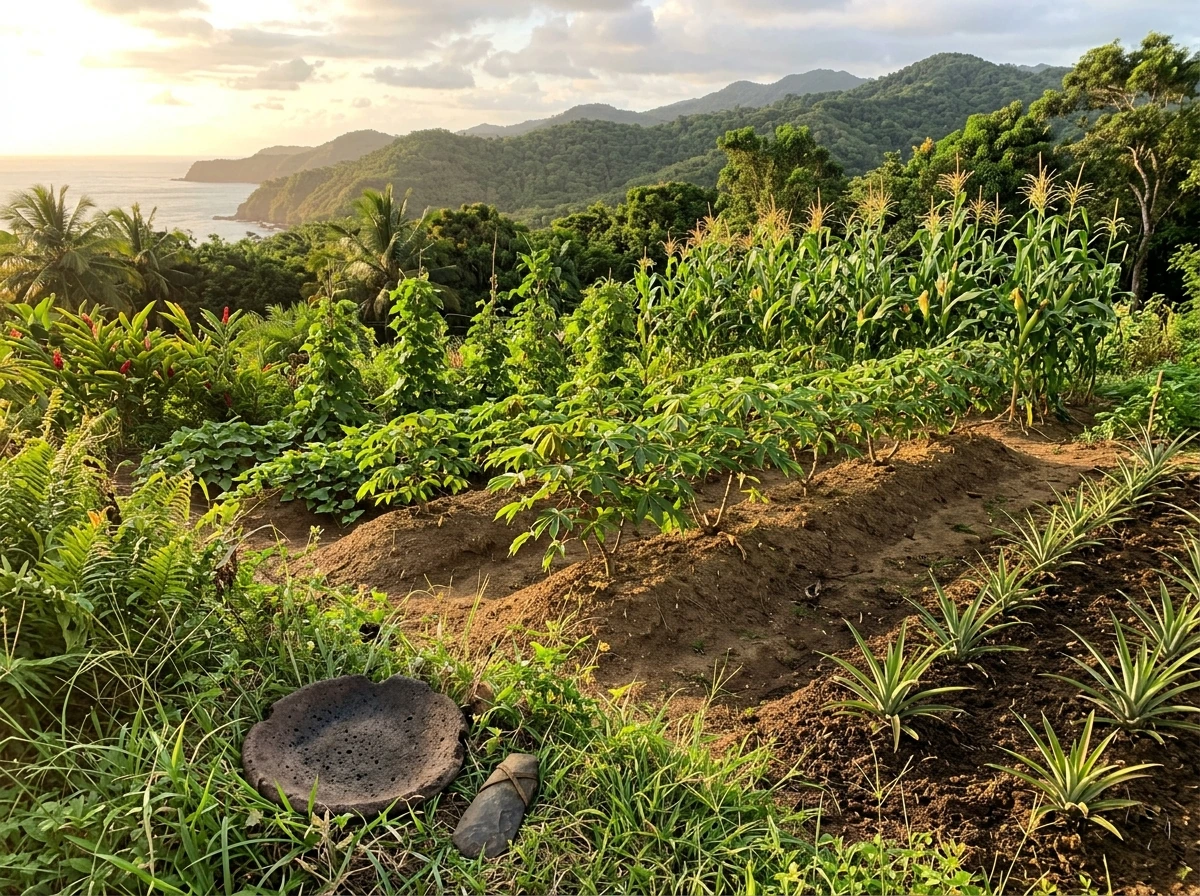
The Taíno farming system was largely based on conucos, raised mound gardens that improved drainage and soil depth. This was smart agronomy: Caribbean soils can be shallow and prone to waterlogging during the wet season, and mounding concentrates organic matter while letting excess rain drain away. Cassava in particular thrives in this setup, and the same kind of mountain-ready thinking shows up in how the Incas grow crops in the mountains, even if their techniques and environments differed. The mound system also allowed intercropping, growing multiple plants together in ways that mimicked the layered structure of the surrounding forest.
How Historians and Archaeologists Know This
The evidence for Taíno crops comes from several different sources, and they don't all carry equal weight. Understanding the difference matters if you want to be precise about what we actually know versus what is plausible but less confirmed.
Starch Grain and Microbotanical Analysis
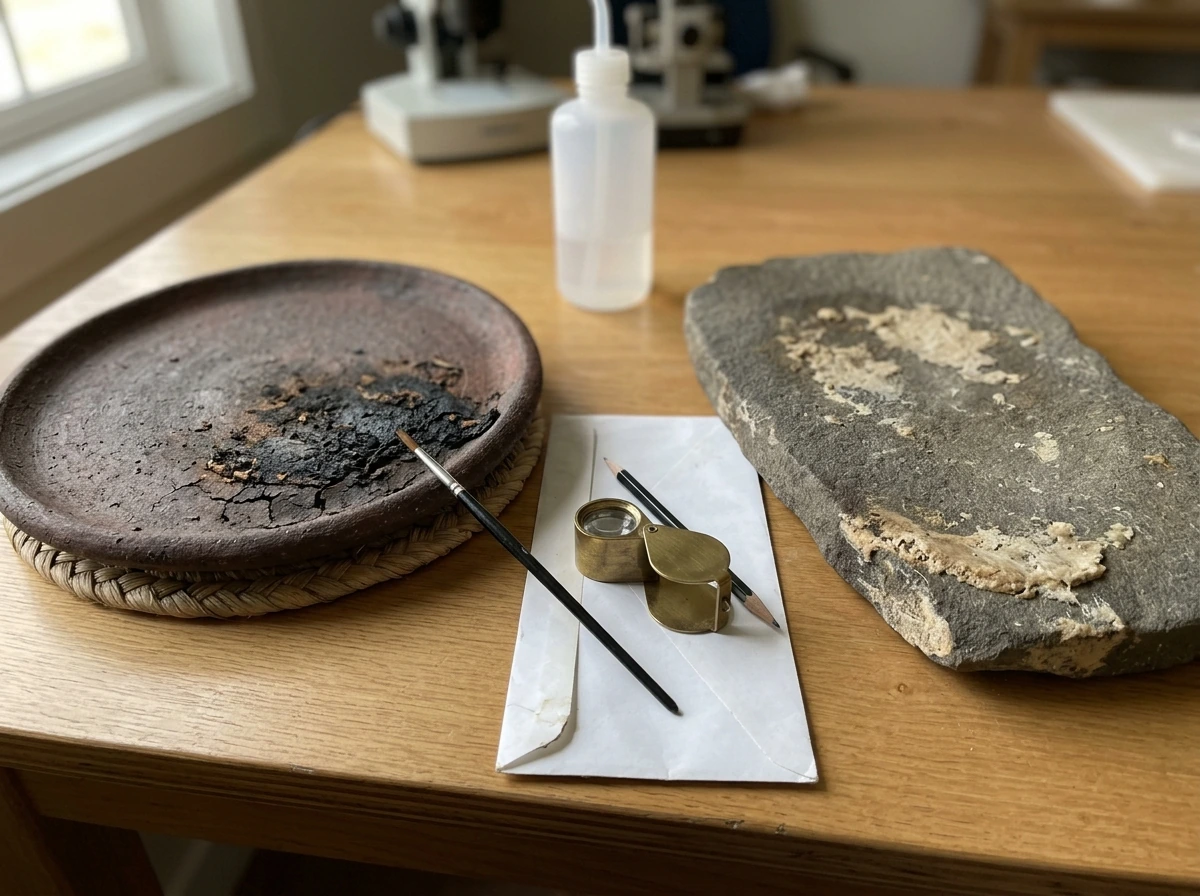
This is the gold standard for the Taíno crop record right now. Researchers scrape residue from ceramic griddles, cooking pots, and stone tools, then examine the microscopic starch grains and plant structures (phytoliths) under a microscope. Different plant species produce starch grains and phytoliths with distinct shapes and sizes, allowing identification to the genus or sometimes species level. Studies using this method from Hispaniola, Puerto Rico, and Cuba have consistently confirmed cassava, maize, sweet potato, beans, cocoyam, and zamia as cultivated or processed plants. This evidence is tied to specific tools and sites, which means it is evidence of actual processing and use, not just general presence in the environment.
Isotopic and Coprolite Evidence
Isotopic analysis of human and animal remains can detect the proportion of C4 plants (like maize) versus C3 plants (like cassava and sweet potato) in ancient diets. Coprolite (fossilized feces) studies use ancient DNA and plant macrofossil analysis to identify what was eaten. A coprolite study from precolonial Puerto Rico identified a full list of expected cultigens including maize, sweet potato, common bean, manioc, zamia, cocoyam, and peanut. The catch: coprolite DNA tends to preserve raw or lightly processed foods better than heavily cooked ones, so intensely processed foods like casabe (baked cassava bread) may be underrepresented in this type of evidence.
Early Spanish Accounts
Columbus and the chroniclers who followed him described Taíno agriculture in some detail, noting cassava bread, cotton fields, tobacco use, pineapples, and chili peppers. These accounts are useful historical records, but they come with real limitations. The Spanish observers were not trained botanists, they were working through interpreters, and they sometimes conflated different plants or described familiar crops in unfamiliar forms. Researchers are explicit that relying exclusively on ethnohistoric accounts to reconstruct precolonial agriculture is inappropriate. Spanish chronicles are best used to corroborate what archaeobotanical evidence already supports independently.
Which Crops Are Debated
Cassava, maize, and sweet potato are beyond debate. Common bean and peanut are well-supported. Zamia, cocoyam, and annatto sit at a moderate-high confidence level based on microbotanical evidence. Squash, chili pepper, and pineapple have solid ethnohistoric and botanical plausibility but relatively thinner direct archaeobotanical confirmation in the Taíno-specific record compared to cassava and maize. That doesn't mean the Taíno didn't grow them, but it means the evidence is different in type and strength.
Modern Equivalents and What You Can Grow Today
If you're a gardener or farmer in a tropical or subtropical climate, the Taíno crop list is genuinely practical. Most of these plants are still widely grown today under the same or very similar species names, and they perform well in USDA zones 10-13 or anywhere with a warm wet-dry seasonal pattern similar to the Caribbean.
| Taíno Crop | Modern Species/Variety to Look For | Best Growing Conditions |
|---|---|---|
| Cassava (yuca) | Manihot esculenta (sweet or bitter varieties) | Well-drained tropical soil, full sun, tolerates drought once established |
| Sweet potato | Ipomoea batatas (many modern cultivars) | Loose, well-drained soil, full sun, warm temperatures year-round |
| Maize | Zea mays (open-pollinated tropical varieties preferred) | Fertile soil, consistent moisture during pollination, warm nights |
| Common bean | Phaseolus vulgaris (bush or pole types) | Well-drained soil, full sun, warm days and nights |
| Peanut | Arachis hypogaea | Sandy, loose soil for pod development, full sun, 4-5 month warm season |
| Cocoyam | Xanthosoma sagittifolium (malanga) | Moist, rich soil, partial to full sun, tolerates wet conditions |
| Cotton | Gossypium hirsutum (Upland cotton) | Well-drained soil, full sun, long warm season (150+ frost-free days) |
| Annatto | Bixa orellana | Tropical to subtropical, tolerates poor soils, full sun to partial shade |
| Chili pepper | Capsicum annuum or C. chinense | Well-drained fertile soil, full sun, warm temperatures |
| Pineapple | Ananas comosus | Sandy, slightly acidic soil, full sun, drought-tolerant once established |
If you are in a Caribbean, Florida, South Texas, or similar tropical/subtropical zone, most of this list is directly plantable today. Cassava and sweet potato are probably your easiest starting points: both are forgiving of less-than-perfect soil, drought-tolerant once established, and produce generous yields. Malanga (cocoyam) is readily available at Caribbean grocery stores as a planting slip if you can't find nursery stock. Annatto is increasingly available as an ornamental/edible shrub at specialty nurseries and is worth growing just for the seeds alone.
For verification and deeper research, the most reliable starting points are peer-reviewed archaeobotanical studies from Hispaniola, Puerto Rico, and Cuba. Look for work using starch-grain residue analysis or phytolith studies from specific named sites. The multi-island microremain synthesis published in the Journal of Archaeological Science in 2023 is a good modern entry point into the current evidence base. For the broader context of how Indigenous Caribbean agriculture compares with other pre-Columbian civilizations, you can find useful comparisons in our coverage of For the broader context of how Indigenous Caribbean agriculture compares with other pre-Columbian civilizations, you can find useful comparisons in our coverage of what the Aztec grew and what the Inca grew, which shows how different crop complexes developed across different American environments. If you are comparing this with Mayan agriculture, the Mayans also cultivated a very different set of staple crops suited to Mesoamerica what crops did the Mayans grow. , which shows how different crop complexes developed across different American environments.
The practical takeaway is straightforward: the Taíno built one of the most efficient tropical farming systems in the ancient world, one centered on root crops that thrive in marginal soils, grains that provided dietary variety, and useful plants that supported everyday life from hammocks to cooking. That same crop logic still applies in the modern Caribbean and similar climates today.
FAQ
What crops did the Taíno grow that are considered the most certain?
If you mean the highest-confidence cultivated “core,” the Taíno are most securely linked to cassava (manioc/yuca), maize, and sweet potato. A second tier with strong support includes common bean and peanut, plus cultivated or processed roots like cocoyam and zamia.
Did the Taíno only grow staple root crops, or did they also cultivate fruits and vegetables?
Yes, they grew non-staple plants too, including pineapple and squash, but the evidence for these tends to rely more on ethnohistoric descriptions and general botanical plausibility than on the same amount of site-specific residue data used for cassava and maize.
Which Taíno crops required special processing, and why does that matter for what we know?
Zamia and cocoyam are both starchy roots that can require careful processing to reduce toxins or bitterness, similar in concept to how bitter cassava must be detoxified. The key difference is that the article’s strongest confidence is for cassava, while zamia and cocoyam are better supported but less “debate-free.”
Why might a crop be missing from the archaeological record even if the Taíno grew it?
Because some methods preserve some foods better than others, archaeologists can see “what was eaten or processed,” but not equally. Coprolite DNA tends to skew toward raw or lightly processed foods, which means heavily processed items like baked cassava bread may look less common in certain datasets.
How did the Taíno farming method (conucos) affect which crops they could grow well?
The conuco raised-mound system helped in areas with shallow soils and wet-season waterlogging, by improving drainage and soil depth. That means crop choice was not random, cassava in particular fits well with this agronomic approach.
How did Taíno maize use differ from maize-based foods in places like the Aztec or Maya?
If you’re comparing the Taíno crop set with mainland Mesoamerican traditions, the article notes a prep difference for maize, Taíno maize use appears more often as boiled or eaten in other forms rather than baked into tortillas or tamales. So even when the crop overlaps, preparation traditions can diverge.
If I want to grow Taíno crops today, which ones are easiest to source and start with?
Modern plant availability can make a practical difference, for example malanga (cocoyam) may be easier to find as planting slips in Caribbean markets than some rarer roots. Annatto may be available as an ornamental or edible shrub, which helps if you want the seeds for dye or food use.
What kind of evidence is best for deciding whether a crop was actually cultivated by the Taíno?
The most reliable “what they grew” answers come from residue-based work on specific tools and sites (starch grains and phytoliths), because those data connect crop identification to actual cooking or processing. Historical chronicles are useful but should be treated as supportive, not primary, evidence.
Next Articles
What Crops Did the Mayans Grow, and How They Cultivated Them
Discover what crops the Mayans grew and how they farmed them, including key staples and planting and water methods.
What Did the Delaware Colony Grow: Crops, Uses & Legacy
Colonial Delaware’s main crops, grains, hay, flax, fruits, vegetables, livestock, why they thrived and how they were sold.
What Did Jamestown Grow and How They Farmed It
Learn what Jamestown colonists grew and the methods they used to plant, harvest, and adapt crops to Virginia conditions.