The Apache grew corn (maize), beans, squash, and pumpkins as their main cultivated crops, planted in small plots along river and stream banks where soil was fertile and water was accessible. But here is the catch: not every Apache group farmed the same way, and some groups, particularly the Mescalero, relied heavily on trade with Pueblo peoples for those staple grains rather than growing them directly. Gathered plants like agave, sotol, piñon nuts, mesquite beans, acorns, prickly pear, and yucca were just as central to Apache subsistence as anything planted in a field, and many searches for 'what did the Apache grow' are really asking about both categories at once.
What Crops Did the Apache Tribe Grow? Staples and Wild Foods

Samuel Rourke
2 Jul 2026
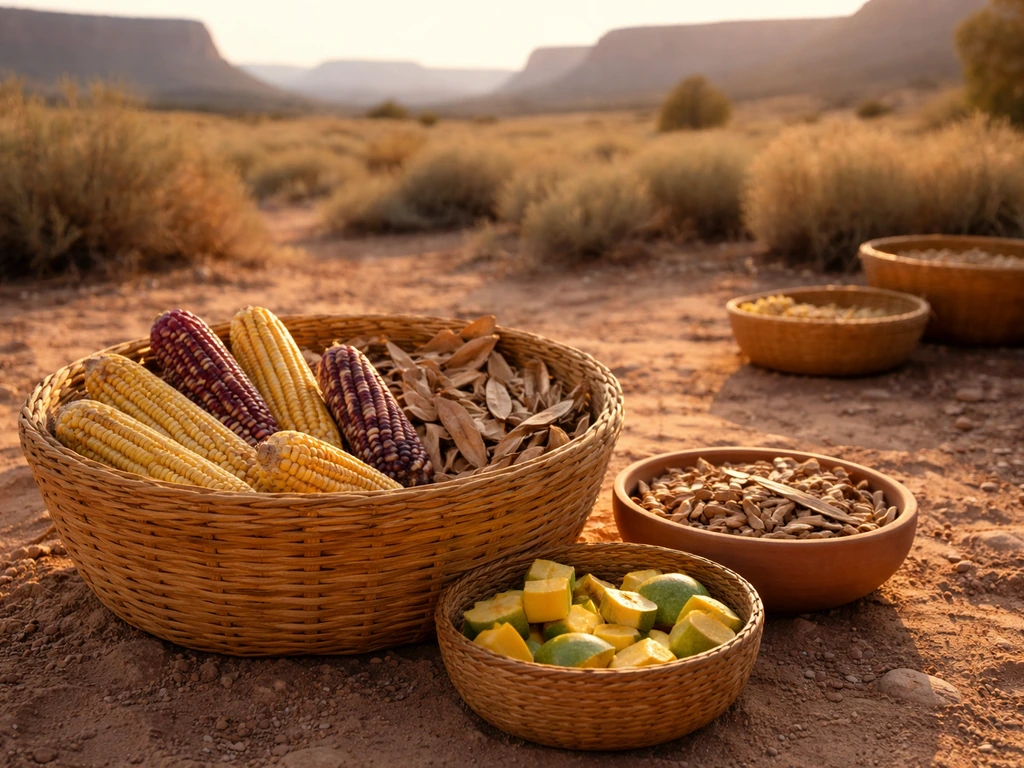
Crops and gathered plants by category
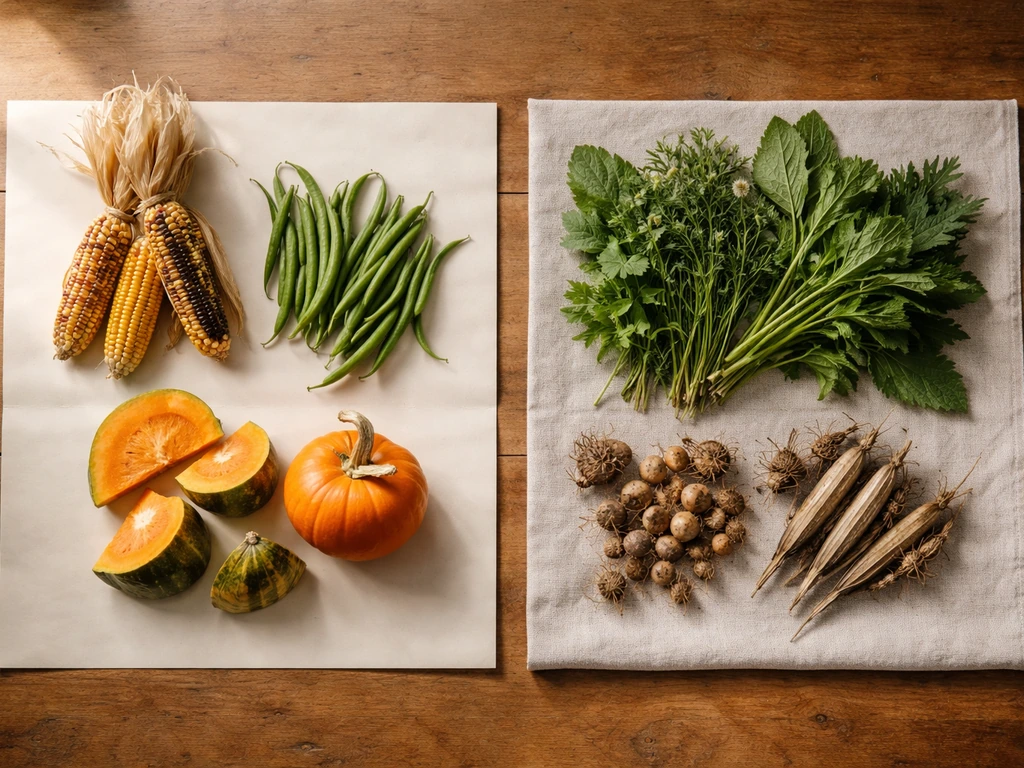
It helps to split the answer into two columns from the start, because Apache food systems combined deliberate cultivation with highly organized plant gathering. Both mattered, and grouping them together is not a mistake; it reflects how the Apache themselves managed their food supply across a landscape that ranged from high mountain forests to desert lowlands.
| Category | Plants | Notes |
|---|---|---|
| Cultivated staples | Corn (maize), beans, squash, pumpkins | Planted in plots along river/stream banks; primary farming crops across farming Apache groups |
| Cultivated additions (Jicarilla) | Melons, peas, wheat | Added after late-1600s contact; Jicarilla had more developed agriculture than other subgroups |
| Gathered carbohydrate staples | Agave (mescal), sotol, yucca | Hearts baked in pit ovens; dried and stored; especially critical for Mescalero and Lipan |
| Gathered nuts and seeds | Piñon nuts, acorns, dropseed grass seeds, other grass seeds | Upland and mountain zones; nutritionally dense, storable |
| Gathered fruits and pods | Mesquite beans, prickly pear, saguaro fruit, yucca fruit/buds | Desert lowland zones; mesquite beans also used to flavor winter dishes |
| Traded crops (Mescalero) | Maize, beans, squash | Obtained through exchange with Pueblo neighbors rather than grown independently |
Which Apache group grew what: subgroup and region breakdown
The Apache were not one group with one food system. Six major divisions are consistently recognized in ethnographic and Smithsonian-level reports: Western Apache, Chiricahua, Mescalero, Jicarilla, Kiowa-Apache (Plains Apache), and Lipan. Each lived in a different ecological zone, and their crop and gathering practices reflect that directly.
Western Apache (central and eastern Arizona)
Western Apache groups, including the White Mountain, San Carlos, Cibecue, and Tonto bands, are the most associated with deliberate agriculture among all Apache subgroups. National Park Service historical materials specifically note that corn, beans, and squash were the principal Aboriginal crops for the Western Apache. They cultivated garden plots that required reliable water access, and some accounts describe basic irrigation. Their territory in the mountains and river valleys of Arizona gave them both the water and the soil to make farming viable.
Jicarilla Apache (northern New Mexico and southern Colorado)
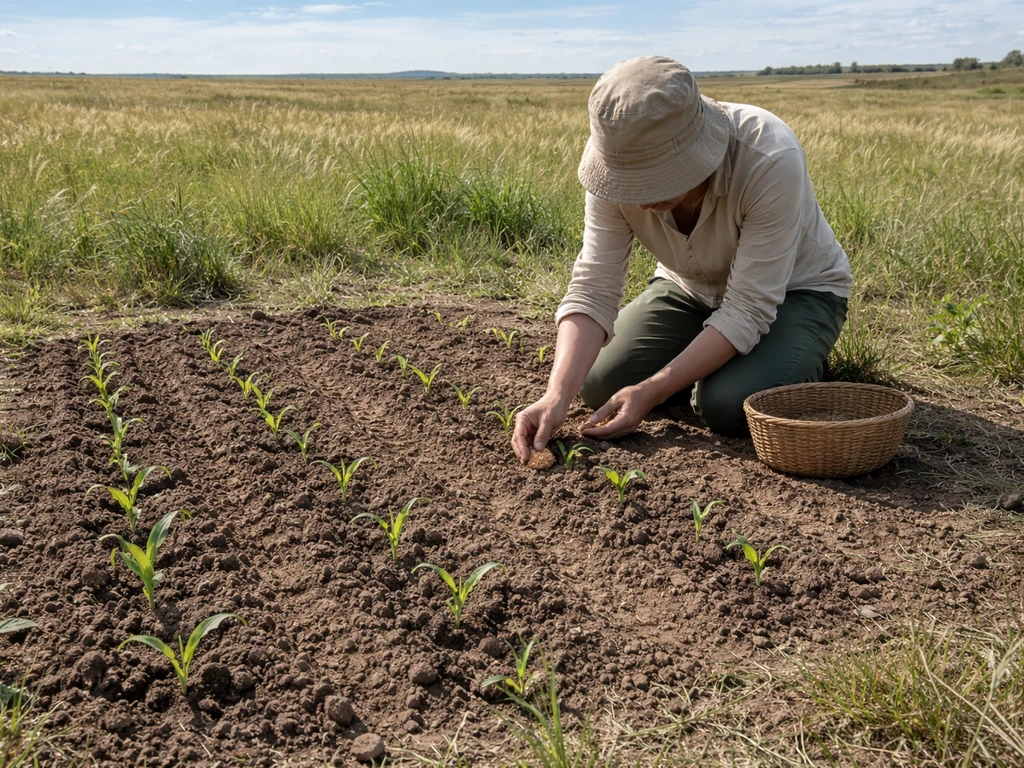
Jicarilla agriculture is well-documented and expanded noticeably after the late 1600s. Their cultivated crop list is the most diverse of any Apache group: maize, beans, squash, pumpkins, peas, melons, and wheat, all planted along river and stream banks. If you want the specific crops by subgroup, the next sections break down what different Apache groups grew and gathered by region what crops did the comanche grow. Some accounts describe irrigation use. Their proximity to Pueblo communities and Spanish settlements likely accelerated the adoption of new crops like wheat and melons. They also gathered piñon nuts, acorns, and yucca fruit as important dietary supplements.
Mescalero Apache (southeastern New Mexico and adjacent Texas/Mexico)
The Mescalero are named for the mescal agave, which tells you a lot about their food priorities. Their subsistence was anchored in agave and sotol harvesting rather than field agriculture. Some ethnographic sources suggest the Mescalero did not grow maize as a community staple and instead obtained corn, beans, and squash through trade with Pueblo peoples. The NPS's Guadalupe Mountains site specifically highlights agave, sotol, and bear grass as key Mescalero harvest plants. This makes them one of the clearest examples of an Apache group whose 'crops' were almost entirely managed wild plants rather than cultivated fields.
Chiricahua Apache (southeastern Arizona, southwestern New Mexico, northern Mexico)
The Chiricahua are well-documented in ethnobotanical literature, with a NAEB plant-use list of 198 species for the Chiricahua alone. Their diet blended gathered plants heavily: piñon nuts, acorns, mesquite beans, prickly pear, saguaro fruit, dropseed grass seeds, and yucca appear repeatedly in the record. Field cultivation was practiced but secondary to gathering in their more arid and mobile lifestyle. Their territory straddled the Sonoran and Chihuahuan deserts, which shaped the gathered plant side of their diet significantly.
Lipan Apache (Texas, eastern New Mexico, northeastern Mexico)
Lipan community accounts describe planting corn and squash along fertile river banks, camping long enough to let crops sprout and establish. This river-bank cultivation model is consistent with other mobile or semi-mobile Apache groups. Alongside farming, Lipan ancestors gathered and processed cactus, agave, yucca, mescal, tule, palm, and mesquite. Their range extended into Texas river valleys and desert plains, and their food system reflects that blend of plains, desert, and riparian ecology.
Kiowa-Apache / Plains Apache (southwestern Oklahoma and adjacent plains)
Plains Apache lived in a temperate steppe environment very different from the desert Southwest. A peer-reviewed Oklahoma Biological Survey field study from the early 1960s documented at least 105 species of vascular plants used by Plains Apache in southwestern Oklahoma for food, material, and ritual purposes. Their food system was far more oriented toward gathering and hunting across the Great Plains than toward field agriculture. This group illustrates just how much Apache subsistence varied by regional ecology.
The core cultivated crops in detail
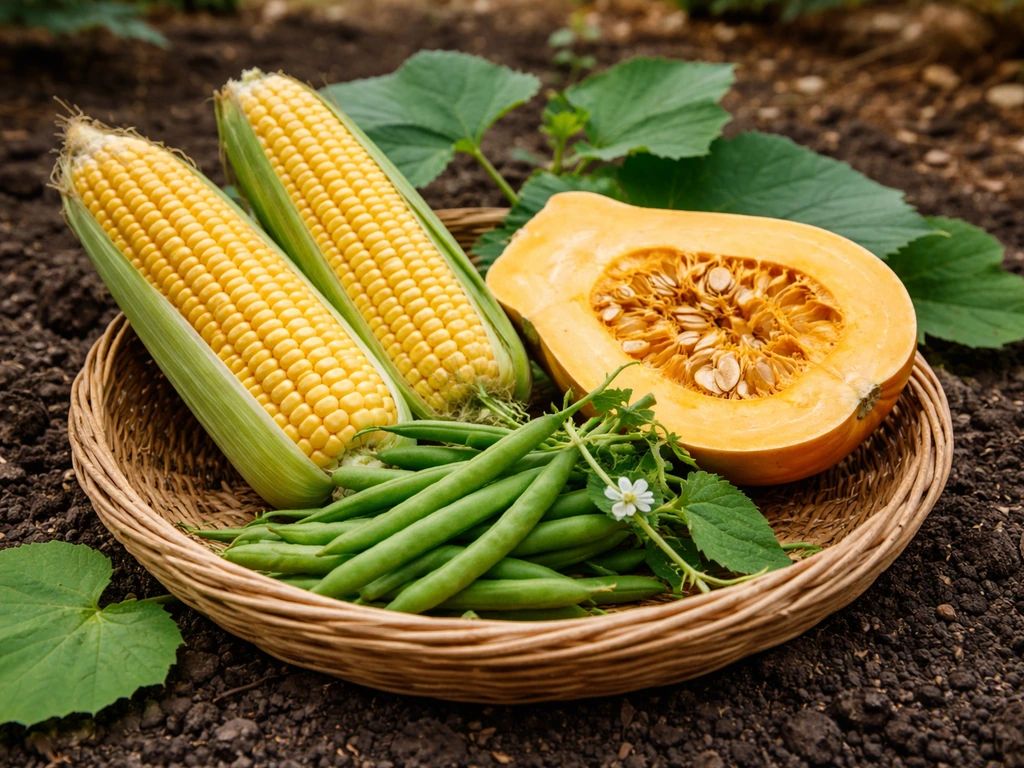
For farming Apache groups, corn, beans, and squash formed the classic Three Sisters combination found across much of Native North America. Corn provided the caloric backbone. Beans fixed nitrogen and added protein. Squash and pumpkins provided vitamins, spread ground cover to suppress weeds and retain moisture, and stored well into winter. These three worked together agronomically, and their cultivation was tied to river-bank plots where silt-rich soil and proximity to water reduced the irrigation burden.
The Jicarilla added melons, peas, and eventually wheat to this foundation, reflecting both their northern New Mexico ecology and their longer contact with Pueblo and Spanish agricultural traditions. Wheat in particular requires different seasonal timing than maize, and its appearance in Jicarilla records suggests real agricultural adaptation rather than just occasional trade.
Gathered plants that belong in any honest 'Apache crops' answer
When someone searches for what the Apache grew, they are often trying to understand the full food picture, not just what was planted in rows. Gathered plants were also a key part of what Native Americans grew, alongside cultivated crops. The gathered plants below were managed, harvested on known seasonal cycles, and sometimes processed with significant labor investment. Calling them simply 'wild' undersells how central they were.
- Agave (mescal): Hearts roasted in pit ovens for days; the resulting food was pounded into patties and dried for storage. This was a major carbohydrate source for desert-zone Apache groups.
- Sotol: Harvested similarly to agave; pulpy central stems baked and pounded into chewy, storable patties. Archaeological sites across the Lower Pecos region document sotol harvesting going back thousands of years.
- Piñon nuts: High-fat, high-calorie nuts from mountain pine forests; harvested in fall and stored for winter. Critical for upland groups including Jicarilla.
- Mesquite beans: The NPS specifically notes mesquite beans as an 'important food staple,' used to flavor winter squash, barrel cactus, and dumplings. Desert lowland Apache groups relied on mesquite heavily.
- Prickly pear: Both the fruit (tuna) and the pads were eaten; juice was also consumed. Chiricahua records mention it specifically.
- Saguaro fruit: Used by Chiricahua and other desert-zone groups; harvested with long poles from tall cacti.
- Acorns: Gathered in mountain oak zones; processed to remove tannins before eating.
- Yucca: Fruit, buds, and seeds eaten; fibers also used for weaving and material culture.
- Dropseed grass and other grass seeds: Ground into flour or mush; documented in Chiricahua ethnobotanical records.
Why different Apache groups grew (and gathered) different things
The short version: ecology drove everything. Apache territory stretched from the high mountain forests of northern New Mexico down through the Sonoran and Chihuahuan deserts into northern Mexico and east across the Texas plains. Those are dramatically different growing environments, and Apache food systems adapted to match.
Water access was the single biggest variable for farming. River-bank cultivation was the default strategy because it provided fertile silt soil and proximity to water without requiring complex infrastructure. Western Apache and Jicarilla both had access to mountain-fed river systems, which is why both groups developed real farming traditions. Mescalero territory in the Guadalupe Mountains and Chihuahuan Desert offered fewer reliable agricultural water sources, pushing subsistence toward agave and sotol harvesting instead.
Elevation and temperature mattered for gathered plants. Piñon nuts were an upland resource requiring mountain forest zones. Saguaro and prickly pear were lowland desert resources. Mesquite was a desert and grassland plant. Groups whose territory covered multiple elevation bands could tap multiple gathered food sources across different seasons, which is exactly what made Apache food systems so resilient.
Trade also filled gaps. Mescalero Apache apparently obtained much of their corn, beans, and squash through Pueblo trade rather than growing it themselves. This is not a failure of agriculture; it is a rational decision in a landscape where agave and sotol were more reliable carbohydrate sources than rainfed field corn. Other neighboring groups such as the Pueblo, Navajo, and Comanche had different agricultural profiles shaped by their own ecologies, and trade between these groups was a normal part of regional food systems. The Navajo also farmed and raised crops, but what they planted depended heavily on local water, elevation, and community trade networks.
How we actually know this, and where the evidence gets thin
The evidence base is real but uneven. Here is a quick map of what exists and what its limits are.
Ethnobotanical databases are the most systematic resource. The Native American Ethnobotany Database (NAEB/BRIT) is searchable by tribe and includes Apache-specific records. The Chiricahua alone have 198 documented plant uses in that database, and Mescalero records are also included. The foundational synthesis is 'The Ethnobiology of the Chiricahua and Mescalero Apache,' which frames plant uses by subgroup, geography, and ecological setting. This is the kind of primary-source material that holds up.
Historical accounts, including Spanish colonial records and early American ethnographic reports, document Jicarilla farming practices and Western Apache cultivation in reasonable detail. NPS historical materials reference Western Apache corn-beans-squash cultivation directly. These accounts are useful but reflect observer perspectives that may have underreported gathering practices relative to farming because farming looked more familiar to European observers.
Archaeology and archaeobotany can confirm regional agricultural patterns (maize, squash, and beans appear in pre-contact Southwest archaeological sites, and agave domestication in Arizona has been dated and periodized in peer-reviewed research), but archaeological evidence is not always Apache-specific. Linking a particular site's macrobotanical remains to a specific Apache subgroup requires careful dating and cultural attribution that is not always possible. So when you see claims like 'the Apache grew agave,' the underlying support is often a combination of ethnobotanical records plus regional archaeological context, not a directly Apache-attributed excavation.
The honest caveat: some specific claims about what individual subgroups did or did not grow (like the claim that Mescalero didn't grow maize independently) appear in secondary ethnographic summaries that are worth cross-checking against primary ethnobotanical sources like the NAEB before citing in academic work.
Using this for research, teaching, or modern gardening

If you are a student or researcher, the best starting point is the BRIT Native American Ethnobotany Database. Search by Apache subgroup name to get species-level plant use records. Cross-reference with 'The Ethnobiology of the Chiricahua and Mescalero Apache' for Southern Apache groups, and with Jicarilla-specific ethnographic records for northern New Mexico groups. The Smithsonian and NPS historical documents give you the macro-level subgroup framework to anchor specific plant records geographically.
If you are trying to map Apache crops to modern growing conditions, the connection is surprisingly direct. Western Apache territory in central Arizona (Fort Apache, San Carlos, White Mountain) corresponds to USDA hardiness zones 5 to 8 depending on elevation, with warm-season growing windows suited to traditional corn, beans, and squash. Jicarilla territory in northern New Mexico is a shorter-season high desert environment, zones 5 to 6, where drought-tolerant crops and dry beans perform well. Mescalero territory in southeastern New Mexico is drier still, Chihuahuan Desert, zones 6 to 7, where agave and drought-adapted species are more practical than field corn without irrigation.
The Native American Seed Repository (NASR) through Native Seeds/SEARCH has Apache community seed accessions from Fort Apache, San Carlos, and White Mountain in Arizona and from the Mescalero Apache in New Mexico. These are actual seed varieties with documented cultural and geographic provenance, and they represent the clearest bridge between historical Apache cultivation records and what you can grow in those climates today. If you are a gardener interested in historically appropriate Southwest varieties, that collection is the most direct path.
For context on how Apache agriculture fits into the broader picture of Native American crop traditions, it helps to compare the Apache with neighboring groups. Pueblo peoples had the most intensive and geographically fixed agricultural systems in the Southwest, while Navajo and Comanche agricultural traditions each reflect their own distinct territorial and ecological contexts. Apache agriculture sits between those extremes: real cultivation where water and land supported it, layered with a sophisticated gathering tradition that carried groups through droughts, lean years, and mobile periods.
FAQ
Did all Apache groups grow corn, beans, and squash?
No. The “Three Sisters” pattern is most strongly associated with groups like the Western Apache and Jicarilla, where river-valley farming was feasible. For groups with less reliable farm water, field cultivation could be secondary or replaced by managed harvests like agave and sotol (notably Mescalero).
Which Apache subgroup is most linked to farming rather than gathering?
Western Apache and Jicarilla are the most consistently described as practicing more deliberate agriculture because their territories had mountain-fed water and fertile river or stream edges. Even then, gathering remained important, especially for year-round calories and fats.
If I’m researching “what crops did the Apache grow,” should I include gathered plants?
Usually yes, because many Apache food records treat managed wild foods as central parts of the diet, not side items. A common mistake is listing only field crops and missing calorie-dense resources like piñon, acorns, mesquite beans, yucca, and cactus fruits.
What’s the practical difference between “Apache crops” and “Apache food plants”?
“Crops” implies cultivation in plots or fields, typically corn, beans, and squash plus region-specific additions. “Food plants” also includes regularly harvested and processed resources, such as agave and sotol for carbohydrate, and seasonally available nuts, seeds, and fruits.
Did Mescalero Apache definitely not grow maize at all?
Claims vary by secondary summaries, and the article notes that some “did not grow” statements need cross-checking. If you need an academically careful answer, verify maize and other staples in ethnobotanical databases for the specific subgroup and time period.
Why did some Apache obtain staples through trade instead of farming?
The biggest driver was water reliability. Where dependable river-bank farming was limited, trade offered a lower-risk route to stable carbohydrates and proteins, especially when local managed plants already provided dependable calories.
How did river-bank farming work without major irrigation systems?
The strategy relied on natural silt-rich soil near streams, and camping long enough for planting to establish (described for river-bank cultivation by mobile or semi-mobile groups). This reduces the need for complex irrigation, but it still requires consistent access to water at planting and early growth.
Were Apache farming calendars the same everywhere they lived?
No. Elevation, temperature, and length of the growing season changed timing and crop success. A clear example in the article is wheat in Jicarilla contexts, which requires different seasonal alignment than maize and suggests adaptation to northern high desert conditions.
What crops should modern growers focus on if they want historically appropriate Apache varieties?
Match climate and hardiness first, then choose varieties tied to specific communities. The article highlights that NASR accessions from Fort Apache, San Carlos, White Mountain, and Mescalero provide a direct pathway to regionally appropriate seed lines rather than generic “Southwest” seed.
If archaeology shows maize or agave in the Southwest, does that automatically mean it was grown by Apache groups?
Not automatically. The article explains that archaeology can confirm broad regional patterns but may not allow confident assignment to a specific Apache subgroup. Cultural attribution requires careful dating and linkage, which is often uncertain.
What’s a common mistake when people ask “what crops did the Apache tribe grow”?
Treating Apache as one unified tribe with one farming system. Apache divisions lived in different ecological zones, so the best answer is subgroup- and region-specific (and should be paired with the gathering side of the diet).
Next Articles
What Did the Navajo Grow? Crops by Region and Climate
Explore what the Navajo grew by region, including corn, beans, squash, and how climate and water shaped crop choices.
What Crops Did the Comanche Grow? Maize, Beans, Squash
Comanche maize, beans, squash plus other likely crops and wild foods, with methods to verify band and location.
What Crops Did the Pueblo Grow A Regional Guide
Region-by-region list of Pueblo crops, including corn beans squash, plus fruits and grains, with why they grew in arid S