The Comanche were not farmers. Before the reservation era, they did not cultivate fields of corn, beans, or squash. Instead, they were highly mobile buffalo hunters on the Southern Plains, and they relied on trade with neighboring agricultural peoples to get the cultivated crops they needed. What you'll find in historical and ethnographic records is a subsistence system built around hunting, gathering wild plants, and trading for crops rather than growing them. That distinction matters a lot if you're researching this topic seriously.
What Crops Did the Comanche Grow? Maize, Beans, Squash

Samuel Rourke
26 Jun 2026
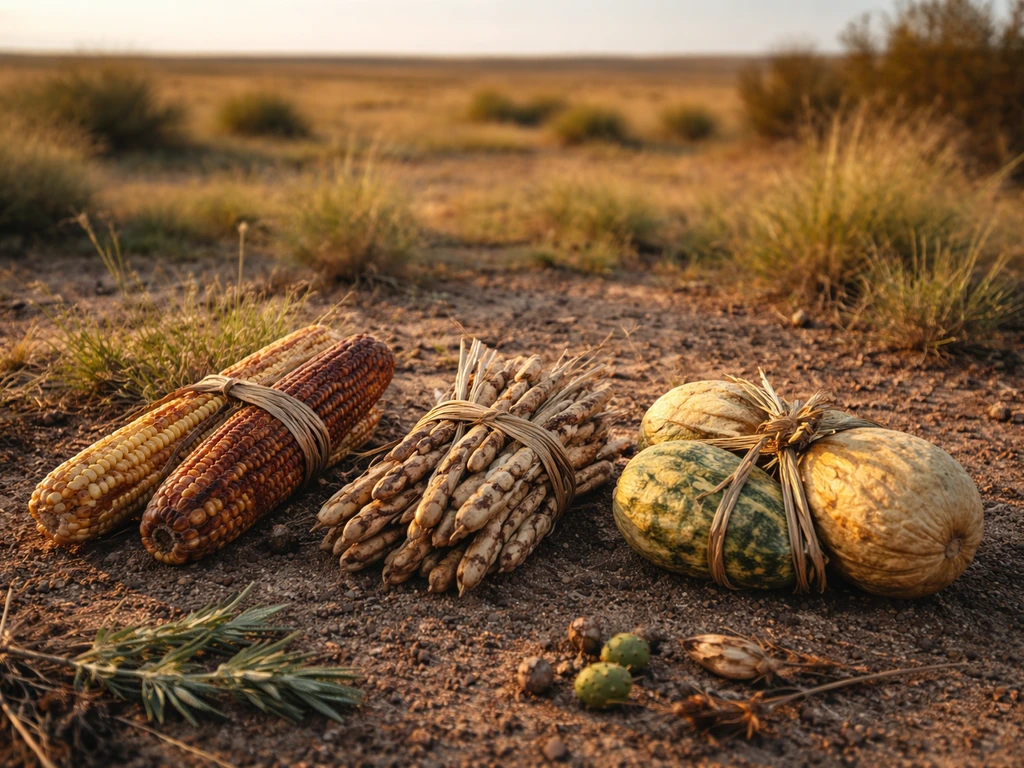
Staple crops associated with Comanche life
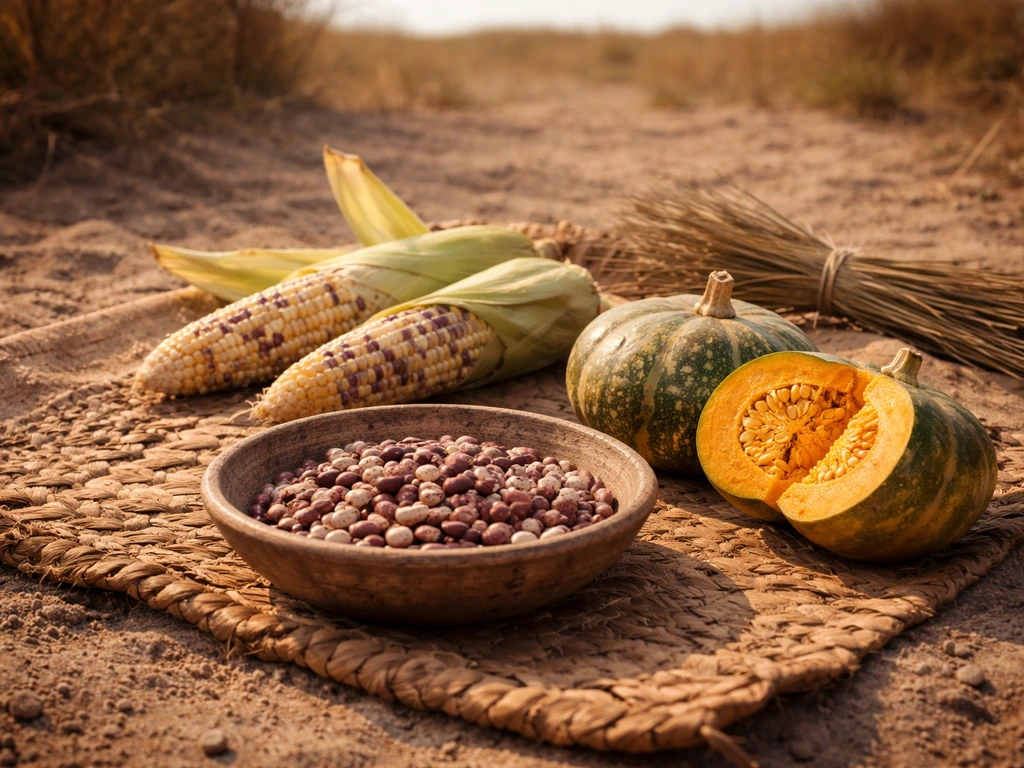
Corn (maize), beans, and squash all appear in accounts of Comanche diet, but in nearly every well-sourced case, these crops came from trade rather than cultivation. The Comanche obtained corn from Spanish-governed New Mexico and Texas settlements and from neighboring Native horticulturalists, particularly Pueblo peoples and river-farming groups along the Arkansas and Red Rivers. The same goes for tobacco, which shows up consistently in Comanche trade networks but not in their own planted fields.
Encyclopedia-level references on Comanche culture are clear on this point: before the reservation period, Comanches 'did no cultivating and depended on trade for corn, beans, and squash.' That's not a fringe interpretation. It reflects the broad consensus across ethnographic and historical sources. Household vegetable gardening did eventually appear, but not until the 1890s, well into the reservation era, when Comanche lifeways were being forcibly transformed.
Corn, beans, squash, and the Three Sisters question
The Three Sisters (corn, beans, and squash) are so deeply associated with Native American agriculture that it's easy to assume every tribe grew them. Many did, including the Cherokee, Pueblo peoples, and many Eastern Woodlands groups. But the Comanche are a genuine exception. Their identity as a people is inseparable from the horse culture that emerged after they acquired horses in the early 1700s. Horses transformed them into highly mobile bison hunters, and that mobility was fundamentally incompatible with tending planted fields.
That said, corn was absolutely part of the Comanche diet. Archeological and isotopic evidence shows maize consumption among Southern Plains peoples, and Comanche trade records confirm regular corn acquisition. The interpretive challenge scholars wrestle with is distinguishing whether maize pollen or residue found at a site reflects crops grown there versus crops brought in through trade. Peer-reviewed work on maize domestication archaeology explicitly warns that maize pollen is hard to interpret without strong identification methods, because it can't always tell you whether the plant was cultivated locally or carried in.
Wild plants, foraging, and the real backbone of Comanche plant food
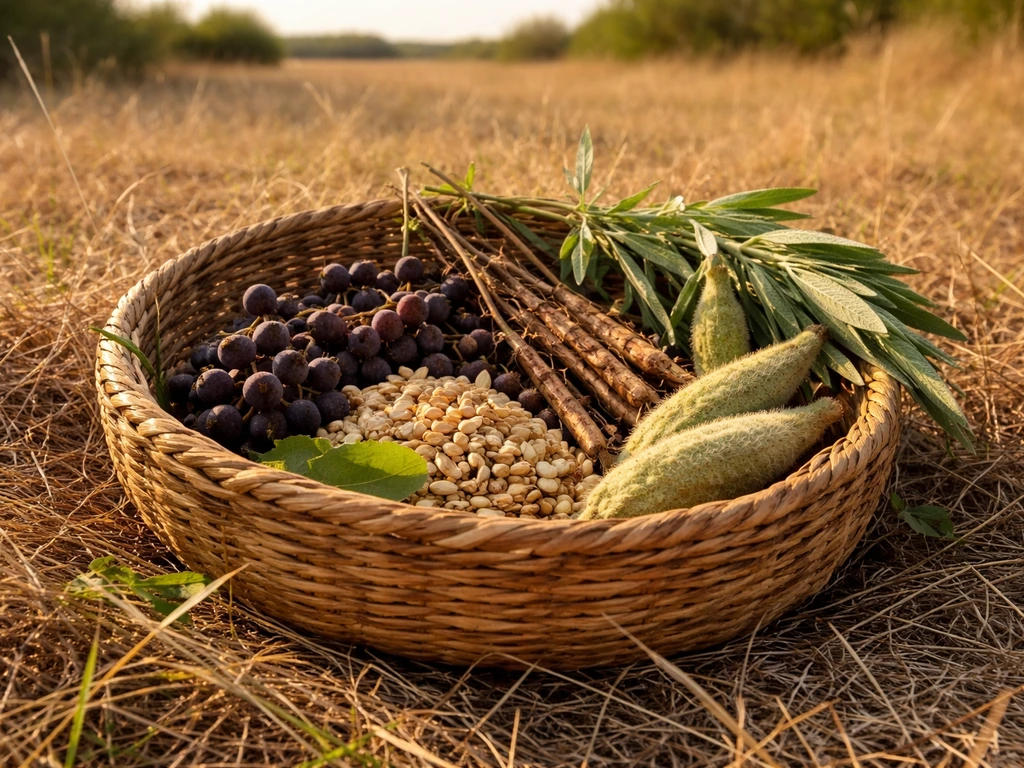
Here's where the picture gets richer. While the Comanche didn't cultivate crops, they were sophisticated users of wild plant resources. Ethnobotanical studies, including Carlson's foundational work based on plant material collected in 1933, document a wide range of plant uses for both food and medicine. The research includes a detailed table of plant species and their applications, covering everything from roots and tubers to fruits.
Gathered fruits were especially important. Historical accounts consistently mention wild grapes, currants, plums, mulberries, and persimmons as Comanche food sources. These weren't cultivated, but they were known, sought out seasonally, and often abundant across the Southern Plains and Cross Timbers regions. Roots and tubers rounded out the carbohydrate side of the diet alongside traded corn.
- Wild grapes (several species native to Texas and Oklahoma)
- Wild plums (Prunus angustifolia and related species)
- Mulberries (common along river corridors)
- Persimmons (especially American persimmon, Diospyros virginiana)
- Currants and gooseberries
- Various edible roots and tubers, including wild onions and prairie turnip (Psoralea esculenta)
- Mesquite pods (important in southern and western Comanche territory)
- Prickly pear cactus fruit (tunas), especially in the Llano Estacado region
Mesquite and prickly pear are worth emphasizing because they reflect the climate reality of the Southern Plains and Chihuahuan Desert fringe where Comanche bands ranged. These plants thrive in dry, hot conditions and produce dense, calorie-rich food without any cultivation required. Prickly pear pads were also eaten and provided moisture in arid conditions.
How crops and hunting fit together in Comanche subsistence
Bison was the foundation of the Comanche economy, full stop. Estimates suggest that bison provided the majority of Comanche calories, protein, and fat, and the entire seasonal movement pattern of Comanche bands was organized around following bison herds. Crops and plant foods were supplements, not staples, in the cultivated sense.
The practical overlap between farming and hunting came through trade. The Comanche were powerful enough militarily and commercially to trade bison hides, horses, and captives for corn, dried vegetables, and manufactured goods at trading fairs and through bilateral agreements. The Wichita and Caddo confederacies, the Pueblo towns of New Mexico, and Spanish colonial settlements all served as crop suppliers. If you're wondering what crops the Pueblo grew, colonial accounts and Pueblo agriculture records can give a clearer picture of which foods were available for trade what crops did the Pueblo grow. This trade network was extensive and well-documented in colonial records going back to the 18th century.
One nuance worth understanding: some smaller or more marginal Comanche groups, particularly those in transition zones near the eastern edge of the Plains, may have maintained limited kitchen gardens or acquired planting knowledge from neighboring agricultural peoples. But this was not characteristic of the main Comanche bands, and it's important not to project Eastern Woodlands farming patterns onto a people whose ecology and culture were fundamentally different.
How crops varied across Comanche groups and seasons
The Comanche were never a single unified group. They organized into bands, each associated with different territories across the Southern Plains: the Yamparika in the north near the Arkansas River, the Kotsoteka in central territory around the Canadian River, the Penateka in the south near the Edwards Plateau and into central Texas, the Quahadi on the Llano Estacado, and others. Band territory directly shaped which wild plants were available and which trading partners were accessible.
| Band / Region | Territory Characteristics | Key Plant Food Sources | Primary Trade Crop Access |
|---|---|---|---|
| Yamparika (northern) | Arkansas River corridor, shortgrass plains | Prairie turnip, wild berries, currants | Wichita and Caddo corn via trade fairs |
| Kotsoteka (central) | Canadian River plains | Mixed grasses, plums, wild grapes | New Mexico Pueblo corn via Comanchero trade |
| Penateka (southern) | Edwards Plateau, Cross Timbers, central Texas | Pecans, persimmons, wild grapes, oak mast | Spanish Texas settlements, later Anglo traders |
| Quahadi (Llano Estacado) | High Plains, arid steppe | Prickly pear, mesquite, yucca | New Mexico via Comanchero traders |
Seasonality drove everything. Spring and early summer brought edible greens, roots, and early berries. Late summer and fall were harvest seasons for wild fruits and nuts, especially pecans in central Texas (the Penateka range). Winter meant dependence on dried and stored foods, trade goods, and bison fat reserves. Corn acquired through trade could be dried and carried, making it a practical food for mobile people in a way that fresh garden produce could not be.
What the evidence actually looks like
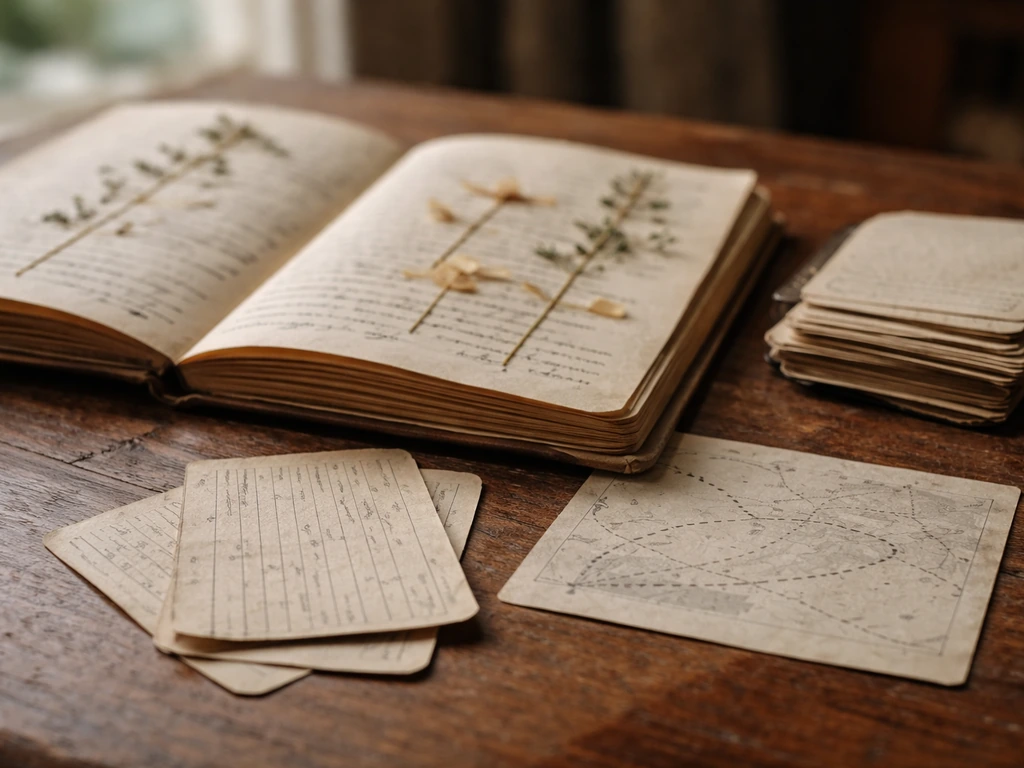
If you're trying to verify specific crop claims for the Comanche, it helps to know what kinds of sources exist and what each one can and can't tell you.
- Ethnographies and ethnobotanical studies: Carlson's 1930s-era plant-uses research is the most detailed early ethnobotanical record. It documents plants used for food and medicine with comparative notes. Access it through eHRAF World Cultures, which indexes it with cross-cultural search tools.
- Colonial and mission records: Spanish colonial documents from New Mexico and Texas from the 1700s onward include records of Comanche trade interactions, sometimes listing specific goods exchanged including corn and tobacco. These are held in archives in Santa Fe, Mexico City (AGN), and Austin (Texas State Library and Archives).
- Settler and military accounts: 19th-century accounts by U.S. Army officers, Indian agents, and settlers document Comanche diet and lifeways, though they need to be read critically for bias and misidentification of plant species.
- Archeological evidence: Excavations at Comanche campsites and associated trading sites have produced plant remains. However, as archaeobotanists note, presence of maize pollen or macrobotanical remains doesn't automatically mean local cultivation. Look for published site reports from Texas, Oklahoma, and New Mexico sites in peer-reviewed journals.
- Isotopic analysis: Carbon isotope studies of human remains can show the proportion of C4 plants (which includes maize and certain grasses) in the diet. This doesn't distinguish cultivated from traded maize, but it confirms consumption levels.
- Comanche oral history and tribal records: The Comanche Nation of Oklahoma has cultural preservation resources and may have documentation relevant to traditional plant use that isn't in academic archives.
One important caution: be skeptical of any source that lists Comanche crops without distinguishing between cultivated, gathered, and traded foods. This conflation is common in generalist summaries and can mislead both students and historians. The peer-reviewed literature on this is quite consistent: the Comanche were not farmers before the reservation era, and treating trade acquisition as equivalent to cultivation is a significant error.
How to research Comanche crops by location and time period
If you need to map Comanche plant use for a specific band, location, or time period, here's a practical workflow that works whether you're a student, reenactor, or serious historian. For a quick answer to what crops the Apache grew, you can start by looking at the tribe's local farming and gathering practices by region and era what crops the Apache tribe grow.
- Start with eHRAF World Cultures: Search for 'Comanche' combined with terms like 'plant foods,' 'agriculture,' 'diet,' or 'trade.' The platform lets you filter by subject code, so you can isolate food vs. trade vs. ceremony entries quickly.
- Identify the specific band and territory: Map the band's known range onto river systems and ecological zones. The Penateka on the Edwards Plateau had access to completely different wild plants than the Quahadi on the Llano Estacado. Band territory matters as much as tribal identity.
- Search state archives by river corridor: Use Texas State Library and Archives (Austin), Oklahoma Historical Society, and New Mexico State Records Center. Search by time period (pre-1840, 1840-1875, post-1875 reservation era) because subsistence patterns changed dramatically across these phases.
- Cross-reference with neighboring agricultural peoples: For any crop that appears in a Comanche context, check whether the Wichita, Caddo, or Pueblo peoples in the same region cultivated that crop. If they did and there's a documented trade relationship, that's likely where the Comanche obtained it.
- Use the JSTOR Global Plants database and USDA PLANTS database: For wild plant identification, cross-referencing common names with scientific names prevents the confusion that comes from regional variation in plant names.
- Consult the Comanche Nation directly: The Comanche Nation Cultural Preservation Office in Lawton, Oklahoma, can direct researchers to tribal resources or point out where academic literature diverges from community knowledge.
For context, the Comanche pattern contrasts sharply with neighboring groups whose crop agriculture is much better documented. The Cherokee in the East grew corn, beans, squash, and sunflowers in established fields. The Pueblo peoples of the Southwest were intensive farmers of corn, beans, squash, and cotton. The Apache groups had varying relationships with agriculture depending on the specific band. Understanding where the Comanche fit in that regional agricultural picture helps clarify why the sources look the way they do.
The bottom line for any researcher: when a source says the Comanche 'grew' or 'cultivated' a crop, ask for the evidence. In most cases, what you'll find is that they acquired it through trade, encountered it through contact with farming peoples, or foraged for wild relatives of cultivated plants. That's a historically interesting and important story on its own, but it's a different story than one about indigenous field agriculture.
FAQ
Did the Comanche ever grow any crops at all, or was it completely zero cultivation before the reservation era?
In the main bands before the reservation period, evidence points to little to no field cultivation. That does not mean no one ever planted anything somewhere, but if crop-growing shows up in a source, you should check whether it is described as trade acquisition, kitchen gardening, or a later reservation-era change rather than typical pre-contact Comanche practice.
When researchers find maize at a Comanche site, how can you tell if it was traded in or grown locally?
Look for the type of evidence cited. Maize pollen alone is often ambiguous, while stronger identification methods (like diagnostic kernels/residues in well-dated contexts, clear processing features, or botanical remains linked to cultivation) are needed to argue for local planting. Trade is usually the default explanation when the archaeological signal is weak.
Do the Comanche eat the same “Three Sisters” crops in the same way as farming tribes?
They could consume corn, beans, and squash, but consumption does not equal farming. For the Comanche, these foods generally functioned as supplements obtained through trade or contact, while the core calories and the seasonal movement pattern centered on bison and wild plant resources rather than tending fields.
Were corn, beans, and squash their only traded crops?
No. Accounts also mention other traded plant foods and goods, and at minimum you should expect a broader menu shaped by trading partners. When a text lists only three crops, it may be simplifying for readability, so check whether it specifies a particular period, region, or trade fair context.
What role did location and band territory play in what crops the Comanche could access?
Band territory affected both access to trading partners and seasonal plant availability. For example, different bands ranged across areas with different wild food landscapes and different proximity to Pueblo towns, Spanish settlements, or other horticultural groups, which would shift what foods were commonly acquired through exchange.
If the Comanche were not farmers, how did they get enough calories without stored crops?
They relied on bison as the major calorie base and used dried or stored foods where possible, including dried traded corn. They also managed seasonal foraging and storage of wild plant foods, so the diet could remain viable without a large-scale agricultural staple.
Why do some quick summaries say “Comanche grew corn, beans, and squash”?
Many summaries use broad language where “grew” effectively means “had in their diet.” Your best fix is to confirm whether the source explicitly distinguishes cultivation from trade and gathering, and whether it ties the claim to the correct time period (pre-reservation versus reservation era).
Did the Comanche household gardening that appears in the 1890s mean they suddenly became traditional “Three Sisters” farmers?
Not necessarily. Reservation-era gardening can increase local planting, but it does not automatically imply the full adoption of a farming system comparable to established agricultural societies. To evaluate claims, ask whether the source describes small gardens, consistent field cultivation, or a specific crop regimen.
If I’m writing a paper, what is the safest wording for Comanche crop-related statements?
Use wording that separates diet from agriculture, such as “Comanche acquired and consumed corn, beans, and squash, largely through trade and contact,” rather than “grew.” If you must discuss cultivation, specify the evidence type and the time period you are using.
Could wild relatives of cultivated crops explain “crop-like” plant use in Comanche lifeways?
Yes. Comanche plant knowledge included many wild relatives and look-alikes that could be gathered and used for food or medicine. When a source treats wild plant use as “growing crops,” it can blur the line between foraging and agriculture, so check the plant species listed and whether they are cultivated or gathered.
Next Articles
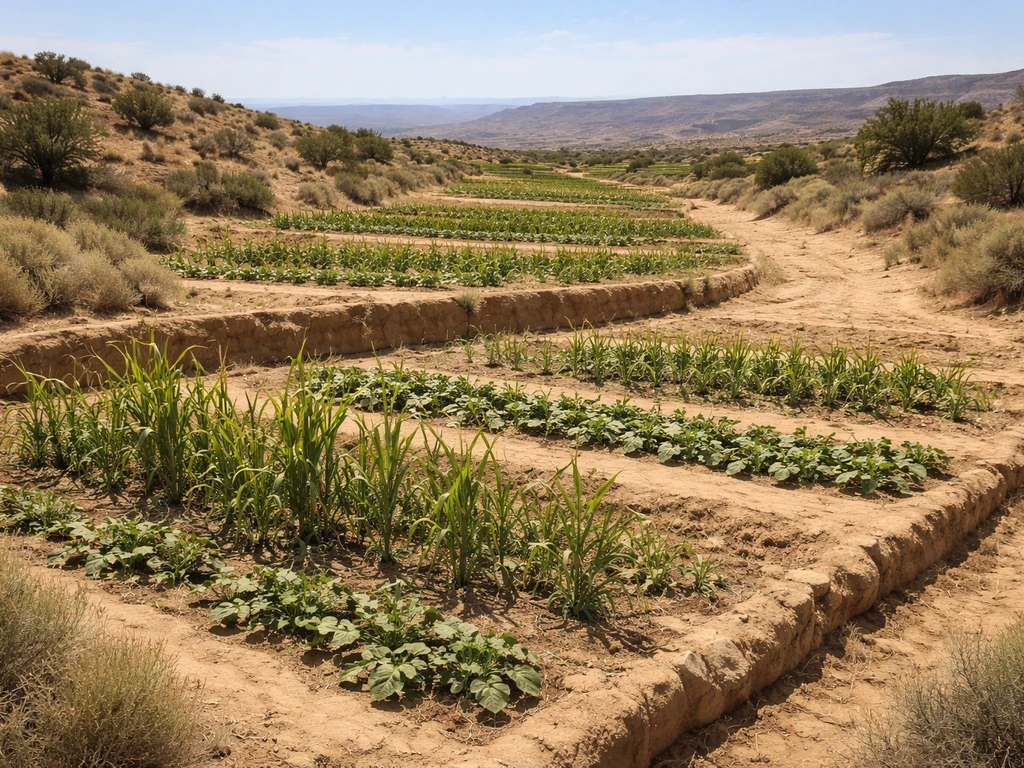
What Crops Did the Pueblo Grow A Regional Guide
Region-by-region list of Pueblo crops, including corn beans squash, plus fruits and grains, with why they grew in arid S
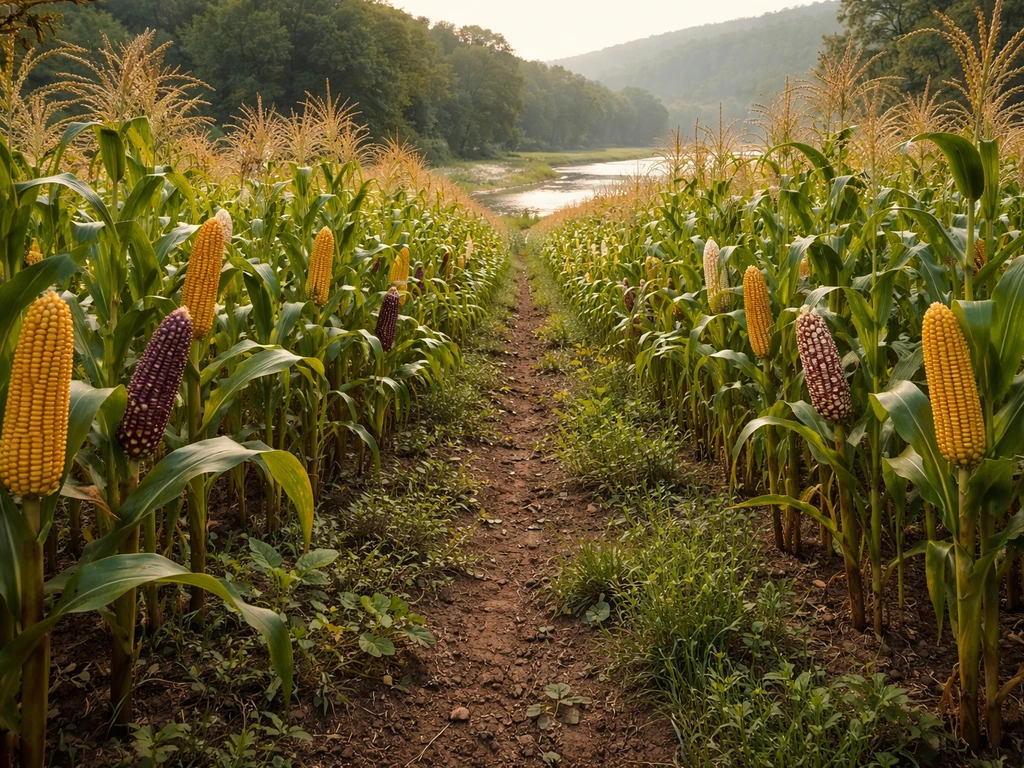
What Crops Did the Cherokee Grow By Region and Season
Cherokee staple and garden crops by region and season, plus how to verify sources and grow faithful today.
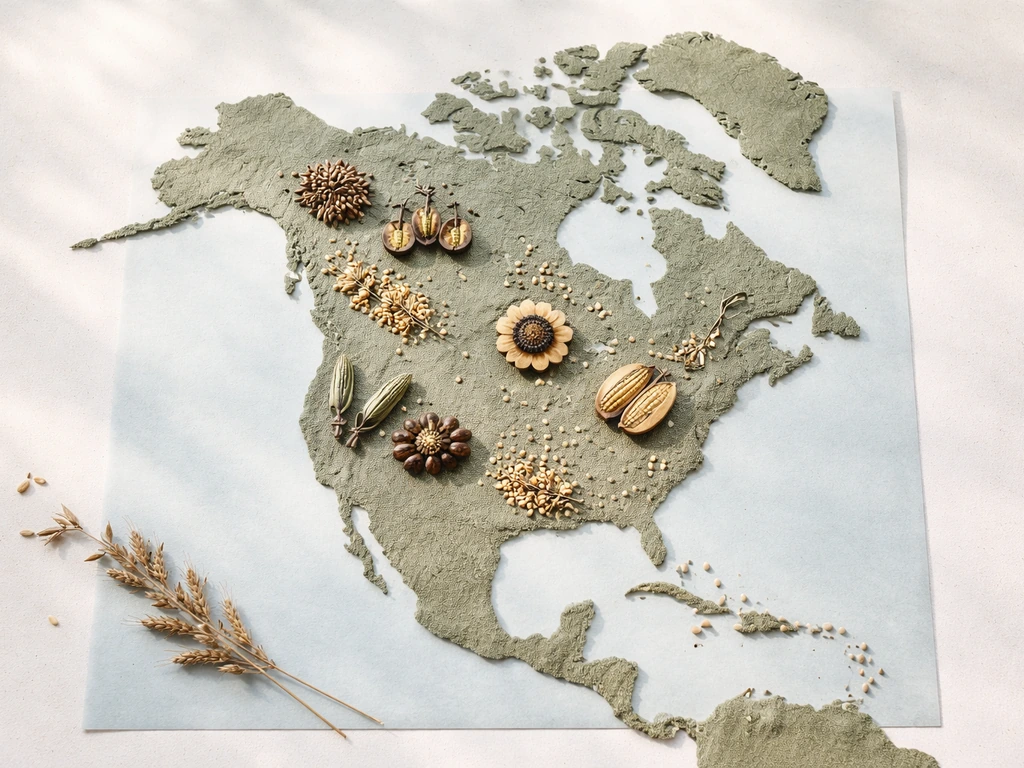
What Crops Did Native Americans Grow by Region
Region-by-region guide to Native American crops, including Three Sisters and staples, uses, and how climate shaped farmi