The Navajo (Diné) primarily grew corn, beans, squash, and peaches, with watermelons added after Spanish contact. These crops formed the backbone of Diné agriculture for hundreds of years across what is now the Four Corners region of the American Southwest. To learn the exact varieties and crop mixes tied to different Diné regions, see which specific crops were cultivated in the same areas and time periods. The specific mix of what got planted in any given area depended heavily on elevation, water access, and the length of the frost-free growing season, which varied considerably across Navajo lands.
What Did the Navajo Grow? Crops by Region and Climate

Samuel Rourke
27 Jun 2026
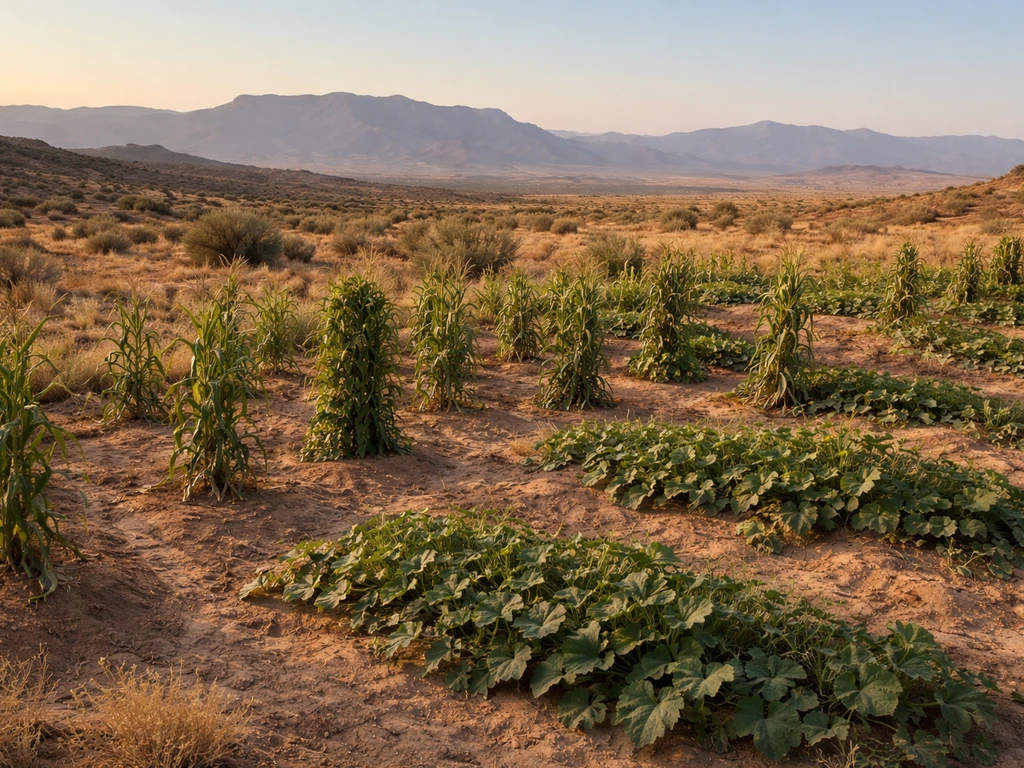
The core crops the Navajo (Diné) grew
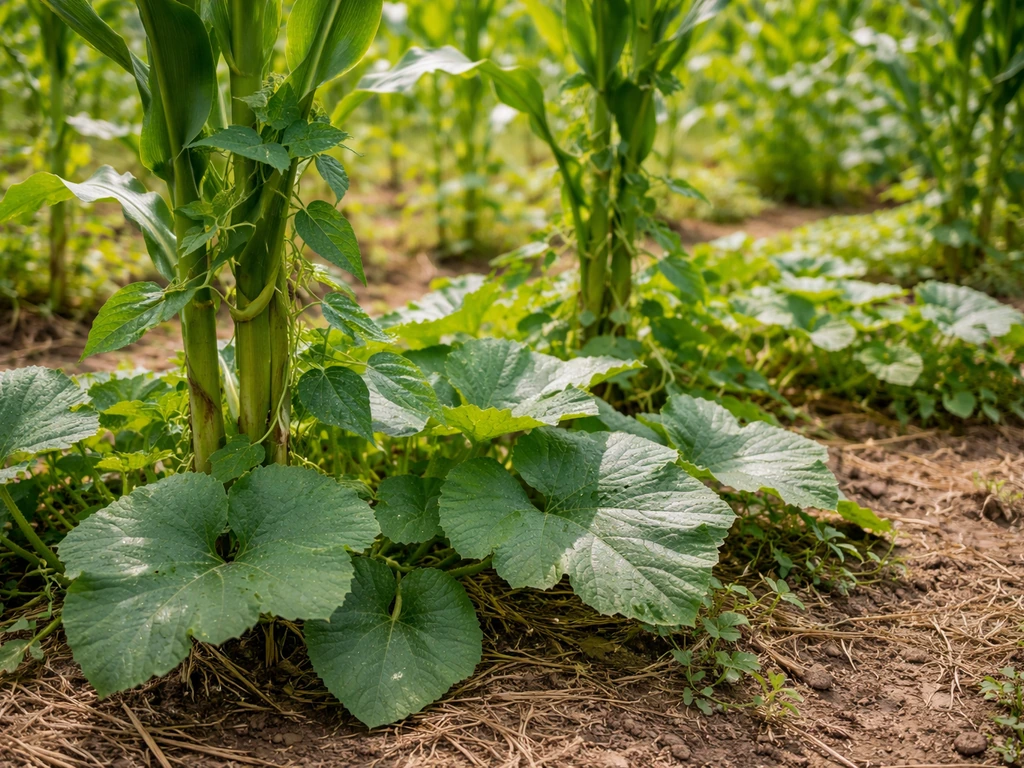
Corn (maize) was the centerpiece of Diné farming. It was not just a food staple but also carried deep cultural and ceremonial significance. Alongside corn, beans and squash completed what many Southwestern peoples cultivated together, often in the same field. This combination, known widely as the Three Sisters, made practical ecological sense: beans fix nitrogen in the soil, squash shades out weeds and retains soil moisture, and corn provides structure for bean vines to climb.
Peaches deserve particular attention in Navajo agricultural history. Comanche crop lists can be verified through tribal and ethnographic sources that document which plants were cultivated in different Comanche regions and time periods what crops did the comanche grow. Canyon de Chelly, in what is now northeastern Arizona, became especially well known for Diné peach orchards, with September being a key harvest and congregation time at the canyon. This was not a minor crop, and efforts to restore traditional Navajo peach horticulture are ongoing today. Watermelons also appeared in Diné fields, likely spreading through contact with Spanish settlers and neighboring Pueblo peoples after the 1600s.
Wheat arrived later, brought by Spanish colonizers into New Mexico in the 1600s and gradually worked into agricultural systems across the region. A number of ethnobotanical sources, including Forest Service research on Southwestern agriculture, explicitly reference 'introduced wheat and traditional corn and beans' together in discussions of Diné farming, showing how older Indigenous cultigens and Spanish-era introductions coexisted over time.
- Corn (maize): the primary staple, grown in multiple varieties, harvested at 'Big Ripening' in September
- Beans: a protein-rich companion crop grown alongside corn and squash
- Squash: cultivated for food and practical field benefits like moisture retention
- Peaches: a major horticultural crop, especially prominent at Canyon de Chelly
- Watermelons: introduced through Spanish contact and Pueblo trade networks
- Wheat: a Spanish-introduced crop that entered Navajo agriculture after the 1600s
How region and climate shaped what got planted where
Navajo lands cover a vast area, from low desert valleys around 4,500 feet elevation to highland plateaus and canyon systems above 7,000 feet. That range matters a lot when you're deciding what to plant. Lower elevation sites near canyon floors, river systems, and washes offered more reliable moisture and slightly longer frost-free seasons, making them ideal for corn, squash, and fruit orchards like the famous peach groves at Canyon de Chelly. Higher elevation areas had shorter growing seasons but sometimes more reliable summer rainfall.
The Ramah Navajo area in New Mexico, one of the most well-documented subregions from an ethnobotanical standpoint thanks to Paul Vestal's 1952 ethnobotany study, sits at higher elevations and had its own distinct plant use patterns. Regional differences like this are exactly why you can't just say 'the Navajo grew X' without specifying where, because the crop mix and plant use shifted meaningfully from one part of Diné Bikéyah (Navajo homeland) to another.
Dryland farming and irrigation: how water shaped Navajo agriculture
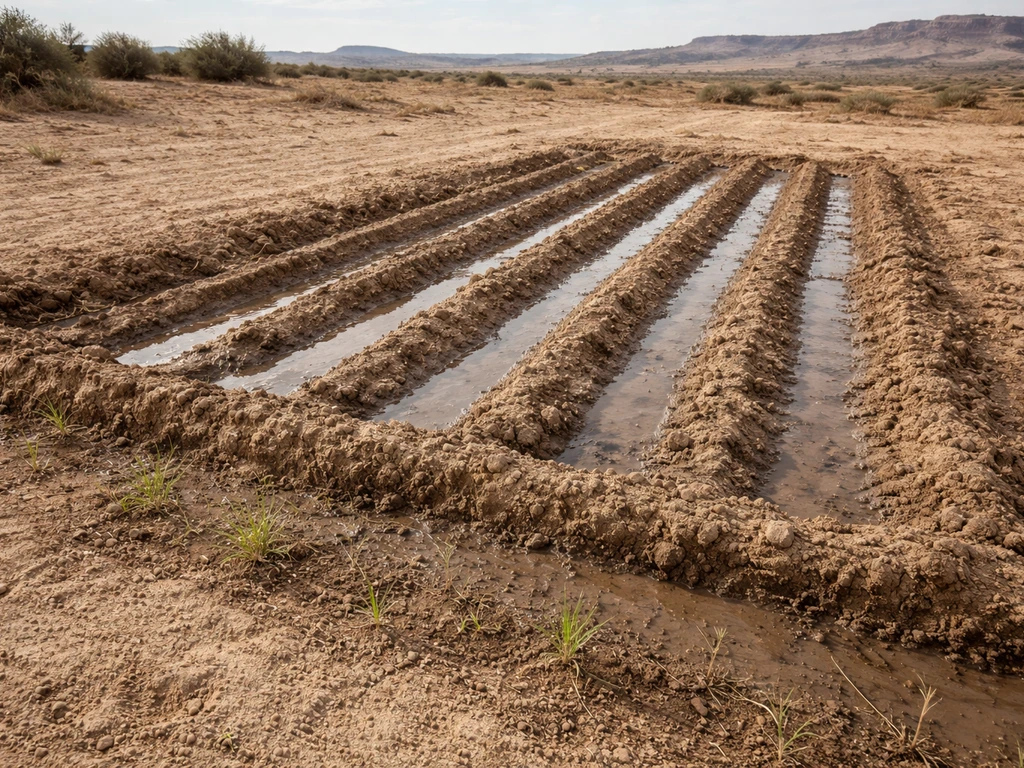
Most Navajo farming was dryland farming, meaning crops were grown without irrigation by relying on natural rainfall and runoff. This was not passive or haphazard. Diné farmers were skilled at reading the landscape, selecting field locations near arroyos, canyon floors, and alluvial fans where runoff naturally concentrated soil moisture. This allowed corn and beans to get the water they needed even in a semi-arid environment averaging 8 to 14 inches of annual rainfall across much of Navajo territory.
In areas where water was more accessible, small-scale water management was used to direct seasonal flows onto fields. This differed from the Spanish acequia system, which was a more formalized gravity-fed canal network requiring communal governance and regular spring maintenance (typically timed to snowmelt). The acequia approach was more common in northern New Mexico communities with denser Hispanic settlement. Diné water management was generally more site-specific and adapted to the scattered, mobile patterns of Navajo land use rather than a centralized village irrigation system.
When things got planted and harvested
Navajo farming was closely tied to natural seasonal indicators rather than a fixed calendar date. Warm-season crops like corn, squash, melons, and beans were typically planted starting in May if conditions allowed, but planting could be delayed into early June, a period associated in the Diné calendar with a month sometimes called 'Yaʼiishjááshchilí.' Farmers read plant and animal signs in the environment to judge when conditions were right, a practice that made the timing adaptive and location-specific.
The major harvest period was September, referred to in Diné tradition as 'Big Ripening.' This is when corn, beans, and other cultigens reached maturity and communities gathered to harvest. Peach harvests at Canyon de Chelly followed a similar September timing, and the harvest season was a significant social and ceremonial event. Understanding this seasonal calendar helps explain why crop selection leaned toward varieties with roughly a 90 to 120 day growing window, well matched to the frost-free period at most Navajo farming elevations.
How Navajo farming fits into broader Southwest agriculture
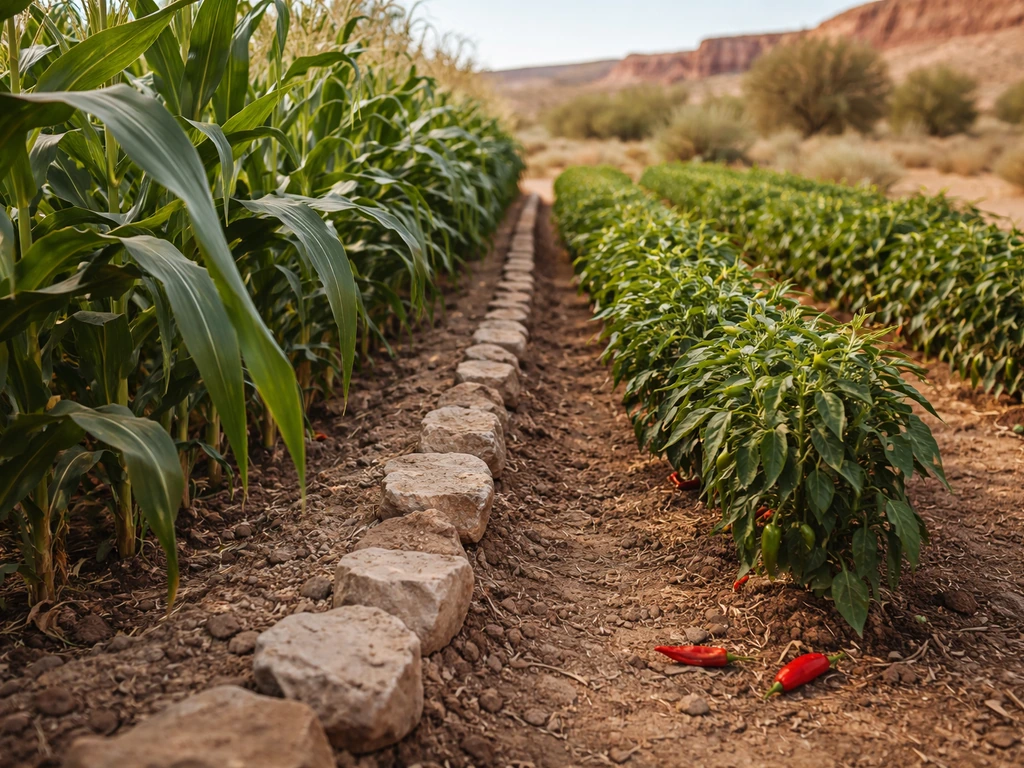
Navajo agriculture did not develop in isolation. The Diné homeland borders Pueblo peoples to the east and south, and there was significant interaction, trade, and at times intermarriage between Navajo and Pueblo communities over centuries. The Pueblo peoples, including ancestors documented at sites like Bandelier National Monument, were cultivating corn, beans, and squash using digging sticks and seed-saving practices well before Navajo contact with them. These shared crops and techniques reflect a broader Southwest agricultural tradition, not separate parallel inventories.
Spanish colonization from the late 1500s onward introduced new plants into the regional mix. A 1630 report by Franciscan friar Alonso de Benavides described Pueblo communities growing peaches, plums, apricots, corn, squash, and beans, which shows how quickly introduced fruit trees had spread through Pueblo and, by extension, Navajo networks by that time. Wheat and barley, both Spanish introductions, also entered the Southwest and required irrigation to produce well, which is one reason they were more common in places like the Rio Grande valley than in dryland Navajo farming areas.
Compared to neighboring groups, the Navajo shared the core Three Sisters base with Pueblo peoples and the Cherokee and other Eastern agricultural nations, but the specific varieties, growing techniques, and cultural contexts were distinct. If you are looking specifically at Cherokee agriculture, their crop set also reflected Eastern Woodland farming traditions rather than the same mix used in Diné lands. Apache groups in the same general region tended toward more mobile subsistence and less intensive cultivation. The Comanche were even less agricultural, relying heavily on bison. The Pueblo peoples, by contrast, had some of the most intensive and centralized irrigation agriculture in the pre-contact Southwest, and they had a measurable influence on Diné farming.
| Group | Core crops | Farming style | Notable influence |
|---|---|---|---|
| Navajo (Diné) | Corn, beans, squash, peaches, watermelon, wheat (post-Spanish) | Dryland farming, runoff irrigation, canyon floor orchards | Pueblo trade and contact; Spanish introductions |
| Pueblo peoples | Corn, beans, squash, fruit trees | Intensive irrigation, terracing, seed saving | Direct influence on Navajo crop adoption |
| Apache | Corn (limited), wild plants | Semi-mobile, limited cultivation | Less agricultural than Navajo or Pueblo |
| Comanche | Minimal cultivation | Nomadic, bison-focused | Very little crop agriculture |
| Cherokee (Eastern) | Corn, beans, squash, sunflowers | Mixed woodland farming | Eastern woodland tradition, less Southwest overlap |
Where to verify crop lists and find region-specific sources
If you're doing research, a few specific sources are worth going straight to rather than relying on general overviews. Paul Vestal's 1952 work 'Ethnobotany of the Ramah Navaho,' published through the Peabody Museum of Archaeology and Ethnology at Harvard and indexed in eHRAF World Cultures, is one of the most rigorously documented ethnobotanical records for a specific Navajo subregion. It includes plant nomenclature and documented uses, so it's useful for anyone mapping crop and plant data at the regional level.
For archaeobotanical evidence, searching for macrobotanical and archaeobotanical reports tied to specific site excavations in the Four Corners region will give you the most location-specific crop data. These reports often distinguish between cultivated species (corn, beans, squash) and gathered wild plants, which is important for understanding Navajo subsistence as a system rather than a simple crop list.
The National Park Service is a useful free resource for specific sites. The Canyon de Chelly and Hubbell Trading Post pages discuss Navajo plant use directly, and the NPS article on Diné peach horticulture is a good starting point for understanding the orchard tradition. The Hubbell Trading Post National Historic Site notes that globe-mallows were a Navajo “Life Medicine” and that they were dried and used as tobacco. SARE's 'Selected Plants of Navajo Rangelands' resource covers range and habitat plants specific to Navajo lands and includes an index useful for cross-referencing plant types by region.
For Spanish-era introductions and how they changed regional crop systems, USDA Forest Service publications on Southwestern agriculture (especially those dealing with New Mexico and the Rio Grande corridor) document the introduction of wheat and barley and the expansion of acequia irrigation. These help you draw a clear line between what was pre-contact Navajo cultivation and what came in through colonial contact, which matters a lot when you're building an accurate historical crop map for any part of the Southwest.
- Vestal (1952) 'Ethnobotany of the Ramah Navaho' via Peabody Museum or eHRAF World Cultures: best primary source for Ramah area plant documentation
- NPS Canyon de Chelly and Hubbell Trading Post pages: accessible, location-specific information on Navajo crops and plants
- NPS Diné peach horticulture article: focused look at orchard crops and seasonal harvest timing
- USDA Forest Service Southwestern agriculture publications: covers Spanish-era crop introductions and irrigation history
- SARE 'Selected Plants of Navajo Rangelands': indexed reference for Navajo land plant habitats and species
- Archaeobotanical site reports from Four Corners excavations: most precise location-specific evidence for cultivated vs. gathered plants
FAQ
Did the Navajo grow only the “Three Sisters” crops, or were there other staples too?
The core Diné field system centered on corn, beans, and squash, but regional food needs and local ecology added more crops. Fruit orchards, especially peaches in places like Canyon de Chelly, and later introductions like watermelons and wheat expanded the overall plant inventory depending on elevation and water access.
Were watermelons part of Navajo farming before Spanish contact?
Watermelons are generally treated as a later addition, spreading through contact with Spanish settlers and neighboring Pueblo communities after the 1600s. If you see a claim that watermelons were long-standing pre-contact Diné crops, it is worth checking whether the evidence is actually tied to a specific site and time period.
Why can’t you answer “what did the Navajo grow?” without specifying a region?
Navajo lands span major elevation changes, which shift frost-free length, rainfall reliability, and runoff patterns. A crop mix that works in canyon floors may fail on high plateaus, so “Navajo grown” crops can differ even within the same broader homeland.
Did the Navajo use irrigation the same way as the Spanish or Hispano acequias?
Much of Diné agriculture relied on dryland methods using natural runoff and field placement near arroyos, canyon bottoms, and alluvial fans. Where water existed, Diné approaches tended to be more site-specific and less like large, communal gravity canal systems typical of acequias.
If most farming was dryland, how did farmers get enough water for corn and beans?
They depended on micro-location choices that capture seasonal moisture, like fields positioned where runoff concentrates in the soil. This let corn and beans access water without installing large irrigation works, but it also meant yields varied by year and local weather.
When did Navajo farmers plant, and does it match a fixed calendar date?
Planting timing was adaptive, guided by environmental indicators rather than a single date. Warm-season crops commonly started in May if conditions allowed, but could shift into early June depending on localized spring conditions and the frost-free window.
Was September always the main harvest month for Navajo crops?
September is described as the major ripening and gathering period, including harvests of corn and beans. However, the exact timing still depended on elevation and season length, so the calendar month aligns best with typical growing windows of about 90 to 120 days rather than a universal fixed schedule.
Did wheat grow well across Navajo lands?
Wheat was an important regional introduction, but it required conditions that were easier to meet where irrigation or more reliable water was available. That is one reason wheat is often more prominent in areas like the Rio Grande corridor than in drier, more strictly dryland Diné farming zones.
What about the Ramah Navajo area, was it the same as other Diné regions?
Ramah Navajo subregions had distinct plant use patterns and documentation highlights different emphasis across higher-elevation landscapes. If you are comparing crop lists, use a subregion context instead of treating “Navajo” as one uniform farming system.
How can I tell from research whether crops were cultivated or gathered wild plants?
Look for archaeobotanical reports that separate macrobotanical evidence into cultivated species versus wild gathered resources. A site’s crop “list” can otherwise overstate cultivation if wild plants are not distinguished from field crops.
Where should I look if I need the most detailed, place-specific crop records?
For specific Diné regions, ethnobotanical studies focused on a subregion (like the Ramah area) are more precise than general summaries. For archaeology, target macrobotanical and archaeobotanical site reports tied to exact excavation locations to capture what was actually grown or used there.
Next Articles
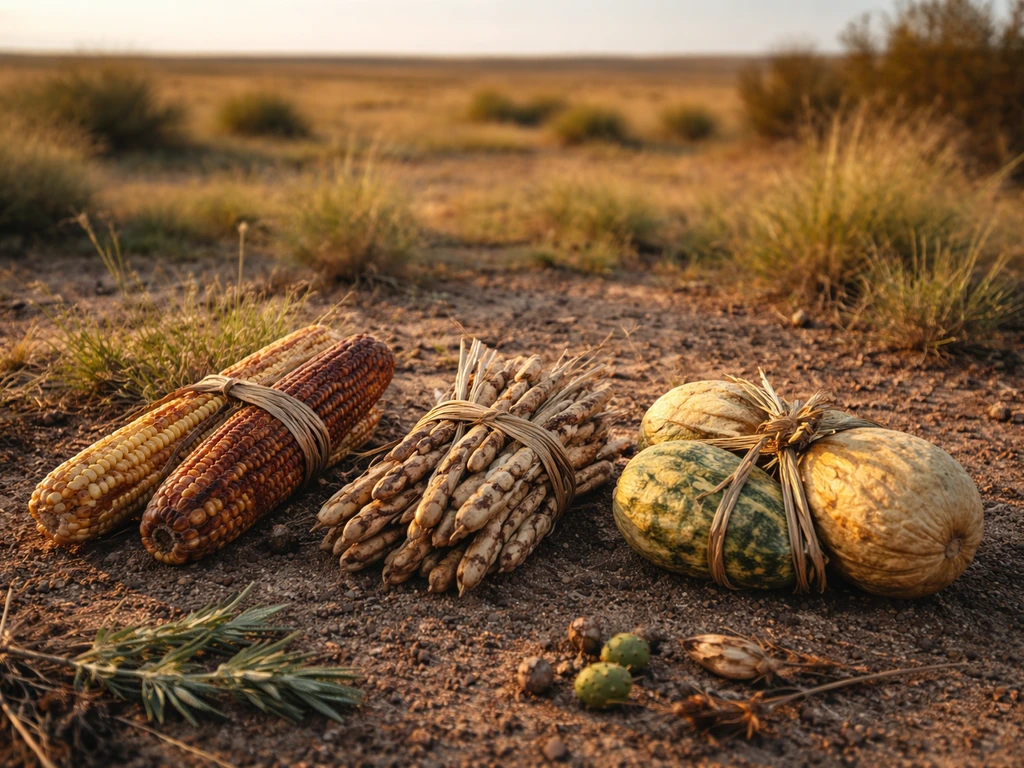
What Crops Did the Comanche Grow? Maize, Beans, Squash
Comanche maize, beans, squash plus other likely crops and wild foods, with methods to verify band and location.
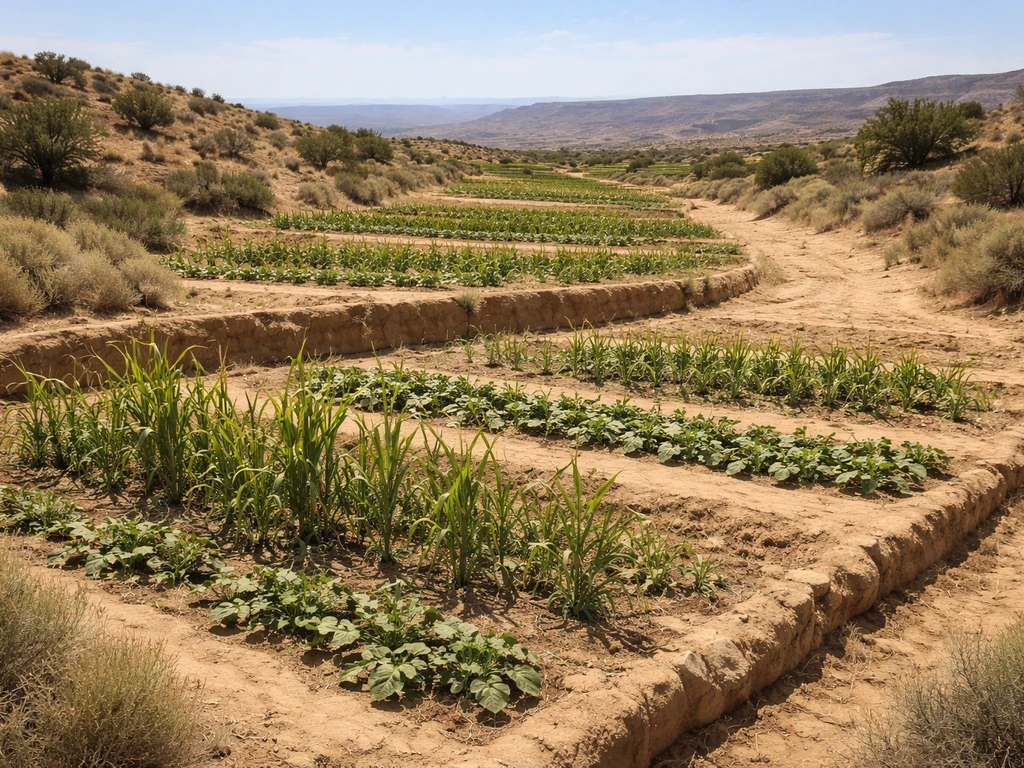
What Crops Did the Pueblo Grow A Regional Guide
Region-by-region list of Pueblo crops, including corn beans squash, plus fruits and grains, with why they grew in arid S
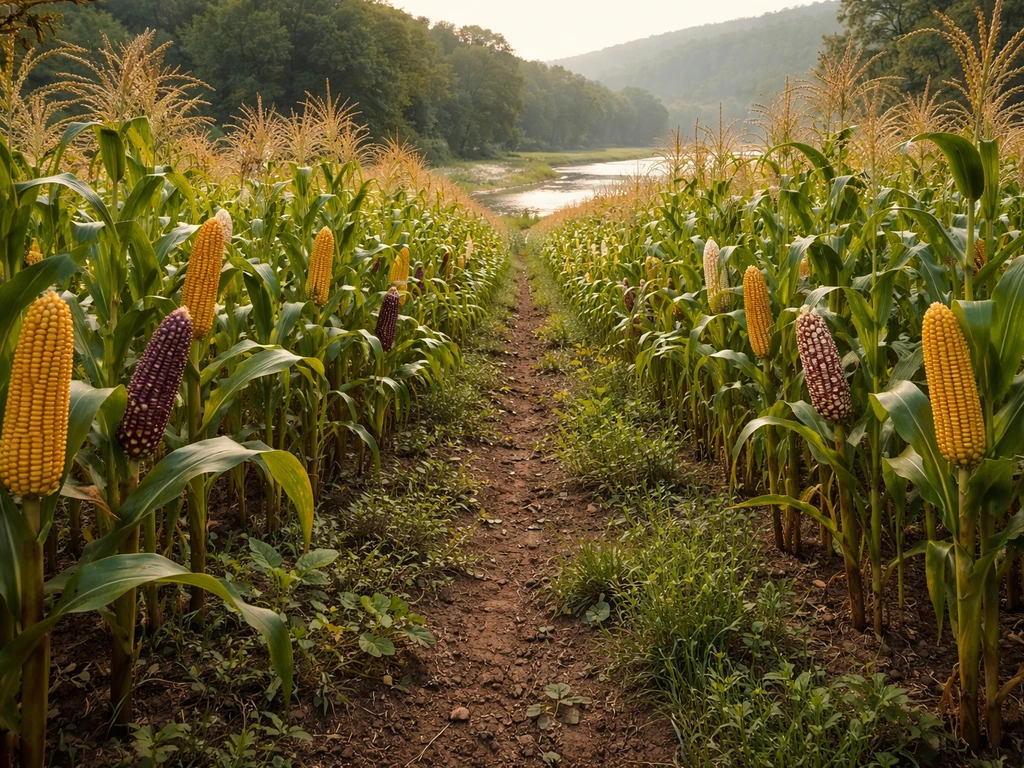
What Crops Did the Cherokee Grow By Region and Season
Cherokee staple and garden crops by region and season, plus how to verify sources and grow faithful today.