There is no single best place to grow crops in the world, and that's not a dodge. The answer genuinely depends on what you're growing. The Corn Belt of the U. S.
Best Place to Grow Crops in the World: How to Choose Regions

Samuel Rourke
21 Jun 2026
Midwest is unbeatable for maize. The Gangetic Plain of India and the Mississippi Delta dominate rice. The Fertile Crescent gave us wheat and barley thousands of years ago and still produces them. Mediterranean climates from California to Spain to coastal Chile are exceptional for fruits, olives, and vegetables.
What you need to do is match a crop to a climate, soil, and water situation, not search for one magic region that does everything well. To answer where do farmers grow crops, match each crop to the region's climate, soil, and water conditions rather than looking for one magic place.
Why there's no single 'best place' for crops
Every crop has its own temperature preferences, water needs, soil tolerances, and frost sensitivity. A region that grows the world's best oranges will be a disaster for winter wheat. Most crops grow best where the climate matches their temperature needs and the growing season is long enough for them to finish their life cycle at which ph do most crops grow best. One that's perfect for rice would waterlog a potato field.
The FAO's Global Agro-Ecological Zones framework (GAEZ v5, released in 2021 and considered the most advanced global tool for assessing agricultural land suitability) doesn't ask 'where is the best farmland? ' It asks 'for a specific crop, how suitable is this specific piece of land? ' Those are very different questions.
The GAEZ method stacks three layers to define any growing zone: a length-of-growing-period (LGP), a thermal regime, and a soil mapping unit. Climate comes first. If climate doesn't allow a crop to complete its life cycle, soil quality doesn't matter at all. Only after climate clears the bar do soil and terrain factors become modifiers. That's a useful mental model for anyone trying to figure out where crops can actually grow.
There's also the matter of what 'best' means to you. A commercial grain farmer thinking about yield per hectare has different priorities than a subsistence farmer worried about drought risk, or a gardener in a short-season climate trying to squeeze in a harvest. This guide will give you frameworks for all of those situations.
Quick criteria to judge any region's crop-growing potential
Before looking at specific regions, it helps to know what factors actually determine agricultural potential. Here are the five that matter most, in roughly the order you should check them.
| Factor | What to check | Why it matters |
|---|---|---|
| Climate / Temperature | Average highs and lows during growing months; frost-free period | Most agriculture requires at least 90 frost-free days; thermal regime gates whether crops can complete their cycle |
| Water availability | Annual rainfall, irrigation access, drought frequency | USGS Water Requirement Satisfaction Index (WRSI) tracks crop performance based on water availability during the growing season; water stress is the leading yield limiter globally |
| Soil quality and pH | Soil type, organic matter, drainage, pH (ideally 6.0–7.5 for most crops) | FAO's Global Soil Partnership identifies pH 6.0–7.5 as acceptable for most plants; outside this range, key nutrients become unavailable regardless of other conditions |
| Season length (LGP) | Length of growing period; frost-free window; number of growing cycles per year | FAO AEZ zones are defined partly by LGP; tropical zones can support 2–4 growing periods annually while short-season temperate zones allow only one |
| Risk factors | Drought, heat stress, flood, pest pressure, late/early frost probability | FAO AEZ accounts for yield losses due to climatic limitations rather than assuming ideal conditions; risk screening is essential before committing to a crop or region |
One thing worth flagging: the USDA Plant Hardiness Zone Map is widely used and genuinely useful for screening whether perennial plants can survive winter minimums at a location. But hardiness zones are about average annual minimum temperatures, not frost dates. Two places in the same hardiness zone can have very different frost-free windows, so always check actual first and last frost dates separately when planning annual crops.
Britannica also summarizes that for most agriculture the growing season is often measured as a frost-free period, with most agriculture requiring a frost-free season of at least about 90 days. NOAA and Weather.
gov publish averaged first and last frost/freeze dates for most U. S. locations, which is a much more reliable tool for annual crop planning than a hardiness zone alone.
Top crop-growing regions around the world, by climate and crop type
Rather than ranking regions, it's more useful to match climate zones to the crops that genuinely thrive there. Here's a practical global short-list.
Humid subtropical and temperate continental (grains and soybeans)
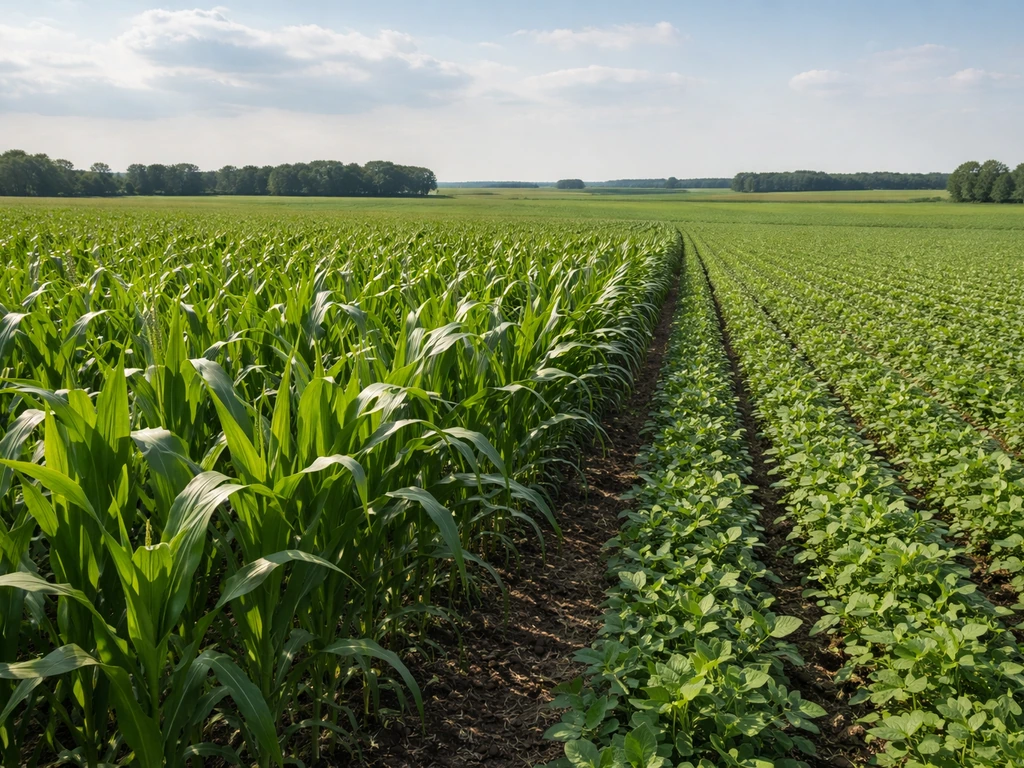
The U.S. Corn Belt (Iowa, Illinois, Indiana, Nebraska, Kansas, Ohio) is among the most productive grain regions on Earth. To learn more about where farmers grow common crops in Class 1 style, you can use the same idea of matching crops to climate and growing conditions Corn Belt. Deep mollisol soils, adequate summer rainfall, and long frost-free growing seasons combine to produce exceptional corn and soybean yields. The North China Plain and the Pampas of Argentina operate in similar climate envelopes and are global leaders in wheat, corn, and soybeans. Ukraine and parts of southern Russia, sitting on some of the world's deepest black soils (chernozems), are top wheat producers when geopolitical stability allows supply chains to function.
Tropical monsoon and humid tropical (rice, tropical fruits, root crops)
South and Southeast Asia dominate global rice production. The Mekong Delta (Vietnam), the Irrawaddy Delta (Myanmar), the Gangetic Plain (India and Bangladesh), and the lowlands of Thailand and Indonesia combine warm temperatures, high rainfall, and long growing periods to allow two or even three rice crops per year in some areas. Tropical regions of sub-Saharan Africa and Latin America are highly productive for cassava, plantain, yams, and tropical fruits, though soil fertility management is often a limiting factor in heavily leached tropical soils.
Mediterranean climates (fruits, vegetables, olives, wine grapes)
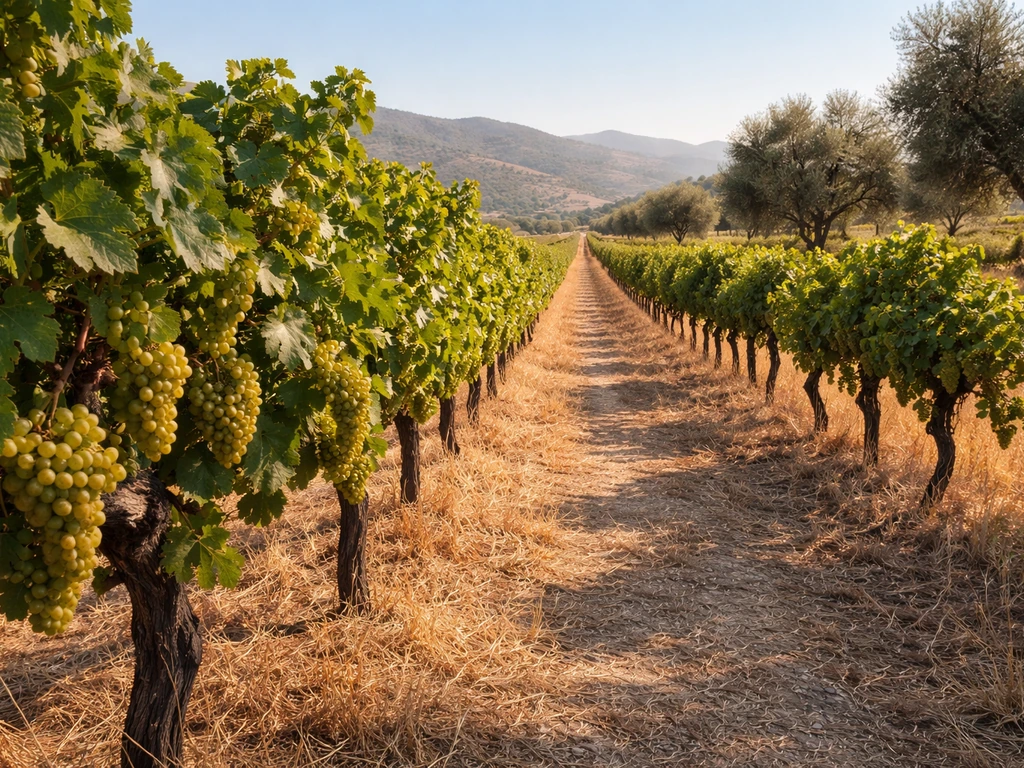
True Mediterranean climates (warm dry summers, mild wet winters) occur in only five places on Earth: the Mediterranean Basin itself, California's Central Valley and coastal regions, central Chile, the Western Cape of South Africa, and southwestern Australia. All five are exceptional for wine grapes, olives, stone fruits, citrus, and a wide range of specialty vegetables. California's Central Valley alone produces a significant share of the world's almonds, tomatoes, and lettuce, partly because of irrigation infrastructure layered onto an already favorable climate.
Semi-arid with irrigation (cotton, wheat, specialty crops)
Some of the most productive farmland in the world sits in regions that would be nearly barren without irrigation. The Nile Valley, the Indus Plain of Pakistan, California's Imperial Valley, and Israel's Negev desert region all demonstrate that excellent soils and warm temperatures can overcome low rainfall when water is reliably delivered. FAO's AQUASTAT database tracks global irrigation infrastructure and water use, and it shows that irrigation already underpins a disproportionate share of global food production relative to the land area irrigated.
Cool temperate and boreal margins (root crops, barley, short-season vegetables)
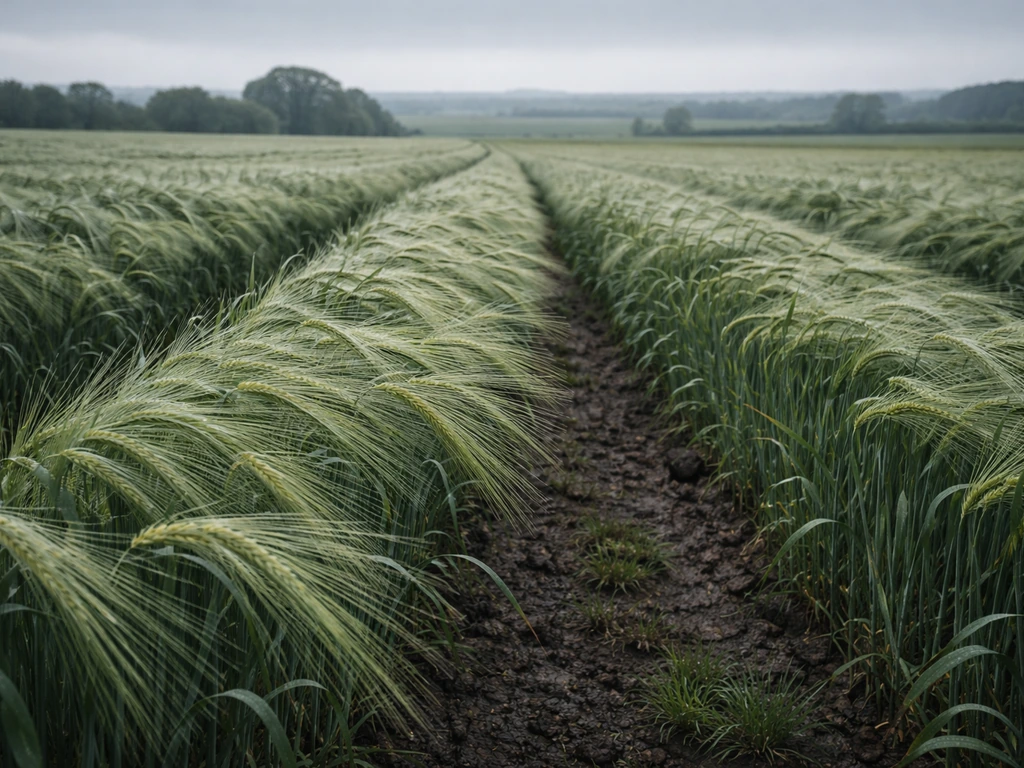
Shorter growing seasons don't eliminate agriculture; they just change the crop menu. Northern Europe (Scandinavia, northern Germany, Poland) excels at barley, potatoes, sugar beets, and cool-season vegetables. Parts of Canada (the Prairie Provinces), Alaska, and northern Russia grow spring wheat and canola during long summer days that partially compensate for the short frost-free window. These regions require crops specifically bred for short seasons and cold tolerance.
U.S. and country-level guidance using crop distribution patterns
For anyone focused on North America, the regional crop distribution patterns are well-documented. The USDA's National Agricultural Statistics Service (NASS) QuickStats tool lets you filter crop production data by location, crop type, and time period down to the county level, which is one of the most practical resources for understanding where specific crops are actually grown at scale. To answer where do crops grow, tools like USDA NASS QuickStats can show what’s actually grown in each county over time.
Some regional patterns are striking. Arkansas typically grows around 56 to 58 percent of the U. S. long-grain rice crop, with the rest of production concentrated in the Mississippi Delta region spanning parts of Mississippi, Missouri, and Louisiana.
The USDA ERS chart/gallery on U. S. rice producing regions is a map-based resource for understanding where rice is grown in the United States [long-grain rice crop](https://www. ers.
usda. gov/data-products/chart-gallery/chart-detail? chartId=98344). Louisiana's soils and climate also support significant sugar cane production.
California dominates fruits, nuts, and vegetables nationally. The Great Plains run hard winter wheat from Texas north through Kansas and Oklahoma, switching to spring wheat in North Dakota and Montana. Florida and the lower Rio Grande Valley specialize in citrus and winter vegetables that take advantage of frost-free or near-frost-free winters.
Globally, country-level patterns reflect similar climate logic. Brazil's Cerrado region has become a soybean powerhouse after soil amendment programs in the 1970s and 1980s corrected the naturally acidic, low-phosphorus soils. The Netherlands achieves extraordinary vegetable yields per hectare through intensive greenhouse production. India is simultaneously a top producer of rice, wheat, sugarcane, cotton, and pulses because it contains multiple distinct climate zones within its borders. No single country 'wins' because geography is varied everywhere.
Historical context: where crops thrived in the past and what that tells us now
Understanding where crops originated is more than a history lesson. It tells you something fundamental about what growing conditions those crops evolved to prefer, which helps explain where they still thrive today.
Wheat and barley were domesticated approximately 10,000 years ago in the Fertile Crescent, the arc of land stretching from modern Israel and Jordan through Lebanon, Syria, southeastern Turkey, and into Iraq and western Iran. This region had the right combination of winter rainfall, warm dry summers for seed maturation, and wild ancestors of these grains already adapted to seasonal drought. Those same conditions, now replicated across the Middle East, northern Africa, Central Asia, the U.S. Great Plains, and the Australian wheat belt, are why wheat grows best in semi-arid temperate zones today. The crop has never fully escaped its original climate preferences.
Ancient Egypt provides a compelling case for irrigation agriculture. The Nile Valley is fundamentally a desert environment, but annual flooding deposited rich silt, and later canal irrigation extended growing seasons beyond what natural rainfall could support. Wheat and barley were Egyptian staples, and research on early cereal cultivation in the Faiyum Oasis shows that some of the earliest Egyptian farming may have actually been rain-fed before irrigation systems matured. That history explains why the Nile Valley remains productive today: the soils are good, temperatures are warm year-round, and the irrigation infrastructure built over millennia is still the backbone of Egyptian agriculture.
Rice domestication in China (the Yangtze River basin, roughly 7,000 to 9,000 years ago) explains why flooded lowland environments in Asia remain the global center of rice production. Rice was bred for warm temperatures, standing water, and high humidity. The monsoon climates of South and Southeast Asia essentially replicate its domestication environment at scale. Crops carry their evolutionary history with them, which is why looking at where a crop originated often tells you where it still grows best.
The historical pattern also carries a warning. Climate has shifted over millennia, and regions that were highly productive in the past have sometimes become marginal or degraded. Parts of the Fertile Crescent now face severe water scarcity and salinity problems from centuries of irrigation. Recognizing that even historically great agricultural regions can decline helps frame the importance of soil and water management today.
How to figure out the best area and crops for your situation
The framework below works whether you're a commercial farmer evaluating a new region, a student mapping agricultural patterns, or a gardener trying to figure out what will actually grow where you live.
- Identify your climate zone first. Look up your hardiness zone for perennials, but also find your actual average last spring frost date and first fall frost date from NOAA or Weather.gov. Calculate your frost-free window. If it's under 90 days, you're working with a short-season constraint and need to prioritize accordingly.
- Check water. Is your rainfall reliable and does it fall during the growing season? Or is it seasonal and offset from when crops need water most? If irrigation is needed, is it available and affordable? FAO AQUASTAT is useful for regional water resource data at a global scale.
- Test or research your soil. For most crops, a soil pH between 6.0 and 7.5 is your target range. Outside that window, nutrient availability drops even in otherwise good soil. Get a lab soil test if you're serious; it costs very little and tells you what you're actually working with.
- Match your climate and soil profile to suitable crop categories. Short-season cool climates: root crops, brassicas, barley, short-season varieties of corn. Long warm seasons with reliable rain: corn, soybeans, sorghum, cotton. Year-round warmth with high rainfall: rice (with irrigation or flooding), tropical fruits, cassava. Mediterranean dry summers: wine grapes, olives, stone fruits, many vegetables.
- Run a risk screen. FAO's GAEZ approach accounts for yield losses from climatic limitations rather than assuming ideal conditions. You should do the same mentally: what are the drought risk, frost risk, heat stress risk, and major pest pressures for your region and chosen crop? A crop that yields well in ideal conditions but crashes in bad years may be a poor fit for a high-risk climate.
- Cross-check with regional production data. In the U.S., USDA NASS QuickStats lets you see what crops farmers in your county or state are actually growing at scale. If nobody nearby grows a particular crop commercially, it's worth asking why before assuming you've found an untapped opportunity.
Next steps: varieties, seasons, and reducing the risk of failure
Once you've identified a region and a short list of suitable crops, the next layer of decisions comes down to variety selection, planting timing, and risk management. These are where a lot of growers leave yield and reliability on the table.
Choose varieties matched to your specific conditions
Regional and local variety trials are more useful than seed catalog descriptions written for broad audiences. University cooperative extension programs in most U.S. states publish annual or biennial variety trial results that show how specific varieties perform in local conditions. For short-season climates, look specifically for varieties with shorter days-to-maturity ratings and documented frost tolerance. For hot, dry environments, drought-tolerant or heat-tolerant lines can significantly outperform standard varieties in stress years.
Plan your seasons around real frost dates, not zones
As mentioned earlier, hardiness zones tell you about winter minimums for perennials, not when your last spring frost is. Use your actual local frost date data to back-calculate transplant and direct-sow dates for each crop. Many vegetable crops have specific soil temperature requirements for germination that matter as much as air temperature; cool-season crops like spinach and peas can germinate in soils as cold as 40°F, while corn and beans want soil at 50 to 60°F or warmer.
Layer in risk reduction from the start
Diversifying crops across varieties and planting dates, maintaining soil health to improve water retention (which directly affects drought resilience), and keeping irrigation options available where possible are the practical ways to manage the yield losses that climate variability inevitably causes. Cover crops improve soil structure and organic matter over time, which improves both water-holding capacity and pH buffering. If you're in a high-risk climate for any one threat (late frosts, summer drought, flooding), build that into your crop selection rather than treating the best-case scenario as your baseline.
Use the tools that already exist
FAO's GAEZ v5 portal is publicly accessible and lets you query crop suitability maps at roughly 1 km resolution for specific crops worldwide. For U.S.-focused research, USDA NASS QuickStats is the most comprehensive public database for crop production by geography. For water constraints, FAO AQUASTAT covers global irrigation and water resource data. NOAA and Weather.gov cover frost and climate data locally. None of these require a paid subscription, and together they give you a genuinely rigorous basis for making regional crop decisions rather than guessing.
The core insight is this: the 'best place to grow crops' is always the best place to grow a specific crop, given a specific set of conditions. The regions that dominate global agriculture aren't lucky, they're matched. The Corn Belt has deep fertile soils and the right summer climate for corn. The Mediterranean has dry summers that suit grapes and olives. The Mekong Delta has warm monsoon flooding that rice was essentially designed for. Once you understand that matching logic, you can apply it at any scale, from evaluating a country for an agribusiness investment down to figuring out what to plant in your backyard this season.
FAQ
How can I tell whether a “good climate” region will still work for my exact crop, not just in ideal years?
Look for yield variability signals, not just average yield. If the region has frequent extreme events (late frosts, heat waves, or heavy rains), prioritize varieties with stress tolerance and plan staggered planting dates. Also check whether the crop’s critical stage (germination, flowering, grain fill, or tuber set) aligns with the region’s historical worst-case weather windows.
Do I need to choose between rainfed and irrigated agriculture when picking the best place to grow a crop?
You should decide early, because irrigation changes what “best” looks like. If you cannot reliably deliver water at peak demand, drought-tolerant crops and conservative planting schedules matter more than soil quality. If irrigation is possible, confirm legal water access and practical delivery constraints (well depth, canal reliability, pumping costs), since those can cap achievable yields even in favorable climates.
What’s the biggest mistake people make when using hardiness zones to plan annual crops?
Relying on average minimum temperature instead of frost-free timing. Hardiness zones do not directly tell you last frost date, first fall frost date, or how long you actually have to reach maturity. For annuals, base sowing and transplanting on local first and last frost dates, then verify soil temperature for germination requirements when relevant.
How do I account for soil problems that limit growth even if the climate is perfect?
Test for the specific constraints the crop cannot tolerate. Many regions can grow “the crop,” but not without addressing issues like salinity, drainage, compaction, or nutrient imbalance. Use soil tests for pH, salinity (EC), organic matter, and basic fertility, then match amendments or water management to the measured limitation rather than assuming soil is uniformly fertile.
If I want the best place to grow crops, should I rank countries or regions by general productivity?
Not if your goal is a specific crop. Country-level averages mix very different climates and farming systems, and they can hide local pockets that are either far better or far worse for your crop. Use crop-specific suitability tools or local production records for the exact crop, then validate with variety trial data if you can.
Are greenhouse or high-tunnel areas “cheating” the climate rules?
They can bypass temperature and frost constraints, but they do not remove limits on light, water, disease pressure, and pollination requirements. Even in protected culture, crops need adequate sunlight, correct ventilation to manage humidity, and careful irrigation scheduling. For high-value vegetables, protected systems are often a better match than changing location, but they still require crop-appropriate climate control.
How should I choose between spring and winter crop versions in a region?
Use the frost-free window and the crop’s vulnerability during winter or early growth. Winter types can outperform in suitable climates because they use cooler-season establishment and often capture early-season resources, but they carry winterkill risk where cold spells are sharp. Compare local historical temperature patterns and consider whether you can protect stands (mulch, row cover) if winter stress is common.
What should I do if the region is known for irrigation-dependent production?
Treat irrigation as a requirement you must verify, not a given. Confirm that water supply is dependable during your crop’s peak water demand, and plan for operational realities like pumping capacity or drought restrictions. If water reliability is uncertain, reduce risk by choosing shorter-duration varieties, using mulches for retention, and planning alternative crops or fallbacks.
Does the crop’s origin history really help in picking regions?
It helps as a starting hypothesis for temperature, moisture, and seasonal behavior. Domestication background often reflects the crop’s preferred environment, so it can narrow your shortlist. However, modern breeding and local management can shift performance, so still validate with local trial results or production data rather than assuming origin automatically guarantees success.
For backyard or small-scale growing, how do I adapt the “best place” idea to a limited space?
Focus on microclimate and timing. Small areas can vary drastically in frost exposure due to slope, wind, nearby walls, and cold-air drainage. Use local frost dates for your exact site, improve soil drainage or water retention based on your observations, and choose varieties with maturity dates that fit your local season length.
Next Articles
Where Do Crops Grow Best? Climate, Soil, Water by Crop
Learn where crops grow best by climate, soil, and water, match crops to regions, and check local frost, heat, and draina
Where Do Crops Grow? Climate, Soil, and Water Rules
Learn where crops grow by climate, soil, and water, with U.S. examples and steps to map matches for any location.
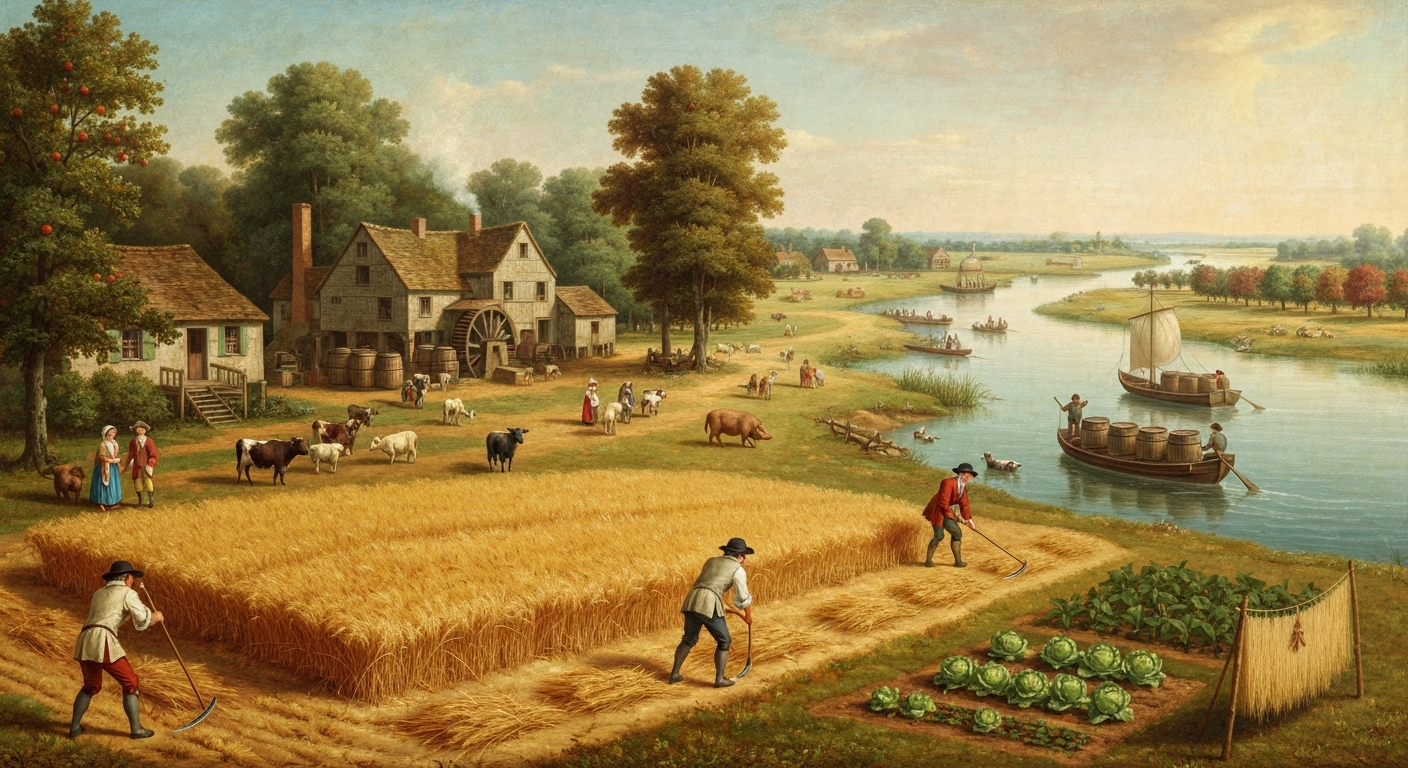
What Did the Delaware Colony Grow: Crops, Uses & Legacy
Colonial Delaware’s main crops, grains, hay, flax, fruits, vegetables, livestock, why they thrived and how they were sold.