Every crop humans grow shares one defining truth: it is a plant that cannot sustain useful production without ongoing human involvement. No cultivated crop simply grows itself. Every single one, from ancient wheat to modern soybeans, requires a person to choose the site, prepare the ground, manage water and nutrients, control weeds and pests, and bring in the harvest. That dependence on human management, combined with the biophysical conditions each crop needs, is the universal fact that ties all cultivated crops together regardless of species, region, or era.
Which Is True of All Crops That Humans Grow: Key Facts

Samuel Rourke
18 Jul 2026
Why this question matters more than it looks
The question of what is universally true of all crops comes up in biology classrooms, on agricultural certification exams, and in real conversations between farmers deciding what to plant. For students, it anchors everything from plant biology to food systems history. For farmers and gardeners, it is the practical checklist that prevents costly mistakes when trialing a new crop on unfamiliar land. For historians, it explains why ancient civilizations clustered where they did and why some regions became breadbaskets while others did not. Understanding the universal traits of cultivated crops also unlocks insight into why certain land types support crops easily while others, like steep pastures or arid rangelands, require significant modification or are simply unsuitable. That context shapes how we read regional crop maps and why crop distributions look the way they do across states, countries, and historical periods.
Key terms worth pinning down first
A few definitions help keep everything that follows grounded. These are not academic hair-splitting; they are working definitions that determine how land is categorized, how crops are counted, and how suitability is assessed.
- Crop: A plant species or variety intentionally cultivated for a useful product, whether food, feed, fibre, or fuel. The FAO's ECOCROP database characterizes roughly 1,700 crops this way, each with documented requirements for temperature, rainfall, soil pH, and growing period length.
- Arable land: Land used for temporary crops, kitchen or market gardens, and land temporarily fallow for fewer than five years. The FAO uses this category interchangeably with 'cropland' in many statistical contexts. It is distinct from land that is structurally unsuitable for cultivation.
- Pasture (permanent meadows and pastures): Land managed primarily for forage production for grazing livestock, whether sown with grasses, grass-legume mixes, or maintained as natural grassland. Pasture and cropland serve different agricultural functions, and converting one to the other carries real ecological costs.
- Weed: An unwanted plant growing alongside a cultivated crop, competing for the same light, water, and nutrients that the crop needs. Weeds are an inevitable feature of cultivated systems precisely because human tillage and nutrient inputs create ideal conditions for opportunistic plants to thrive.
What domestication did to every crop on earth
Before any crop can be managed by humans, it has to be domesticated, and domestication changes plants in predictable, measurable ways. Across cereals, pulses, and fruit crops, researchers have identified a consistent set of changes called the domestication syndrome. Seeds and fruits no longer shatter off the plant at maturity, which prevents dispersal but makes harvest far more efficient. Seed dormancy is reduced or eliminated so that germination is rapid and uniform when a farmer sows a crop. Maturation becomes synchronized across individual plants so an entire field can be harvested at once. Reproductive organs, mainly seeds and fruits, become larger than in wild relatives. Growth habits shift toward forms that suit dense planting: upright stems, compact architecture, and annuality in species that were originally perennial.
These changes did not come free. Domestication created genetic bottlenecks, meaning cultivated varieties carry significantly less genetic diversity than their wild ancestors. That uniformity is what gives modern wheat fields their consistent yield and harvest timing, but it also means that a single pathogen or pest capable of exploiting a shared genetic weakness can move through a crop population rapidly. The Irish potato famine is the most cited historical lesson, but the principle applies universally: every domesticated crop trades some genetic resilience for harvestability and yield.
The management every crop demands from us
Regardless of whether you are growing paddy rice in Southeast Asia, quinoa in the Andean highlands, or winter wheat on the Great Plains, the sequence of management actions is recognizably the same. This is not a coincidence; it follows directly from what domesticated plants are. Because they no longer self-disperse, self-protect, or self-fertilize at scale, humans have to supply all of those functions.
- Site selection and preparation: matching the crop's biophysical requirements to available land, then physically preparing the seedbed through tillage or conservation tillage methods.
- Sowing, planting, or propagation: introducing the crop to the site at the right density, depth, and time of year, whether from seed, transplant, cutting, or vegetative division.
- Nutrient management: supplying nitrogen, phosphorus, potassium, and micronutrients through fertilizer, manure, or cover cropping because most cropped soils cannot sustain yields through natural nutrient cycling alone.
- Water management: ensuring adequate moisture through irrigation, drainage, or careful variety selection matched to local rainfall patterns.
- Pest and weed control: using integrated pest management (IPM) and integrated weed management (IWM) approaches that combine cultural, biological, mechanical, and sometimes chemical tactics to keep competing and damaging organisms below economic thresholds.
- Harvest timing and method: bringing in the crop at the right stage of maturity using appropriate equipment or hand harvesting.
- Post-harvest handling and storage: managing the crop after harvest to prevent spoilage, preserve quality, and prepare it for use or sale.
Every one of these steps requires a decision, and getting even one of them wrong, sowing too early, under-fertilizing, missing the pest threshold, or harvesting too late, can reduce yields significantly or cause a complete crop failure. That is the daily reality of growing crops, and it is why the phrase 'human management' is not an abstraction but a list of concrete tasks that repeat season after season.
The biophysical conditions every crop needs
Human management can compensate for some deficiencies, but it cannot override physics and biology. Every cultivated crop needs an adequate supply of four basic resources: suitable temperature, water, soil nutrients, and sunlight. These are not suggestions; they are hard limits. The FAO's ECOCROP tool, which documents requirements for roughly 1,700 crops, expresses each requirement as a numeric range. GAEZ v4, FAO/IIASA and the ECOCROP crop/environment database (FAO Land & Water) document crop requirements and suitability parameters used for matching crops to land and assessing agro‑ecological suitability GAEZ v4 — FAO/IIASA; ECOCROP crop/environment database (FAO Land & Water). Step outside that range and the crop fails, regardless of inputs.
Temperature and growing season length
Every crop species has a minimum, optimum, and maximum temperature for germination and growth. Frost-free days and accumulated growing-degree days set the upper and lower boundaries for where a crop can be grown without greenhouse infrastructure. Cold-season crops like barley and rye tolerate near-freezing temperatures; tropical crops like cassava and bananas cannot survive a hard frost. Global climate tools like WorldClim and the Köppen-Geiger classification system are standard references for matching these temperature requirements to real locations, which is exactly why regional crop maps look the way they do.
Water and seasonality of rainfall
Total annual rainfall matters less than when that rainfall arrives and how reliable it is. A crop that needs moisture during flowering and grain fill will struggle in a climate where rain falls mainly in winter and the growing season is dry. Irrigation can bridge gaps but adds cost, energy, and infrastructure demands that change the economics of cultivation entirely.
Soil texture, drainage, pH, and organic matter
Soil properties set the ceiling on what any piece of land can produce. Texture (the ratio of sand, silt, and clay) determines water-holding capacity and drainage. pH governs nutrient availability: most crops perform best in the 5.5 to 7.0 range, and significant deviation suppresses yield even with good fertilizer programs. Organic matter drives soil biological activity, which affects nutrient cycling, water infiltration, and disease suppression. Global soil data from sources like ISRIC SoilGrids now makes it possible to assess these properties at fine resolution across virtually any location on earth.
Sunlight
Photosynthesis is non-negotiable. All crops depend on adequate solar radiation, and many also respond to day length (photoperiod) as a cue for flowering or tuber initiation. Shaded sites, high-latitude winters, or dense cloud cover can limit productivity even when temperature and moisture are adequate.
Vulnerabilities every cultivated crop shares
The same features that make crops productive, genetic uniformity, dense planting, concentrated nutrients in the soil, predictable growth cycles, also make them vulnerable. Understanding these shared vulnerabilities is as important as understanding shared requirements.
- Pest pressure: Dense, genetically uniform stands are ideal environments for insect pests and pathogens to establish, reproduce, and spread rapidly. IPM frameworks exist precisely because cultivated systems consistently generate higher pest pressure than unmanaged vegetation.
- Disease: Fungal, bacterial, and viral pathogens exploit the genetic uniformity and close plant spacing of cropped fields. A single virulent pathogen strain can sweep through an entire cultivar planted across thousands of hectares.
- Weeds: Tillage, fertilization, and irrigation create favorable conditions for opportunistic plants to germinate alongside the crop. Weed competition is one of the primary yield-limiting factors globally, and it requires active management every season.
- Climate variability and extremes: Crops are planted to match a historical climate envelope, but drought, late frost, flooding, and heat waves can all fall outside the tolerance range of even well-adapted varieties. Climate change is shifting those envelopes, creating growing mismatches between legacy crop-region pairings.
- Market and supply chain risk: Cultivated crops must be harvested, stored, transported, and sold within specific timeframes. Disruption at any point, from a fuel shortage affecting harvest machinery to a price collapse at market, affects the profitability and sustainability of crop production.
How land type and climate actually determine what you can grow
Not all land is equal for crop production, and that inequality is not random. It follows directly from climate zones, soil types, and topography. Understanding how land type and crop suitability interact is the foundation of regional crop mapping and practical land-use decisions.
Arable land versus pasture: a functional divide
Arable land is typically found on flat to gently rolling terrain with deep, well-drained soils and adequate rainfall or irrigation access. Pasture land often occupies ground that is too steep, too shallow, too wet, or too dry for reliable crop production. The distinction is not always absolute; some pasture can be converted to cropland, but doing so typically causes measurable losses of soil organic carbon, increased erosion, and greater nitrogen losses to waterways. See meta-analyses and reviews documenting soil organic carbon loss and related impacts following grassland-to-cropland conversion (Soil & Tillage Research; Scientific Reports) blank" rel="noopener noreferrer">Meta-analyses and empirical reviews (e.g., 'Synthesis of soil carbon losses...' in Soil & Tillage Research and a Scientific Reports global analysis) show converting grassland or pasture to cropland typically causes topsoil soil organic carbon losses, increased erosion, and greater nitrogen losses to waterways.. The ecological cost of converting permanent pasture to annual crops is well-documented, and reversing the damage takes decades.
Rainfall zones and temperature belts
The FAO's Global Agro-Ecological Zones (GAEZ) framework organizes the world's cropland potential by intersecting temperature belts (tropical, subtropical, temperate, boreal) with rainfall zones (arid, semi-arid, sub-humid, humid). This framework, built from WorldClim climate layers and SoilGrids soil data, explains why maize dominates the humid temperate Corn Belt of the U.S. Midwest, why irrigated wheat fills semi-arid plains from Kansas to Kazakhstan, and why rice concentrates in humid tropical and subtropical lowlands. The crop follows the climate, not the other way around, and historical patterns of crop distribution across states and countries reflect this directly. For maps that highlight regions of land where crops grow easily, consult global agro-ecological assessments and suitability layers.
Land intensity and area requirements by crop type
Different crops require very different amounts of land to produce a given quantity of food. For example, pasture-fed livestock typically require far more land than calorie-dense cereals, which is exactly what would require more land to grow food crops. For clarity, this discussion uses the term area of land where farmers grow crops to mean land allocated specifically for cultivation. Calorie-dense cereals and legumes generally produce more food per hectare than pasture-fed livestock. High-value vegetables and fruits can produce significant economic output on small areas. Understanding land intensity helps farmers, planners, and gardeners make practical decisions about what to grow given the area they have available.
| Crop / Category | Typical yield range (tonnes/ha) | Land intensity | Key site requirements | Suitable for small plots? |
|---|---|---|---|---|
| Wheat (bread and durum) | 2–8 t/ha | Low to moderate | Temperate climate, well-drained loam, 300–900 mm rainfall | No — best at field scale |
| Maize (corn) | 4–12 t/ha | Moderate | Warm summers, fertile soil, 500–800 mm or irrigation | Yes, with space constraints |
| Rice (paddy) | 3–8 t/ha | Moderate to high (water) | Tropical/subtropical, flooded or heavily irrigated soil | Small paddies possible |
| Soybeans | 1.5–4 t/ha | Low to moderate | Warm temperate, well-drained soil, 450–700 mm rainfall | No — best at field scale |
| Potatoes | 15–50 t/ha | High output per area | Cool climate, deep loose soil, 500–700 mm rainfall | Yes — very productive in gardens |
| Tomatoes | 40–100 t/ha (fresh weight) | High output per area | Warm climate, fertile well-drained soil, irrigation | Yes — high value on small plots |
| Leafy vegetables (e.g., spinach, lettuce) | 10–30 t/ha | Very high output per area | Cool season, fertile soil, consistent moisture | Yes — ideal for kitchen gardens |
| Tree fruits (e.g., apples, citrus) | 10–40 t/ha (mature orchards) | High capital, long establishment | Temperate or subtropical, deep soil, no late frosts | Yes, with perennial commitment |
Growing crops on pasture and marginal land: what to expect
One of the most common practical questions from smallholders and new farmers is whether existing pasture can be converted to crop production. For practical guidance, see can you grow crops on pasture land. The honest answer is: sometimes, but with real costs and conditions attached. Pasture soils that have been under permanent grass often have good organic matter levels and soil structure, which can benefit crops in early seasons after conversion. However, converting established pasture disrupts soil biology, releases stored carbon, and typically requires significant tillage, pH adjustment, and nutrient management to achieve competitive crop yields.
The success of any conversion depends heavily on why that land was in pasture in the first place. If it was pasture because of gentle slope, adequate soil depth, and good drainage, conversion is more feasible. If it was pasture because of poor drainage, shallow rocky soil, steep slopes, or climate extremes, those underlying limitations do not disappear with tillage. The land's physical characteristics still define what crops can realistically succeed there. Lower-input, mixed or perennial crops, including fruit trees, forage legumes, or market garden vegetables with significant soil improvement, are often more appropriate choices for marginal or recently converted pasture than high-input annual grain crops.
Practical crop-choice guidance by land type and scale
Putting all of this together into a practical decision framework is straightforward once you accept the universal constraints. Every crop you consider will need suitable temperature, water, soil, and sunlight, and will require consistent human management across all seven stages from site prep to post-harvest. The question is which crops match your specific conditions most closely. For practical, location-specific suggestions on what you can grow on agricultural land, see guidance on what can I grow on agricultural land.
For large-scale farmers on prime arable land
Match crop choice to your documented climate zone first, then soil type. Use GAEZ or ECOCROP to verify that your temperature and rainfall totals fall within the crop's optimum range. Choose varieties adapted to your specific region rather than national averages; local adaptation matters enormously for yield stability. Build rotation plans around pest and weed management logic, not just commodity prices, because continuous monocultures amplify the vulnerabilities that all cultivated crops share.
For smallholders and gardeners on limited area
On small plots, land intensity is your friend. High-output crops like potatoes, tomatoes, leafy greens, and legumes produce meaningful yields from modest areas and respond well to the intensive management that is practical at small scale: close attention to watering, quick response to pest pressure, and timely harvest. Perennial crops like fruit trees and berry bushes require less annual labor input once established and can be productive on land that would be marginal for annual crops. Focus first on crops your local climate supports without irrigation or frost protection, then expand to higher-input options as your infrastructure develops.
For farmers considering pasture or marginal land
Before converting pasture, do a soil test and a slope and drainage assessment. If soil organic carbon is high and drainage is adequate, you may have a genuinely good candidate for conversion. If the land has multiple limiting factors, consider whether a grassland-based enterprise, silvopasture, or perennial crop system might produce more value with less environmental cost than a conventional annual crop rotation. The universal requirement for suitable biophysical conditions applies just as firmly to marginal land as it does to prime cropland.
Historical and regional patterns reinforce the universal rules
Every agricultural civilization that has ever existed selected crops that fit the climate and soil of its home region. Mesopotamia built its surplus on barley and emmer wheat, both drought-tolerant grains suited to semi-arid alluvial soils. The Mesoamerican civilizations developed maize, beans, and squash, a combination that provided complementary nutrients and worked within tropical and subtropical seasonal rainfall patterns. China's agricultural heartland concentrated rice in the humid south and wheat and millet in the drier north, a split that still reflects modern crop distribution maps. None of these patterns were accidents; they were the cumulative result of generations of selection for crops that could meet all the universal requirements under local conditions.
Today's regional crop maps, whether you are looking at which grains dominate the U.S. Great Plains, which root crops define West African smallholder systems, or which tree crops shape Mediterranean landscapes, all reflect the same underlying logic. Climate zones, soil types, and water availability set the menu of possible crops, and human management determines which of those possibilities gets realized. Understanding that logic is what makes regional crop geography readable rather than arbitrary, and it is why the universal truths about all cultivated crops remain the most useful starting point for anyone working with crop data across regions and time periods.
FAQ
What is the concise answer to: which is true of all crops that humans grow?
Every crop humans cultivate is a plant (or plant‑derived organism) intentionally propagated and maintained to produce useful yields, and it requires ongoing human management (site selection, planting/propagation, nutrient and water management, pest/weed control, harvest and post‑harvest handling). Thus crops are dependent both on suitable biophysical conditions (climate, soils, water) and on human inputs and decisions when choosing land use and crop type.
How does FAO define key land categories relevant to crops?
Arable land (often called cropland) is land under temporary crops, temporary meadows for mowing or pasture, kitchen/market gardens and land temporarily fallow (typically <5 years). Pasture or permanent meadows and pastures are lands managed primarily for forage production for grazing animals (sown grasses, grass‑legume mixtures, or managed natural grassland). These definitions distinguish temporary crop production from lands managed mainly for livestock forage.
What is a crop (operational definition used in suitability databases)?
A crop is a plant species, subspecies, variety or cultivar intentionally cultivated for a useful product (food, feed, fibre, fuel, medicinal, etc.). Crop requirement databases (e.g., ECOCROP, GAEZ) describe crops by their environmental ranges (temperature, rainfall, growing period, soil pH, drainage) to match crops to land units.
Which biological and management traits are common to all cultivated crops?
Common traits include: domestication/selection for harvestability (reduced shattering, synchronized maturation, larger reproductive organs, reduced dormancy); genetic narrowing from domestication and modern breeding; requirement for human management actions (site preparation, planting, nutrient and water management, pest/weed control, harvest and storage); and increased vulnerability to pests, diseases and weeds in cultivated, often simplified systems.
What are the crop‑agnostic environmental determinants of suitability across species?
Key, crop‑independent determinants used in suitability assessments are: mean and extreme temperatures (and growing‑degree days), precipitation totals and seasonality (including dry spells and monsoon patterns), length of growing period (frost‑free days), soil texture and drainage, soil pH and nutrient status, and topography. These variables are the inputs of tools like WorldClim, SoilGrids, ECOCROP and GAEZ.
How do these universal characteristics affect land use decisions?
Because crops need both suitable biophysical conditions and human inputs, land‑use decisions must balance: biophysical suitability (climate/soil match) to reduce risk and input needs; availability and cost of water and nutrients; ecosystem impacts (soil carbon, biodiversity) of converting natural or pasture land to crops; and socio‑economic factors (market access, labour, scale). Unsuitable matches raise input costs, lower yields and increase environmental harm.
Next Articles
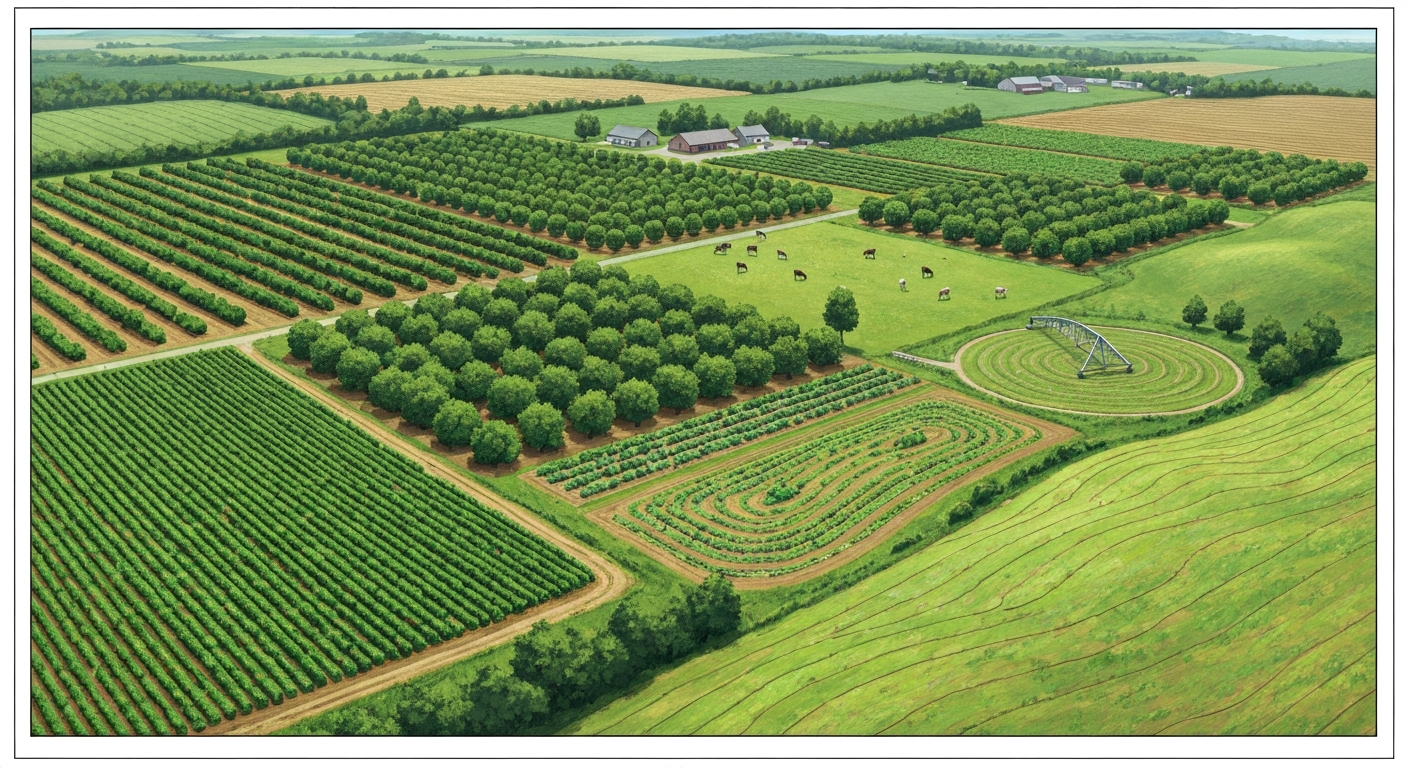
What Can I Grow on Agricultural Land: Crops by Climate & Region
What can I grow on agricultural land: crop choices by climate, soil, water, scale, markets, legal limits, and pasture-to
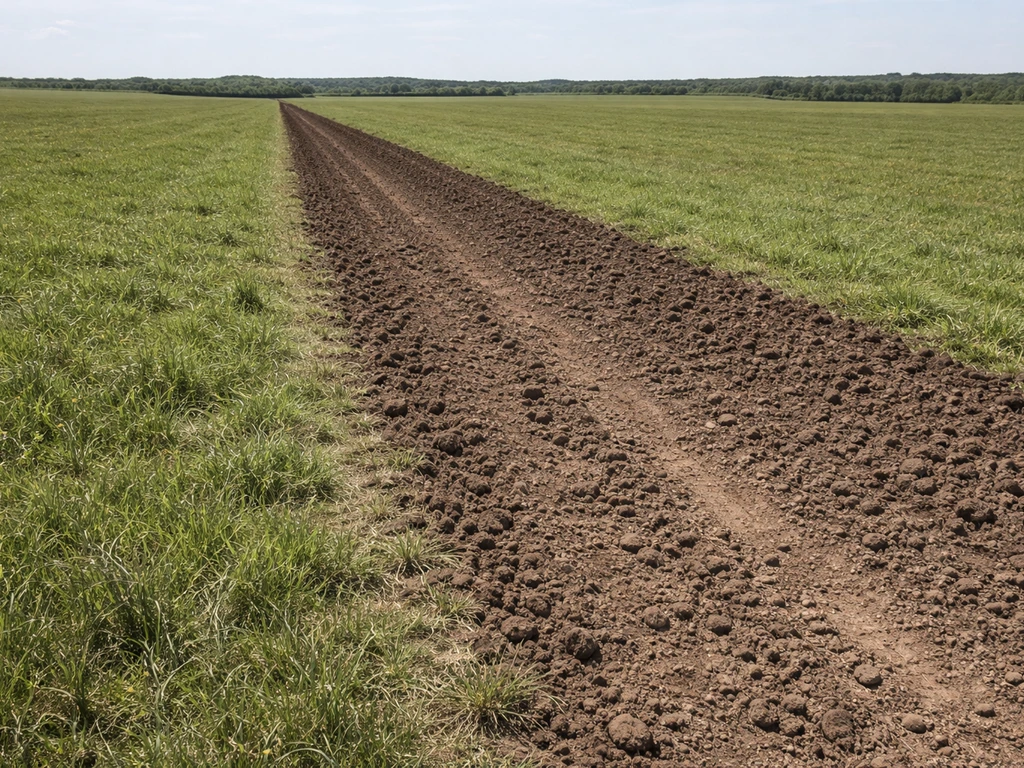
Can You Grow Crops on Pasture Land? Practical Guide
Learn if and how to grow crops on pasture land, including crop picks, soil prep, conversion steps, and common pitfalls.
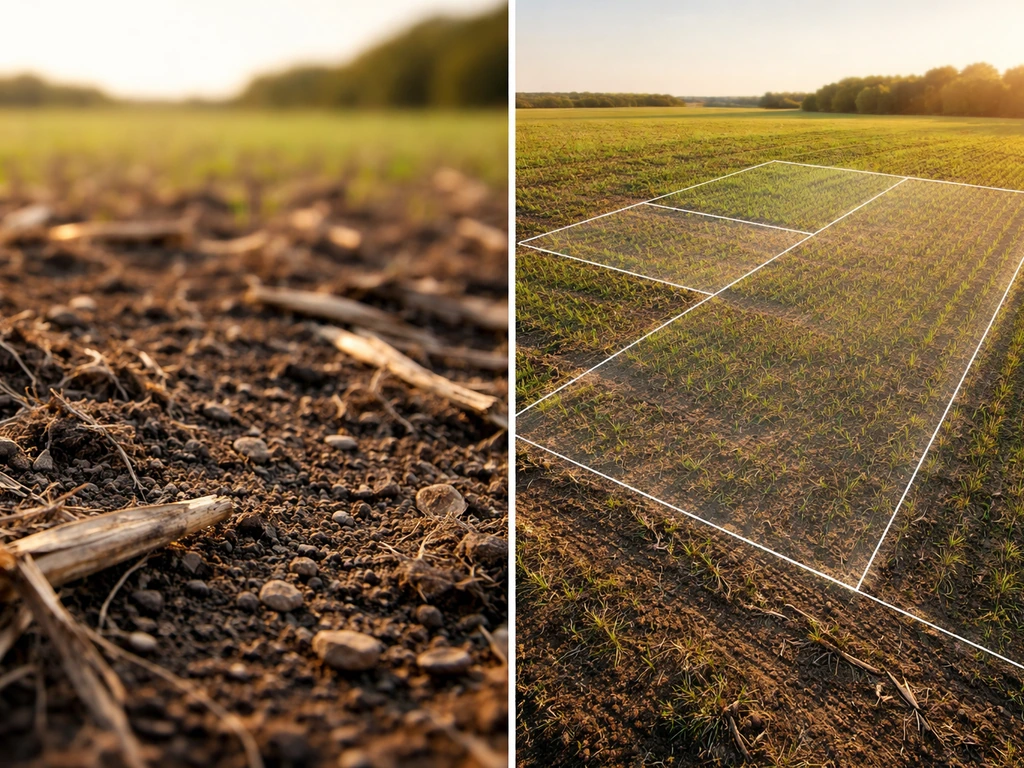
Land Where Crops Grow Easily: A Crop Mapping Guide
Use crop mapping to find land where crops grow easily by matching climate, soil, drainage, and sunlight to the right cro