Most farmers in temperate climates like the U.S. Midwest grow one main crop per field per year. But depending on where you are, your growing season, and how you manage your land, the realistic number can range from one crop every two years (in dry or short-season areas) all the way to three or more crops per year (in tropical or heavily irrigated regions). Climate is the biggest lever. After that, it comes down to your goals, your water access, and which crops you're stacking.
How Many Crops Do Farmers Grow in a Year by Region

Samuel Rourke
7 Jul 2026
What 'number of crops per year' actually means
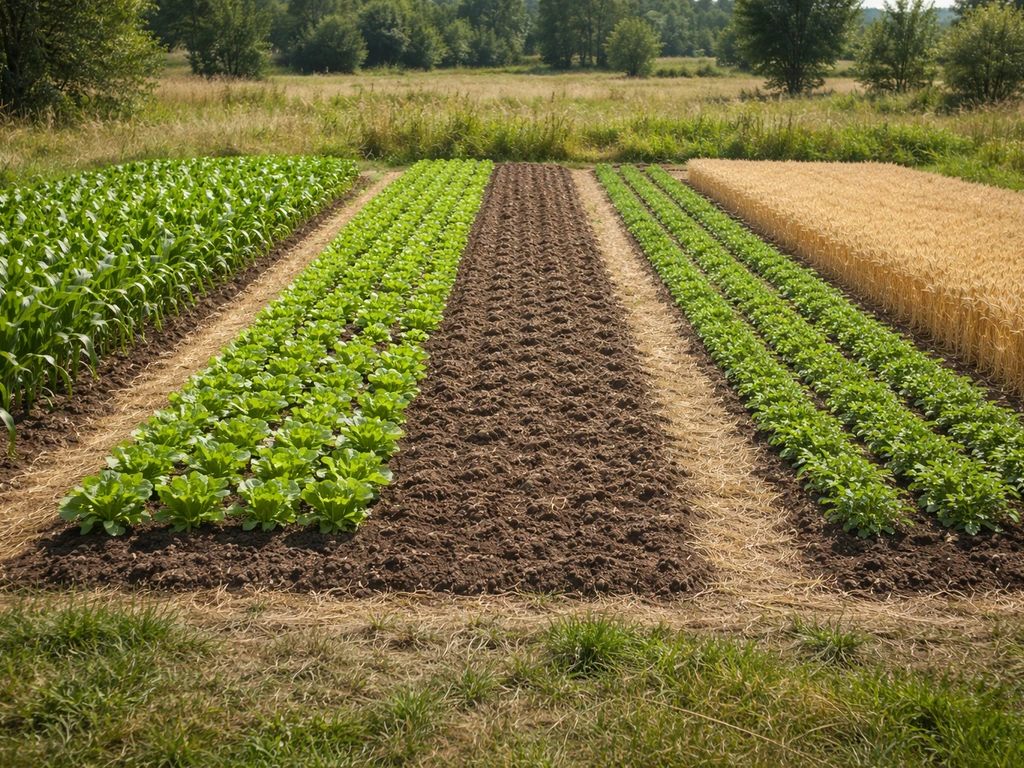
This question sounds simple but it hides a few different things people might mean. There's a big difference between a single-crop system, a crop rotation, and double or triple cropping, and those terms get mixed up constantly.
A single-crop system means one crop is planted and harvested from a given field in a 12-month period. That's the default for most commercial row-crop farmers in the northern U.S. and Canada. Crop rotation is a multi-year system where different crops are grown on the same field in successive seasons or years. A classic example is corn one year, soybeans the next. Each year still has one crop per field, but the crops change over a longer cycle. That's not the same as growing multiple crops in a single year. In some regions, farmers also use plastic film or low tunnels to extend the growing season and grow extra crops growing multiple crops in a single year.
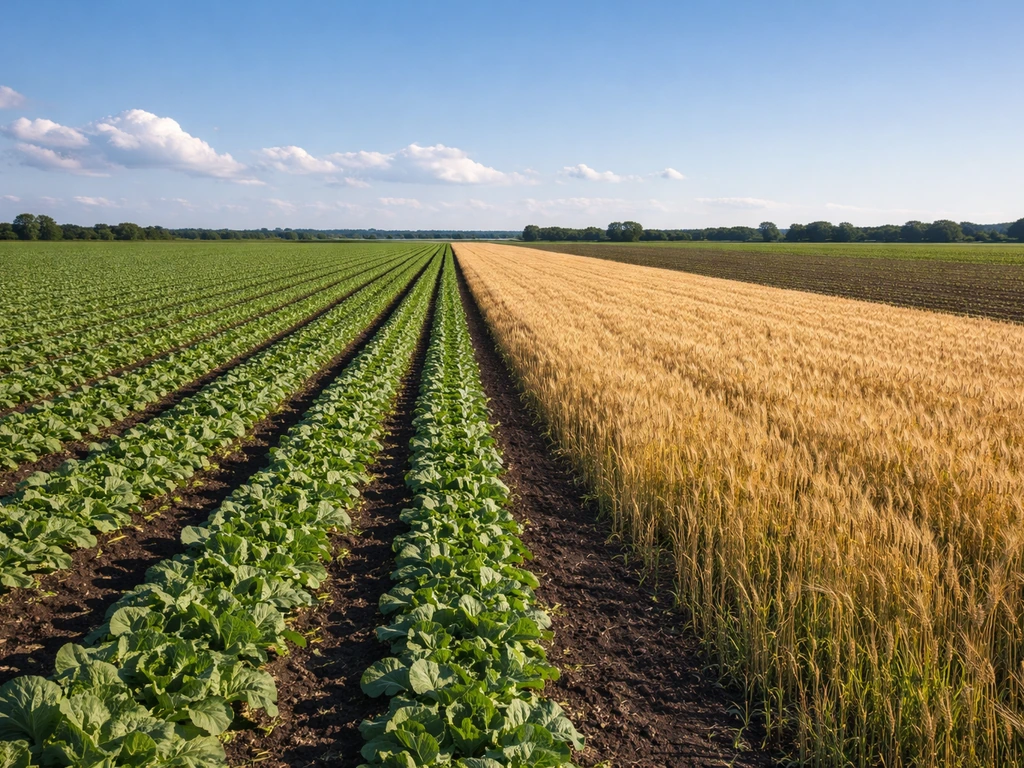
Double cropping is something else entirely. The USDA defines it as the consecutive planting of two specific crops that are both capable of being planted and carried to maturity on the same acreage within a 12-month period. So a Virginia farmer who plants winter wheat, harvests it in June, then immediately plants soybeans and harvests in October has double-cropped that field. The USDA's Risk Management Agency even has a formal insurance distinction for this, separating 'following another crop' (FAC) practices from standard single-season (NFAC) planting.
Triple cropping, common in parts of Southeast Asia and year-round tropical climates, adds a third harvest cycle. At that point, you're often talking about irrigated rice systems or fast-maturing vegetable successions. The FAO measures this intensity as 'cropping intensity,' which is the total gross cropped area divided by the net arable land.
FAO’s GAEZ v4 overview describes how it evaluates agricultural resources and attainable yields and uses cropping intensity to represent production under different management and rain-fed or irrigated conditions cropping intensity, which is the total gross cropped area divided by the net arable land.
FAO explains that gross cropped area can exceed net cropped area because fields may be cropped successively, and that comparing net cropped area with gross cropped area underpins how cropping intensity (cultivation intensity) is measured cropping intensity as 'cropping intensity,' which is the total gross cropped area divided by the net arable land.
A cropping intensity above 100% means at least some fields are producing more than one crop per year.
What actually drives how many crops a farmer can fit in a year
Climate is the foundation. Growing season length, measured in frost-free days or growing degree days, sets the ceiling on what's even biologically possible. A farmer in Minnesota with 120 frost-free days is working with a fundamentally different calendar than a farmer in Florida with 300+ frost-free days. But climate isn't the only factor.
- Frost-free days and growing season length: shorter seasons in northern temperate zones limit most farmers to one crop per year; longer seasons open up double-cropping windows.
- Rainfall and irrigation access: arid regions with irrigation can support multiple crops where rain-fed farming would struggle to support even one. Irrigated valleys in California and Arizona run two or three vegetable crops per year because of this.
- Temperature and day length through the year: some crops need cool temperatures or short days to trigger flowering. A second crop after the first harvest has to fit a narrowing window as the season turns.
- Farm type and goals: a commercial grain farmer optimizes for yield and efficiency, often running one crop per field per year. A market gardener or smallholder may run four or five successive plantings of vegetables on the same beds in a single season.
- Soil health and fallow requirements: some systems intentionally leave fields fallow to rest the soil. That drops the effective crop count below one per year but can improve long-term productivity.
- Labor and equipment: double cropping requires quick turnaround between harvest and planting. On large mechanized farms, that window is narrow and logistically demanding.
Typical cropping intensity by region and climate

Here's how cropping intensity typically plays out across major climate types. These are practical ranges, not strict rules, since irrigation and crop choice can shift things.
| Climate / Region | Typical Crops Per Year Per Field | Key Limiting Factor | Notes |
|---|---|---|---|
| Temperate continental (U.S. Midwest, northern Europe) | 1 (rotation over 2–4 years) | Short growing season, cold winters | Corn-soy rotations dominate; double cropping uncommon north of the Ohio Valley |
| Temperate with long summers (Mid-Atlantic, southern Midwest) | 1–2 | Moderate season allows wheat-soy double crop | Winter wheat harvested June, soybeans planted immediately; common in Virginia, Kentucky, Kansas |
| Mediterranean (California, southern Europe, Chile) | 1–3 depending on crop type | Dry summers require irrigation | Vegetable rotations with irrigation can run 2–3 cycles; dryland grain usually once per year |
| Subtropical (southeastern U.S., northern India, southern China) | 2–3 | Long warm season, rainfall or irrigation needed | Rice double-cropping common; vegetables run multiple successions |
| Tropical (Southeast Asia, sub-Saharan Africa, Central America) | 2–3+ | Year-round warmth, water availability | Triple-crop rice in Vietnam and Bangladesh; mixed smallholder systems often grow 3–5 different crops in overlapping cycles |
| Arid with irrigation (Arizona, Israel, Egypt's Nile Valley) | 2–3 | Water supply is the hard ceiling | Without irrigation, cropping intensity can fall below 1; with it, lettuce-cotton-vegetable rotations run year-round |
Common crop sequences farmers actually use
Single-season systems
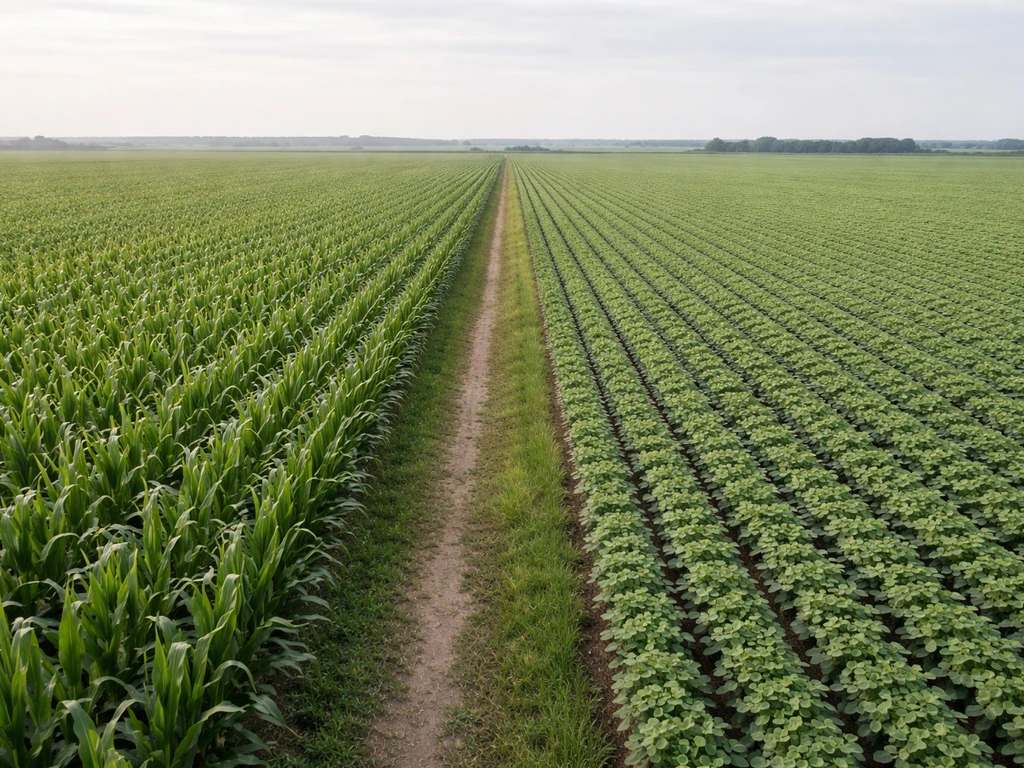
In the U.S. Corn Belt, the dominant pattern is one crop per field per year, alternating corn and soybeans over a two-year cycle. So in any given year, half the farm grows corn and the other half grows soybeans. The field sees one crop per year, but the rotation benefits soil structure and breaks pest cycles. This is the most common commercial grain pattern in states like Iowa, Illinois, and Indiana. To get a quick answer to what crops do farmers grow, look at common crop sequences in your region and the growing season limits your farm faces.
Double-cropping sequences
The classic U.S. double-crop sequence is winter wheat followed by soybeans. Winter wheat is planted in fall, overwinters, and is harvested in June. Soybeans are planted immediately after wheat harvest and reach maturity in October. This works well across Virginia, Maryland, Kentucky, and parts of Kansas and Missouri. USDA ERS data shows double cropping covers only about 2% of U.S. cropland in most years, concentrated in these mid-latitude states where the combined growing windows of two crops fit within 12 months.
Multi-crop and intensive vegetable systems
Market gardeners and smallholders operate differently. A one-acre intensive vegetable operation in North Carolina might run spring lettuce, then summer tomatoes, then fall brassicas on the same beds, getting three distinct crops from the same ground in a single year. In tropical regions, farmers growing what subsistence farmers grow often intercrop, meaning two or more crops are planted together in the same field at the same time, which further complicates the question of 'how many crops' since multiple species are in the ground simultaneously.
How to estimate the realistic crop count for your location today
If you want to figure out what's realistically possible in your specific location, here's the practical approach: Farmers also use cover crops like phacelia to protect soil, support beneficial insects, and improve the next cash crop, which is one reason you might see it grown in certain rotations.
- Find your average last spring frost date and first fall frost date. The USDA Plant Hardiness Zone Map and NOAA's climate data both provide this. The window between those dates is your primary growing season.
- Look up the days-to-maturity for your target crops. If your season is 150 days and a crop takes 90 days, you have a 60-day window left for a second planting. If that 60-day window matches a fast-maturing second crop (like radishes, spinach, or a short-season cover crop), you have double-crop potential.
- Check your state's Cooperative Extension Service crop calendars. Every U.S. state has one, and they show planting and harvest windows crop by crop. These are built specifically to answer 'what can I plant when' for your county.
- Review the USDA NASS Cropland Data Layer (CDL) or Crop Sequence Boundaries (CSB) for your region. These satellite-based datasets show what crops have actually been grown on which fields over multiple years, giving you real-world precedent for what rotations and double-crop patterns are practical near you.
- Talk to your county's USDA Farm Service Agency (FSA) office. They work with USDA's double-cropping definitions daily for insurance and program eligibility purposes, so they can tell you what sequences are recognized and covered in your area.
- If you're outside the U.S., FAO's Global Agro-Ecological Zones (GAEZ v4) model is a free tool that classifies land into single-crop, limited double-crop, and triple-crop zones globally, based on climate and soil data.
How historical farming patterns compare to modern ones
Ancient and medieval farmers generally grew fewer crops per year per field than modern farmers can, but for more complicated reasons than just technology. The three-field system used across medieval Europe divided land into three sections: a winter crop, a spring crop, and fallow. That means roughly two-thirds of the land was cropped in any given year, but any one field was farmed only two years out of three. If you're wondering what farmers grow in fields, the answer often comes down to the typical crop rotation and double-cropping patterns in that region two main crops per year. Cropping intensity was well below 100% by FAO's modern definition.
Ancient Egyptian farmers in the Nile Valley actually achieved something closer to modern double-cropping intensity. The annual flood deposited nutrients, and with careful irrigation management, they could grow two crops per year on the same land, typically emmer wheat or barley in the cool season followed by legumes or flax. This was exceptional by pre-industrial standards and depended entirely on the Nile's flood cycle as a natural irrigation system.
In tropical Asia, wet-rice cultivation has allowed two and sometimes three crops per year for centuries, long before modern inputs. The limiting factor was always water management, not technology. Terraced rice systems in Bali and Vietnam's Red River Delta have been running multi-crop annual cycles for over a thousand years.
What modern agriculture changed most is the predictability and geographic expansion of double cropping. Synthetic fertilizers removed the need for long fallow periods to rebuild soil nitrogen. Irrigation extended cropping into arid regions and extended seasons in semi-arid ones. Faster-maturing crop varieties, bred specifically for short-season windows, opened up double-crop opportunities in places that were previously single-crop by necessity. USDA ERS only started tracking double-cropped acres separately in recent decades because it wasn't widespread enough historically to warrant separate accounting.
Quick examples: crops per year for specific places
Here are concrete estimates for several locations, the kind of quick regional answer this site is built to help you find:
| Location | Frost-Free Days (approx.) | Realistic Crops Per Year Per Field | Typical System |
|---|---|---|---|
| Iowa (Corn Belt) | 150–165 | 1 | Corn-soy rotation; one crop per field per year |
| Virginia (Mid-Atlantic) | 180–200 | 1–2 | Wheat-soy double crop common in the Piedmont and coastal plain |
| Central Valley, California | 250–300 | 2–3 with irrigation | Lettuce, tomato, or vegetable rotations; dryland grain once per year |
| Florida (south) | 300–365 | 2–3+ | Sugarcane, winter vegetables, year-round citrus management |
| Great Plains (Kansas) | 170–185 | 1–2 | Winter wheat as primary crop; dryland corn or sorghum in rotation; limited double-crop in the south |
| Mekong Delta, Vietnam | 365 (tropical) | 3 | Triple-crop irrigated rice is standard practice |
| Nile Delta, Egypt | ~300 with irrigation | 2 | Wheat-cotton or brassica-maize sequences with Nile irrigation |
| Northern India (Punjab) | ~270 | 2 | Wheat-rice double crop; classic green-revolution rotation |
If you're trying to understand what farmers specifically grow in a region like the Great Plains, or what crops subsistence farmers manage across multiple cycles in a year, the cropping intensity framework above gives you the right lens. The number of crops per year is always a product of local climate, water, and what the farmer is trying to achieve. Start with your frost dates and crop calendars, and the realistic range for your location will become clear quickly.
FAQ
Does “how many crops do farmers grow in a year” mean per field or per farm?
Most people mean per field during a 12-month period, because farm size matters less than how many harvest cycles happen on the same acreage. If you are comparing farms, you need to separate field intensity from crop mix across the whole operation (a farm can grow several crop types even if each field only has one).
What’s the difference between crop rotation and double cropping for the “crops per year” count?
Rotation changes which crop occupies a field across multiple seasons or years, but typically still means one harvest cycle per year per field. Double cropping requires two distinct crops that are both planted and harvested within the same 12-month window on the same acreage (criteria include suitability to reach maturity in that time).
How do I count crops when farmers intercrop (two crops planted together in the same field)?
Intercropping is different because crops are in the ground simultaneously. A practical approach is to count harvest events separately if both are harvested as distinct crops, and note the overlap (for example, “two species concurrently” versus “two separate harvests”).
If a farmer plants cover crops, do those count as additional crops per year?
Usually not for “cropping intensity” discussions focused on cash crops, because cover crops are primarily grown to improve soil and are not the main harvested product. However, they may increase the number of crop species grown on paper and can matter if you are using a strict “gross cropped area” accounting method.
What if weather delays planting or harvest, can a double crop turn into a single crop?
Yes. Double cropping is time-window dependent, a missed first harvest date can push the second crop past its maturity or temperature limits. In practice, farmers often have contingency plans, such as switching to a shorter-maturing variety or adjusting planting dates, to preserve the second harvest.
How do irrigation and drainage affect how many crops per year are realistic?
Irrigation expands the ceiling by supplying water to meet crop evapotranspiration needs, but it is not enough by itself. Poor drainage, waterlogging risk, or salinity buildup can cap how often a field can be replanted, so the practical number depends on both water supply and field conditions.
Why do some places report “cropping intensity above 100%,” what does that mean for actual crop counts?
Cropping intensity measures gross cropped area relative to net arable land, so it can exceed 100% when harvests overlap on the same land within the year. That usually corresponds to at least some fields effectively producing two harvest cycles annually, but it does not guarantee every field hits the same maximum.
Are greenhouses and high tunnels included when people ask how many crops farmers grow in a year?
They can be, but they change the definition. Open-field climate limits do not apply the same way, so protected cultivation can support multiple crop successions per year on the same unit. If you are comparing regions, specify whether you are counting field crops, orchard systems, or protected structures.
How can I estimate the maximum number of harvest cycles in my location quickly?
Start with local frost dates or growing degree days, then map planting windows backward from expected harvest and drying times. Also factor downtime for land prep between crops, because the bottleneck is often the interval between harvest of the first crop and establishment of the second.
Does crop type matter, for example grains versus vegetables?
Yes. Vegetables and specialty crops often have shorter growing cycles and more flexible succession planting, so three or more cash crops per year on the same beds can be realistic in small, high-labor systems. Row-grain systems are more constrained by mechanized timing and longer crop durations.
Next Articles
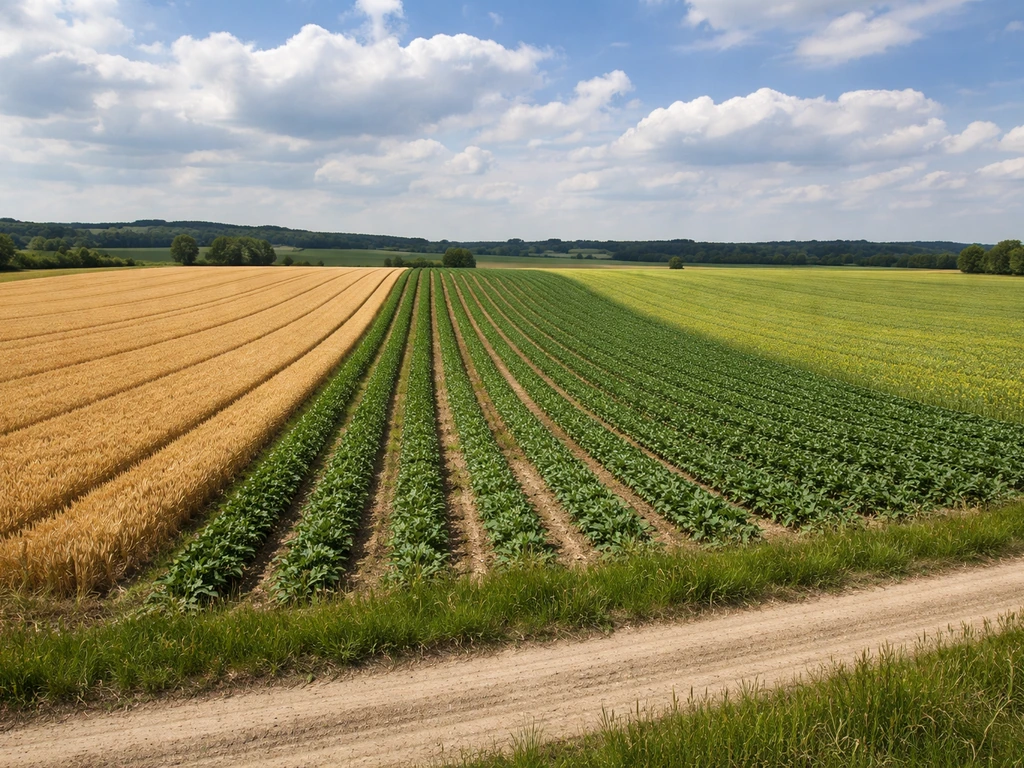
What Do Farmers Grow in Fields? Crops by Region and Climate
What farmers grow in fields varies by climate and soil. See common grain, row, oilseed and forage crops by region and ho
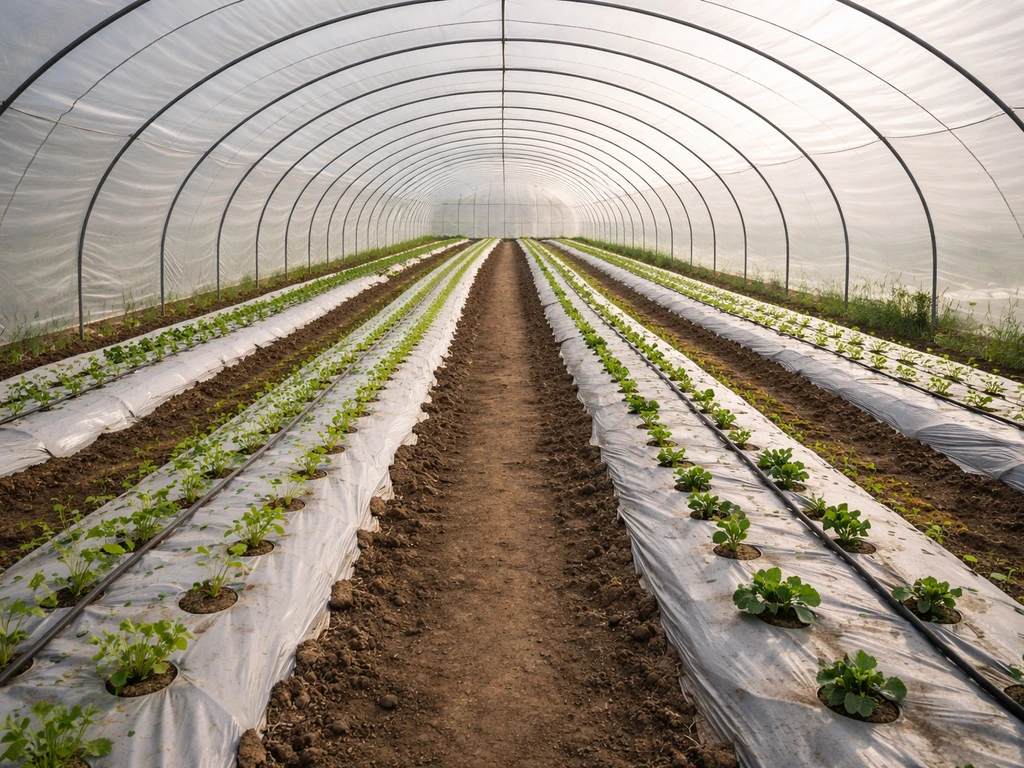
What Do Farmers Grow Under Plastic? Crops by System and Season
Crops grown under plastic by mulch, row covers, tunnels and greenhouses, with season and climate examples plus starter g
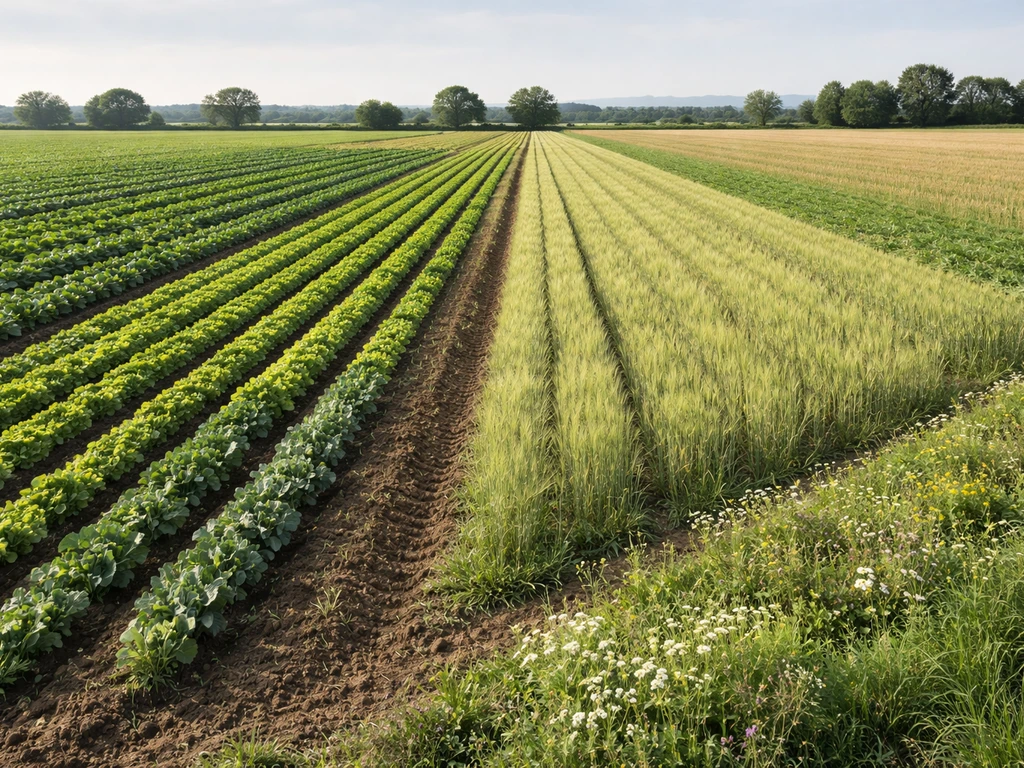
What Farmers Grow: Crops by Region, Climate, and Season
What farmers grow by region and season, with crop types, constraints, rotation, and production system examples.