
Farmers grow an enormous range of crops under plastic, but the most common are tomatoes, peppers, cucumbers, lettuce, spinach, melons, strawberries, raspberries, and other high-value vegetables and fruits. The specific crops depend heavily on which type of plastic system is being used: ground mulch film, low tunnels, high tunnels (hoop houses), or fully controlled greenhouses. Each system creates a different growing environment, and matching the crop to the setup is where most of the practical decision-making happens.
What Do Farmers Grow Under Plastic? Crops by System and Season

Samuel Rourke
30 Jun 2026
What 'plastic' actually means in farming: mulch vs tunnels
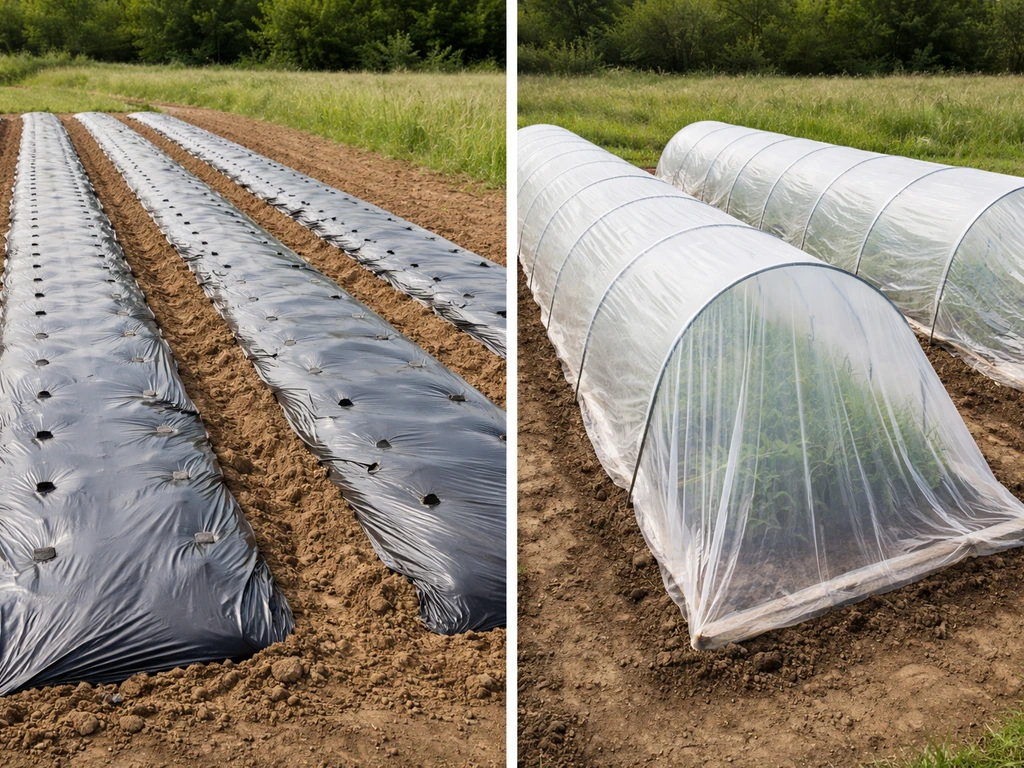
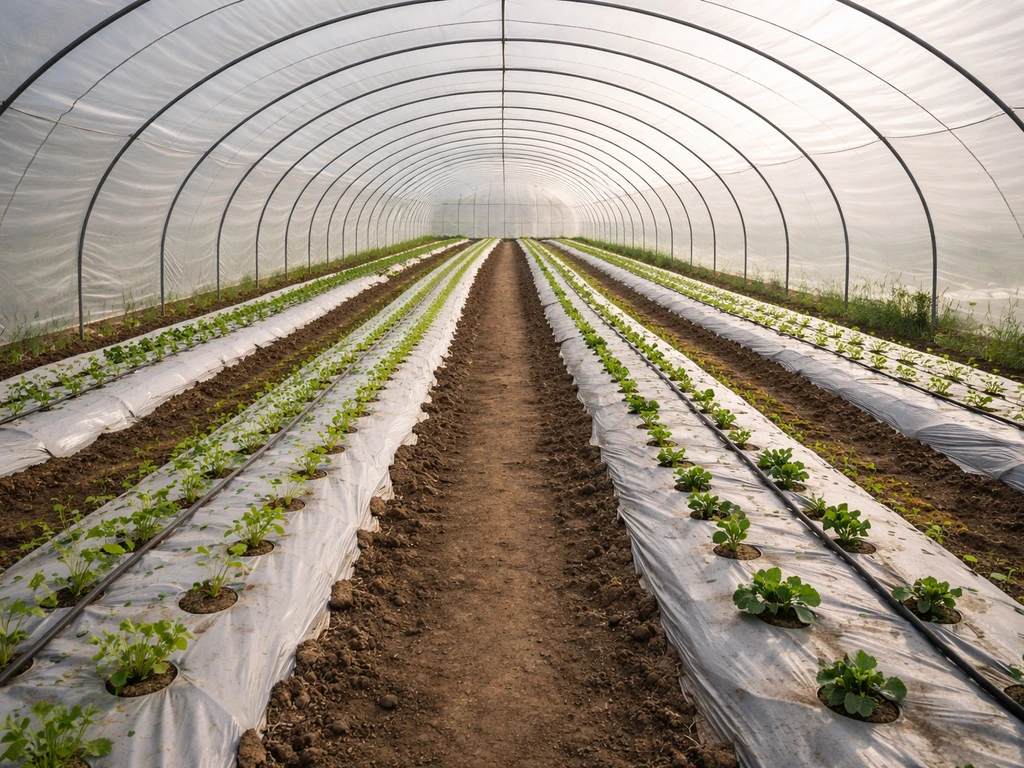
When farmers talk about growing under plastic, they usually mean one of two very different things. The first is plastic mulch, which is a film laid directly on the soil surface around crop rows. It warms the soil, controls weeds, and conserves moisture. It does not form any kind of enclosed space above the plants. The second is a plastic covering used to build a tunnel or structure over the crops, ranging from low tunnels just 2 to 3 feet tall all the way up to full high tunnels (also called hoop houses) that stand at least 6 feet and can be walked through.
These two systems are often used together. A farmer might lay black plastic mulch over the bed, install drip tape under it, and then arch low tunnel hoops over the row with a clear plastic film on top. The mulch handles soil-level conditions while the tunnel cover manages air temperature and frost protection above. Knowing which function you need, soil warming, frost exclusion, rain exclusion, or insect exclusion, shapes every crop and setup decision that follows. When farmers ask what farmers grow, these temperature and protection systems determine which crops perform best.
Row covers add one more layer to understand. These can be either plastic film or fabric (spunbond), and they rest directly on or just above the plants, supported by the crops themselves or by hoops. Lightweight row covers let in light and air and are mainly used for insect exclusion. Heavier covers block more frost. The term 'row cover' and 'low tunnel' often get used interchangeably, but technically the tunnel is the hoop structure and the cover is the material stretched over it.
At the high end of the spectrum sits the greenhouse, which adds active heating, and often more sophisticated climate control, to what a high tunnel does passively. High tunnels are typically covered in 6-mil UV-resistant greenhouse-grade polyethylene and rely on roll-up sides or end doors for ventilation. Greenhouses can cost up to about $20 per square foot while high tunnel materials can run as low as around $0.50 per square foot. That cost gap is exactly why most commercial vegetable growers reach for tunnels rather than greenhouses when the goal is season extension rather than year-round heated production.
Vegetables commonly grown under plastic, by season
Cool-season vegetables are some of the most logical crops to start with under plastic, especially in low and high tunnels. Phacelia is often grown as a cover crop in rotation because it helps build soil health, including through improved structure and pollinator support why do farmers grow phacelia. Spinach, lettuce, kale, arugula, and other leafy greens can be grown through winter in high tunnels even in northern states. Spinach is particularly well regarded for overwintering economics.
Carrots, beets, radishes, peas, and brassicas like broccoli, cabbage, and cauliflower also fit naturally into a late-fall to early-spring high tunnel rotation. Frost tolerance thresholds matter here: crops like spinach, kale, and onions can survive temperatures below 28°F, while lettuce, carrots, and beets handle light frosts down to around 28 to 32°F but need cover if nights get harder.
Warm-season crops make up the bulk of high-value tunnel production. Tomatoes are the single most commonly grown high tunnel crop in many states, including New York where they are also among the highest economic-return options. What do farmers grow in fields? They often grow vegetables and grains seasonally, unlike the crop list typically tailored to tunnels and mulched beds tomatoes.
Peppers, cucumbers, and eggplants follow closely. A Kentucky survey of high tunnel growers confirmed spinach, peppers, tomatoes, lettuce, and cucumbers as the most consistently grown crops. The USDA Climate Hubs also highlights tomatoes, herbs, cucumbers, and peppers as the most popular and successful high tunnel crops nationally. In tunnels, you can transplant cold-sensitive crops like tomatoes and peppers about 3 to 4 weeks earlier than the earliest safe outdoor dates, which translates directly into earlier harvests and premium market prices.
For plastic mulch specifically, the standout crops are cucurbits: melons, watermelons, cucumbers, and squash. Research from Missouri Extension confirms that for early melon production, plastic mulch outperforms organic mulches at warming soil, and drip irrigation under the plastic is standard practice. The combination of soil warming, weed suppression, and moisture retention makes cucurbits unusually responsive to plasticulture. Herbs are also strong plastic mulch candidates, particularly heat-loving ones like basil.
Fruits and specialty crops that benefit from plastic protection
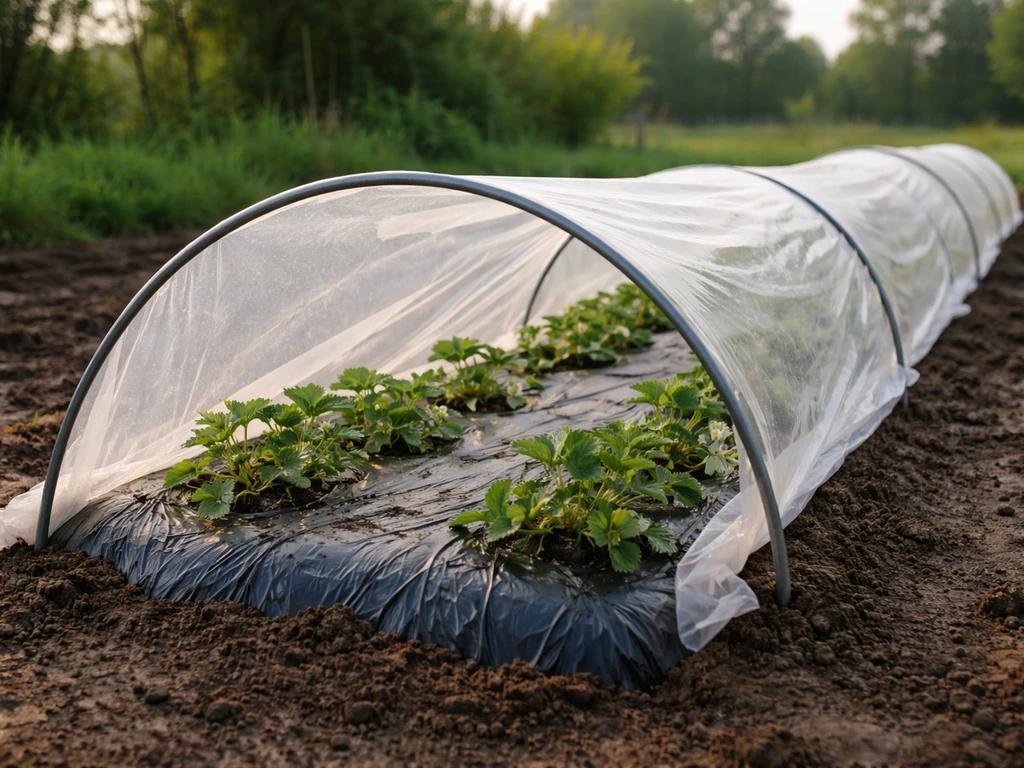
Strawberries are a textbook example of low tunnel plastic production, especially in Oregon and similar climates where OSU Extension specifically names them alongside off-season greens as prime low tunnel crops. Plastic mulch on the bed plus a low tunnel cover over the rows is the standard setup for early strawberry production. Raspberries and blackberries are increasingly grown in high tunnels as well. Raspberry cultivars are more developed for tunnel culture right now, while blackberry tunnel varieties are still catching up according to UC IPM. Cornell's high tunnel program documents that bramble tunnel systems extend the harvest window and improve fruit quality compared to field production.
Grapes are another specialty crop where plastic protection delivers measurable results. NCAT research from 2016 to 2018 found average table grape yields in high tunnels significantly higher than historical field yields for tested cultivars. The rain exclusion aspect is especially valuable for grapes because it reduces fungal disease pressure and can delay harvest timing to hit better market windows.
Blueberries are also being trialed under high tunnels, with research showing air temperatures inside a tunnel running 3 to 20 degrees Celsius higher than outside and soil temperatures about 2 to 5 degrees higher. In cooler regions, that temperature uplift can be the difference between a successful blueberry crop and one that never ripens fully.
NC State Extension also includes cherries on its high tunnel crop list, which speaks to how broadly the protected culture concept is being applied to tree and cane fruits.
How climate and region shape what goes under plastic
The logic here follows directly from what plastic protection actually does: it raises temperatures, excludes rain, and extends the shoulder seasons. In short-season climates like Alaska or the northern Great Plains, even a modest soil temperature increase from black plastic mulch is enough to shift a marginal crop into viable territory. UAF Cooperative Extension specifically addresses plastic mulch and low tunnel use in Alaska for this reason. In the Pacific Northwest, rain exclusion matters as much as warmth, making high tunnels valuable for crops like tomatoes and peppers that struggle with late blight and fruit cracking in wet summers.
In warm southern regions, plastic protection is more about timing than survival. In many regions, subsistence farmers use a mix of seasonal techniques and protected cultivation to grow staples and vegetables. Growers in the Southeast and Southwest use plastic mulch to push early cucurbit and pepper crops ahead of competition, and low tunnels for off-season greens in winter rather than summer. The Willamette Valley in Oregon, which has mild but wet winters, has seen success overwintering cauliflower, onions, and spinach under row covers. In the Mid-Atlantic and Midwest, high tunnels serve a spring-and-fall extension role for tomatoes, peppers, and greens, with summer being warm enough for field production of most crops anyway.
| Climate/Region Type | Best plastic method | Best crops to start with |
|---|---|---|
| Short-season/northern (e.g., Alaska, Great Plains) | Black plastic mulch + low tunnels | Melons, cucumbers, peppers, early tomatoes |
| Cool/wet (e.g., Pacific Northwest) | High tunnels (rain exclusion key) | Tomatoes, peppers, raspberries, greens |
| Mid-latitude (e.g., Kentucky, Mid-Atlantic) | High tunnels for spring/fall extension | Tomatoes, spinach, lettuce, cucumbers, strawberries |
| Mild/Mediterranean (e.g., California coast) | Low tunnels + plastic mulch | Strawberries, melons, herbs, early greens |
| Warm South (e.g., Oklahoma, Texas) | Plastic mulch for soil warming, row covers for off-season greens | Cucurbits, peppers, winter greens, herbs |
Choosing the right plastic setup for your crop
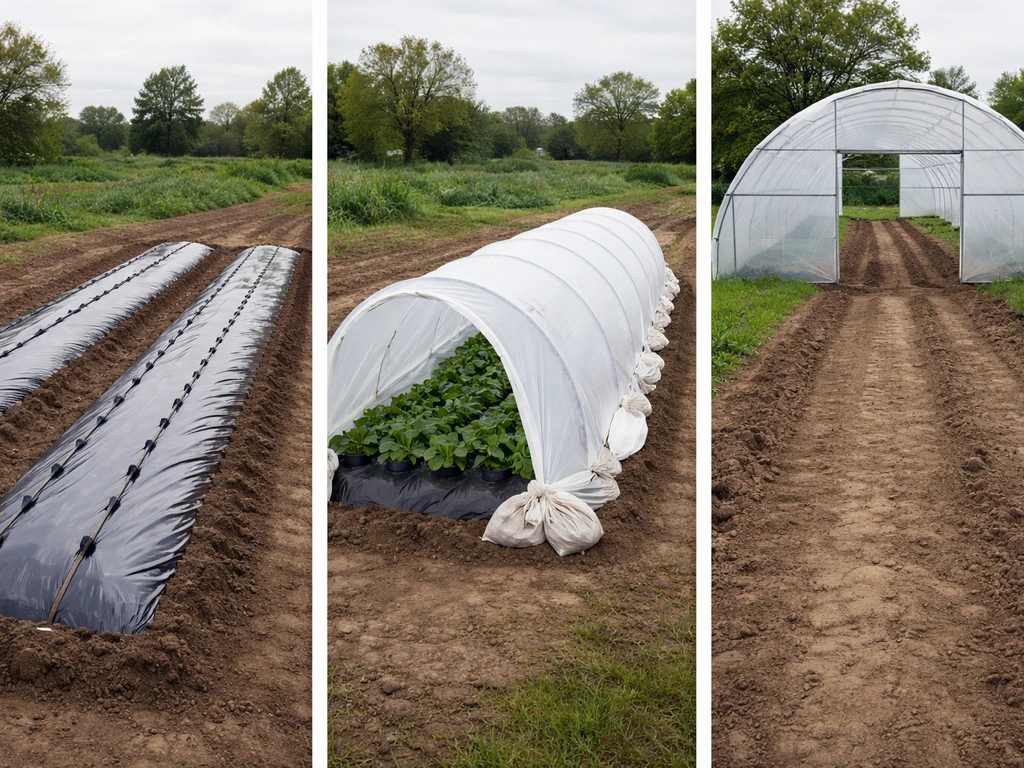
The best way to approach this decision is to start with your production goal, then match the system to it. NC State Extension puts it simply: know your crop's temperature sensitivity, its pollination needs, and its growth habit before picking a structure. A few practical rules help narrow it down quickly.
- Plastic mulch alone: best for heat-loving row crops that need soil warming and weed control but can tolerate open air. Cucurbits (melons, cucumbers, squash), peppers, tomatoes, and basil are the main targets. Use 1 to 1.25 mil embossed film for most vegetable applications. Lay drip tape at the same time you lay the mulch.
- Low tunnels (2 to 3 feet tall): best for extending the shoulder season on high-value crops without major investment. Strawberries, off-season greens, eggplants, peppers, and certain cucumbers are the OSU-recommended starting list. Use clear or transparent plastic for maximum light transmission.
- High tunnels (6+ feet, walkable): best for full-season production of tomatoes, peppers, cucumbers, and cane fruits, or for year-round greens production. The standard covering is 6-mil UV-resistant polyethylene. These structures require daily attention for ventilation and moisture management.
- Greenhouses (heated, climate-controlled): reserve these for high-value crops where year-round production or starting transplants justifies the much higher cost. Seedling propagation, herbs, and specialty greens are common greenhouse crops when full climate control is needed.
- Layered systems: USU describes using a floating row cover or low tunnel inside a high tunnel to add another few degrees of frost protection on especially cold nights. This layering approach is practical for pushing transplant dates earlier or protecting crops during unexpected late frosts.
Pollination is a factor that catches growers off guard when they first move into tunnel production. Melons and some cucumbers need pollinators to set fruit, and a sealed tunnel limits bee access. You either need to open end doors during flowering periods, manually pollinate, or introduce managed pollinators. Tomatoes and peppers self-pollinate more readily and are easier to manage in that respect, which partly explains why they dominate high tunnel crop surveys.
Practical setup basics: soil prep, irrigation, and ventilation
Soil preparation before installing plastic is more important than most beginners expect. Because the plastic will stay in place for the whole season, any weed pressure, nutrient deficiencies, or compaction issues need to be addressed before you lay the film. Remove existing weeds and volunteer plants before covering, since they become pest reservoirs once the plastic goes down. Work in compost or a pre-plant fertilizer appropriate to the crop, because you will have limited ability to amend the soil mid-season under mulch.
Drip irrigation is almost universal in plastic mulch systems. The drip tape is typically laid alongside or just under the plastic at the time of mulch installation, running down the center of the bed. This delivers water directly to the root zone, avoids wetting foliage (which reduces disease pressure), and works efficiently when paired with fertigation. For high tunnels, irrigation scheduling requires understanding your crop's daily water use and the system's output rate, since there is no rainfall to supplement. USU Extension emphasizes that successful tunnel irrigation depends on knowing field capacity, allowable depletion, and crop water use, and not just watering on a calendar schedule.
Ventilation is the most critical daily management task in a high tunnel, and it is the one beginners most often get wrong. Because tunnels exclude rain but not transpiration, humidity builds up fast, especially on warm days. Air temperatures inside a tunnel can run significantly higher than outside, which is useful in spring and fall but becomes dangerous for crops in midsummer without adequate airflow. Roll-up sides and open end doors are the primary ventilation tools.
The general rule is to open the tunnel when outside temperatures rise above about 50°F on sunny days, and to manage nighttime closure carefully to retain heat without trapping excessive moisture. Some growers use a row cover inside the tunnel as an extra thermal layer on cold nights and then remove it once temps warm up.
Pests, diseases, and weeds under plastic: what to watch for
Growing under plastic changes the pest and disease landscape in both helpful and challenging ways. High tunnels exclude rain, which cuts down on rain-splash pathogens and can significantly reduce fungal disease pressure on crops like grapes and tomatoes. NCAT specifically links grape disease reduction to rain exclusion under plastic. On the other hand, the enclosed environment creates ideal conditions for certain pests and diseases to build up fast once established, because their natural predators and environmental disruptions are reduced.
The main pests to plan your IPM program around in high tunnels are thrips, aphids, spider mites, and whiteflies. Western flower thrips feed on cucumbers, peppers, lettuce, and tomatoes. Aphids use weeds and volunteer plants as reservoirs before moving onto crops, which is why weed removal before planting is a standard recommendation from USU. Penn State Extension recommends placing blue and yellow sticky cards at canopy height as early warning monitors for all four key pest groups. Insect netting or screens over vents can physically exclude many pests before they become established.
The two most common diseases in tunnels are powdery mildew and botrytis blight. UNH Extension notes powdery mildew is very common in high tunnel tomatoes specifically. UConn Extension describes botrytis as one of the most common greenhouse and tunnel diseases overall, capable of causing leaf spots, flower blights, damping off, and stem cankers. Both are driven primarily by high humidity and poor airflow, which is why ventilation management is really your first line of disease defense, not a fungicide program.
Weed management under plastic mulch is largely handled by the mulch itself, but weed pressure inside tunnels on unplanted areas needs active management. Weeds that grow along tunnel edges or in the pathways between beds can harbor pests and compete for resources. Remove them before they flower and set seed. When transitioning a tunnel between crops, Penn State Extension recommends a thorough sanitation protocol: clean equipment, remove all plant residues, weed thoroughly, and disinfect tools and flats. Skipping this step is one of the most reliable ways to carry a pest or disease problem from one crop cycle directly into the next.
Growing crops under plastic is one of the more direct ways farmers have found to work around the limits their local climate imposes, whether that is a short growing season, a wet summer, or a frost that arrives before the tomatoes are done. The core principle is the same one that has driven protected culture practices across agricultural history: create a microclimate that suits the crop, rather than waiting for the environment to cooperate.
Modern plastic systems just do it cheaper, faster, and more flexibly than anything available before. For anyone curious about what farmers grow more broadly, from open field crops to subsistence plots to regional specialties, the same climate-first logic applies regardless of the specific method or geography involved. If you are asking what farmers grow on the Great Plains specifically, the answer depends heavily on climate, soil, and how long the growing season lasts what farmers grow more broadly.
FAQ
What do farmers grow under plastic if they only have space for a low tunnel, not a high tunnel?
Low tunnels are best matched to cool-season crops and early starts, like spinach, lettuce, kale, radishes, and overwinter greens. For warm-season crops such as tomatoes, a low tunnel usually works only for short, protected shoulder periods, because limited ventilation increases humidity risk in midsummer.
Is plastic mulch the same thing as a greenhouse cover, or do farmers use both differently?
They are different. Plastic mulch warms soil and suppresses weeds at the ground level but does not create an enclosed air environment above the plants. Tunnel or greenhouse plastic forms a canopy that changes air temperature and blocks rain, so crop choices and daily ventilation duties differ a lot.
Can farmers grow leafy greens year-round under plastic?
Year-round is possible in greenhouses with heat, but for tunnels it typically means continuous succession, not true winter growing everywhere. In high tunnels, many growers rely on overwintering leafy crops like spinach, then restart with spring plantings, using row covers on the coldest nights.
What crops are easiest for beginners when they want results quickly under plastic?
Leafy greens (lettuce, spinach, arugula) and radishes are often the quickest to learn because they tolerate cool temperatures and have simpler pollination needs. If you choose melons or cucumbers, plan for pollination access early, since sealed tunnels can prevent natural pollinators from reaching flowers.
Do tomatoes and peppers still need help with pollination in tunnels?
They usually set fruit with less intervention because many varieties self-pollinate. Still, you should manage ventilation and avoid excessive humidity, since wet, stagnant conditions can reduce effective flowering and increase disease pressure.
How do farmers decide when to open a high tunnel to prevent humidity problems?
A common practical trigger is opening during sunny days when outside temperatures rise above roughly 50°F, then carefully deciding how long to vent based on wind and forecasted nighttime lows. Growers often track inside humidity patterns, because in some climates you need more frequent venting than a simple temperature rule would suggest.
What happens if a farmer forgets to remove weeds before putting down plastic mulch?
It can backfire quickly. Weeds and volunteer plants become reservoirs for pests and disease, and they also compete for nutrients once the crop starts. Because the plastic remains for the season, late weed escapes are hard to correct without pulling up the setup.
What crops perform best with drip irrigation under plastic, and what’s the common mistake?
Most crops grown on plastic mulch use drip, especially cucurbits and heat-loving vegetables like peppers and basil. A common mistake is irrigating by calendar without checking soil moisture or stage-specific water use, which can cause uneven rooting, nutrient uptake issues, and higher disease risk from overly wet soil.
If plastic excludes rain, does that eliminate fungal disease problems completely?
No. Rain exclusion reduces rain-splash pathogens, but tunnels still trap humidity from transpiration. Diseases like powdery mildew and botrytis can still occur when airflow is poor, so growers prioritize ventilation, spacing, and sanitation rather than assuming rain protection alone fixes disease.
Which pests are most likely to appear in tunnels, and how do farmers catch them early?
Thrips, aphids, spider mites, and whiteflies are common. Many growers use blue and yellow sticky cards placed at canopy height right away after planting to detect hotspots early, before populations explode and damage is widespread.
Do farmers need special sanitation between crop cycles in a high tunnel?
Yes, especially if the next crop is from a similar plant family or you had pest or disease issues previously. Typical steps include removing all residues, sanitizing tools and flats, cleaning the area thoroughly, and controlling weeds in and around the tunnel to avoid carrying over pests into the next planting.
Are strawberries always grown under plastic, or is it climate-dependent?
It is climate-dependent. Strawberries are a common low-tunnel plastic crop because the combination of plastic mulch and a low cover helps with early season production, particularly in regions with wet or cool shoulders. In very mild climates, farmers may rely more on seasonal field methods or light row covers instead of full low tunnel setups.
Can fruit crops like grapes and blueberries really benefit from tunnels, not just vegetables?
Yes, plastic protection is used for several fruits. Rain exclusion can reduce disease pressure on grapes and improve fruit quality timing, while the temperature lift inside tunnels can help blueberries reach full ripeness in cooler regions. That said, irrigation and ventilation still matter, because enclosure changes evapotranspiration and humidity dynamics.
What’s the biggest crop-selection mistake farmers make when they ask what they can grow under plastic?
Choosing based only on desired crop without matching the system to the crop’s temperature sensitivity and growth habit. The same crop can work very differently under mulch-only versus a sealed or partially ventilated tunnel, so alignment matters more than the crop list alone.
Next Articles
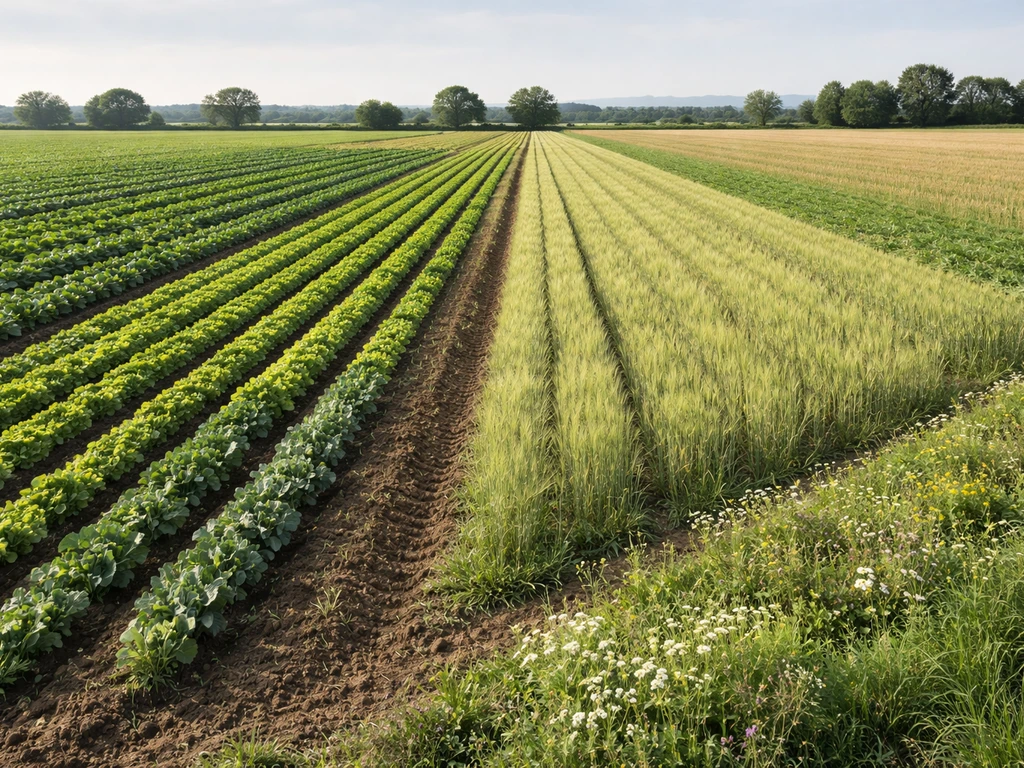
What Farmers Grow: Crops by Region, Climate, and Season
What farmers grow by region and season, with crop types, constraints, rotation, and production system examples.
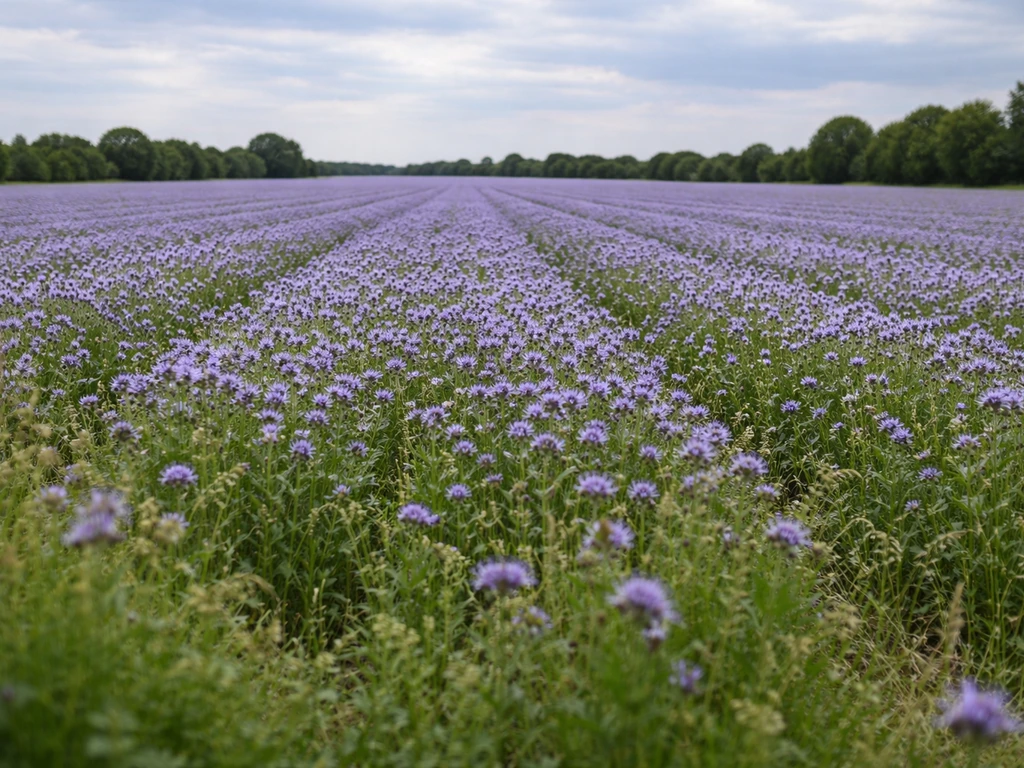
Why Farmers Grow Phacelia: Cover Crop, Soil, Pollinators
Farmers grow phacelia as a fast cover crop for soil building, erosion control, and pollinator support across temperate r
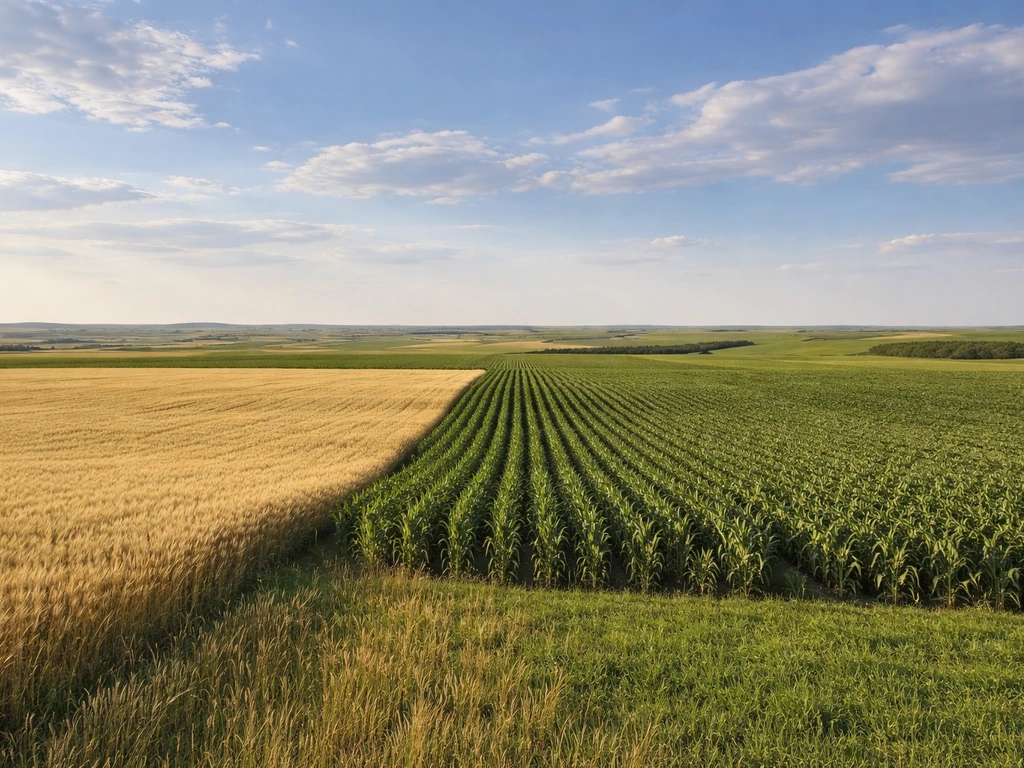
What Do Farmers Grow on the Great Plains? Crops Today
Discover main Great Plains crops today, from wheat and corn to soybeans and alfalfa, plus dryland vs irrigated farming.