Ancient India grew an impressive range of crops across its diverse regions: wheat and barley in the northwest, rice across the Ganges Plain and wetter eastern zones, a rich mix of millets and pulses across the Deccan and southern regions, cotton and sesame as major non-food crops, and spices like black pepper, turmeric, and coriander that would later drive some of the ancient world's most valuable trade routes. The specific mix depended heavily on where you were and when, so it helps to narrow down both the region and the time period before drawing conclusions.
What Crops Did Ancient India Grow? Grains, Pulses, Spices

Samuel Rourke
26 May 2026
What 'Ancient India' Actually Means (Time and Geography)
This is worth getting clear upfront because 'ancient India' can mean very different things. Scholars typically work across a few overlapping frameworks. The earliest well-documented farming comes from sites like Mehrgarh in what is now Balochistan, Pakistan. A 2025 radiocarbon study placed the earliest occupation of Mehrgarh at roughly 5223–4914 BCE, though older estimates often cited dates as far back as 7000 BCE. This northwest corridor is where the Indus Valley Civilization (roughly 3300–1300 BCE, with Mature Harappan from about 2600–1900 BCE) later flourished at sites like Mohenjo-daro and Harappa. Moving east and south, the Ganges Plain's agricultural record runs from around 2500 BCE through the early historic period (roughly 200 BCE), covering Vedic-period agriculture and the rise of the great cities. The Deccan and southern Indian Neolithic had its own independent agricultural tradition, based on indigenous millets and pulses rather than the northwest's wheat-barley package. When you read claims about 'ancient India's crops,' it's worth asking: which of these zones? Which period? The crops are genuinely different by region. In the Neolithic age, crop choices depended strongly on region, such as the millets and pulses of the Deccan versus the wheat and barley package in the northwest Neolithic age crops.
For comparison, contemporaries like ancient Egypt and Mesopotamia were working with their own regionally specific packages at roughly the same time. For a quick contrast, you can also look at what the ancient Egyptians grew and how their farming depended on the Nile and local conditions. The northwest Indian/Indus zone shared some overlap with Near Eastern crops (wheat, barley, lentils) while also developing distinctly South Asian staples alongside them.
Major Staple Grains
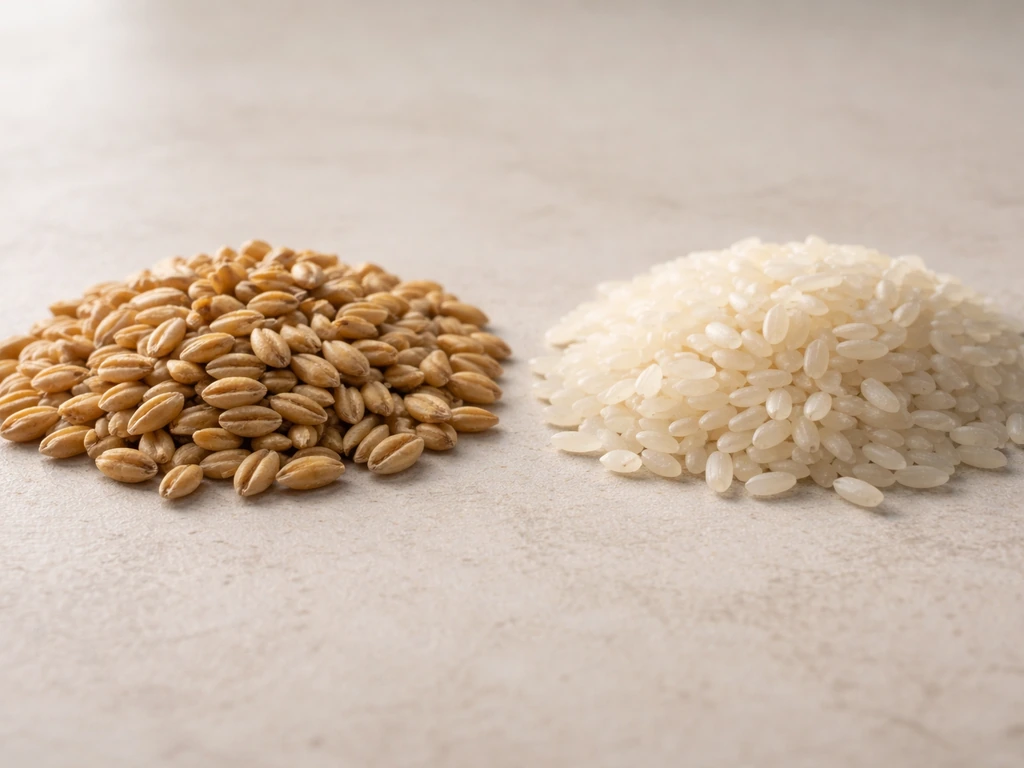
The grain story in ancient India is really a tale of two seasons and two main regions. In the northwest (the Indus Valley zone), barley was the dominant cereal and appears to have been truly ubiquitous in the archaeobotanical record. So the answer to what crops the Sumerians grew depends on how you compare those Mesopotamian staples and the timing of their cultivation wheat and barley. Wheat (Triticum aestivum) was also present but less dominant. Both are winter cereals, planted to take advantage of winter rains in a rabi (cool-season) cropping system. This is the same crop-season logic that governed Near Eastern agriculture, and it's one reason the northwest Indian record looks somewhat similar to what you see in Mesopotamia and ancient Egypt. If you are comparing, you can also look up what crops ancient Egypt grew and how its regional environment shaped farming choices.
Rice (Oryza sativa) is a different story. It's a summer crop suited to the monsoon-fed warmth of the Ganges Plain and the wetter eastern and southern zones. Archaeobotanical evidence confirms cultivated rice on the Ganges Plain across the Neolithic through early historic periods. The key caveat: early Indus-period rice evidence exists but remains debated. Scholars are careful to distinguish between gathered wild rice and deliberately cultivated crops, and secure early dating is tricky. So for the northwest Indus zone, treat rice as a secondary or later crop rather than a founding staple.
Millets deserve as much attention as wheat and rice. Several millet species, including sorghum and various finger and foxtail millets, were grown across the Deccan Plateau and peninsular India. These are drought-tolerant warm-season crops that thrived where monsoon rainfall was less reliable and soils were shallower. The southern Neolithic agricultural system was built around indigenous millets and pulses, quite independently from the northwest's wheat-barley package.
| Grain | Season (cropping system) | Primary ancient region | Notes |
|---|---|---|---|
| Barley (Hordeum vulgare) | Winter (rabi) | Northwest/Indus Valley | Ubiquitous in Harappan archaeobotany |
| Wheat (Triticum aestivum) | Winter (rabi) | Northwest/Indus Valley, Ganges Plain | Present but less dominant than barley in Indus zone |
| Rice (Oryza sativa) | Summer (kharif) | Ganges Plain, eastern/southern India | Indus-period evidence debated; secure on Ganges Plain |
| Sorghum and millets | Summer (kharif) | Deccan Plateau, southern India | Core of southern Neolithic agriculture |
| Finger millet (Eleusine coracana) | Summer (kharif) | Southern/peninsular India | Indigenous domestication in South India |
Pulses and Protein Crops
Pulses were arguably as important as grains across ancient India, and the regional differentiation here is just as striking. Lentils (Lens culinaris) and peas (Pisum sativum) appear in the northwest, broadly consistent with the Near Eastern legume package that also included chickpea. Chickpea (Cicer arietinum) is attested archaeobotanically in South Asian sites, though the evidence can be fragmentary compared to, say, wheat or barley.
The southern and Deccan Neolithic zones had their own indigenous pulses: horse gram (Macrotyloma uniflorum), mung bean (Vigna radiata), and urad/black gram (Vigna mungo) are among the native South Asian legumes with domestication centers in South India, Gujarat, and the Ganges Plain. Scholarly work on this specifically highlights multiple independent domestication centers within India itself, which is a reminder that South Asia wasn't just a passive recipient of crops from the Near East. It was generating its own crop plants at the same time.
One practical note if you're researching this: the archaeobotany of Indian pulses is complicated because identification from charred seeds requires careful morphological criteria. Regional differences in which pulses appear in the record partly reflect real agricultural variation and partly reflect differences in preservation and identification standards. Peer-reviewed reviews of pulse archaeobotany make this point explicitly, so treat broad claims about 'widespread' pulse cultivation with appropriate nuance.
- Lentil (Lens culinaris): northwest India, associated with rabi season
- Chickpea (Cicer arietinum): northwest and Ganges Plain; evidence somewhat fragmentary
- Pea (Pisum sativum): northwest India, part of the Near Eastern legume package
- Horse gram (Macrotyloma uniflorum): southern Deccan, indigenous domestication
- Mung bean (Vigna radiata): South India, Gujarat, Ganges Plain; independently domesticated
- Black gram/urad (Vigna mungo): South India; native South Asian crop
Oilseeds, Fiber Crops, and Other Industrial Plants
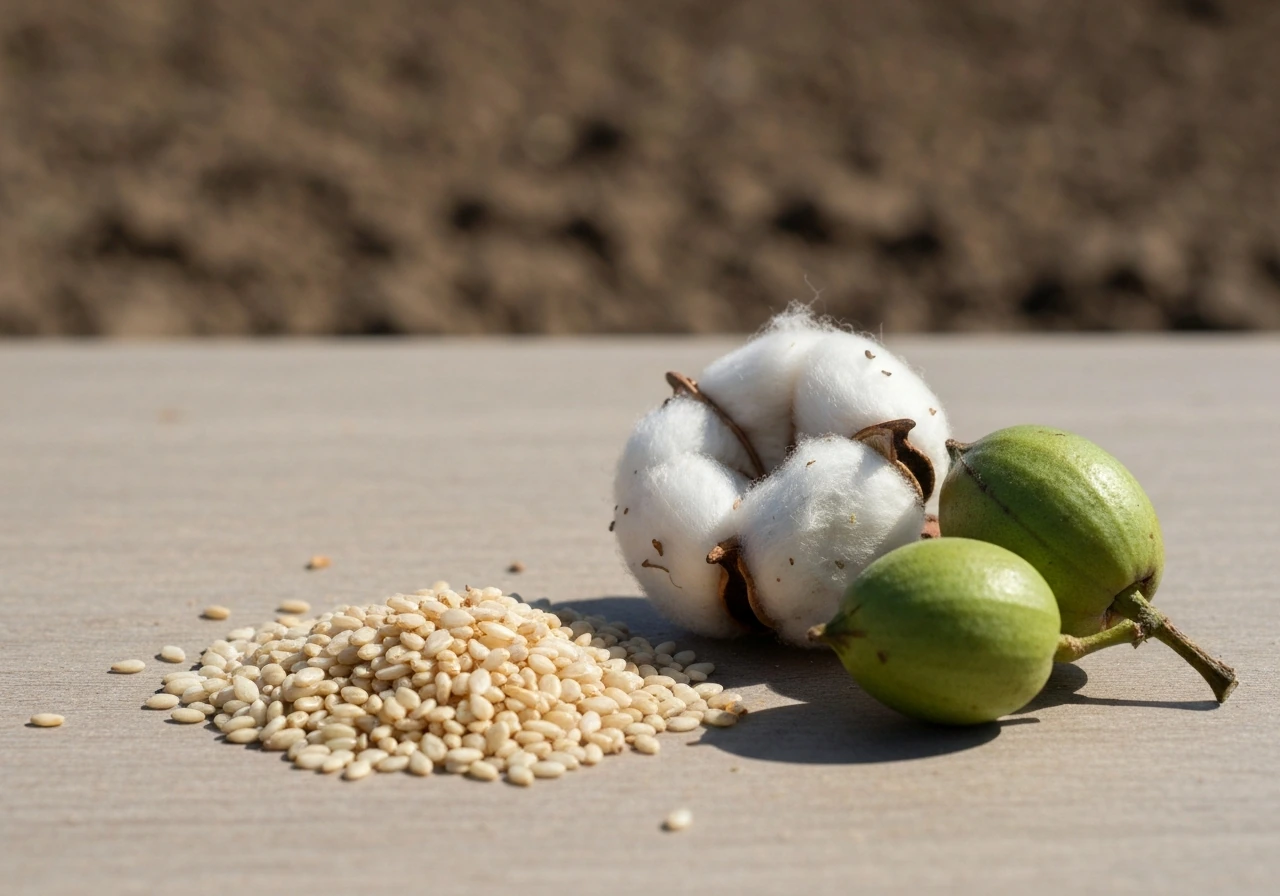
Sesame (Sesamum indicum) is one of the most significant oilseeds in ancient India's record. Charred sesame has been reported from Harappan strata at Harappa itself, with archaeobotanical dates attributed to around 3050–3500 BCE. The Sanskrit term 'tila' for sesame appears in the Atharvaveda and in later Vedic texts like the Taittiriya Samhita, confirming both agricultural and ritual/religious use well into the textual period. As an oilseed, sesame was valued for cooking oil, lamp fuel, and preservation, making it as economically important as any grain.
Cotton is perhaps ancient India's most consequential non-food crop from a global perspective. The earliest evidence for cotton fibers in the region comes from blank" rel="noopener noreferrer">mineralized cotton found in a copper bead string at Neolithic Mehrgarh in Balochistan, placing textile-related cotton use deep in the pre-Harappan period. By the Mature Harappan phase, actual cotton textile fragments and spindle whorls have been found at Mohenjo-daro, demonstrating a fully developed textile industry. Cotton cultivation in the Indus zone was well established by the third millennium BCE, making this one of the earliest centers of cotton agriculture anywhere in the Old World.
Flax was also cultivated in the northwest, and there is evidence for other oilseeds including mustard. These would have served dual roles as food oils and fiber/oil for industrial purposes. Hemp likely had early uses as well, though it's harder to pin down archaeobotanically for the ancient Indian record specifically.
Fruits, Vegetables, and Garden Crops
Pomegranate (Punica granatum) is native from the Middle East through the Himalayas into northern India and has been cultivated across this range since ancient times. It appears in early Indian texts and material culture as both a food crop and a symbolic/sacred fruit. Mangoes (Mangifera indica) are native to South Asia and were being cultivated and valued long before the historical record becomes detailed. The Jataka tales and later Sanskrit literature mention mango groves extensively, pointing to widespread cultivation by the early historic period if not earlier.
Vegetables including eggplant (Solanum melongena), cucumbers, gourds, and various leafy crops were grown in garden plots across the subcontinent. Eggplant is considered native to India and has been cultivated here longer than almost anywhere else. Coconut palms (Cocos nucifera) were cultivated along coastal southern India and provided food, oil, fiber, and drink. Date palms were cultivated in the northwest, overlapping with the same zone where they appear in Mesopotamian and Egyptian agriculture.
Sugar cane (Saccharum officinarum) has deep roots in the Indian subcontinent. It was being processed and refined in India by the early centuries CE at the latest, and there are earlier textual references to sweet preparations. The Ganges Plain, with its warm climate and access to river water for irrigation, was a natural fit for cane cultivation.
Spices, Condiments, and Trade-Linked Crops
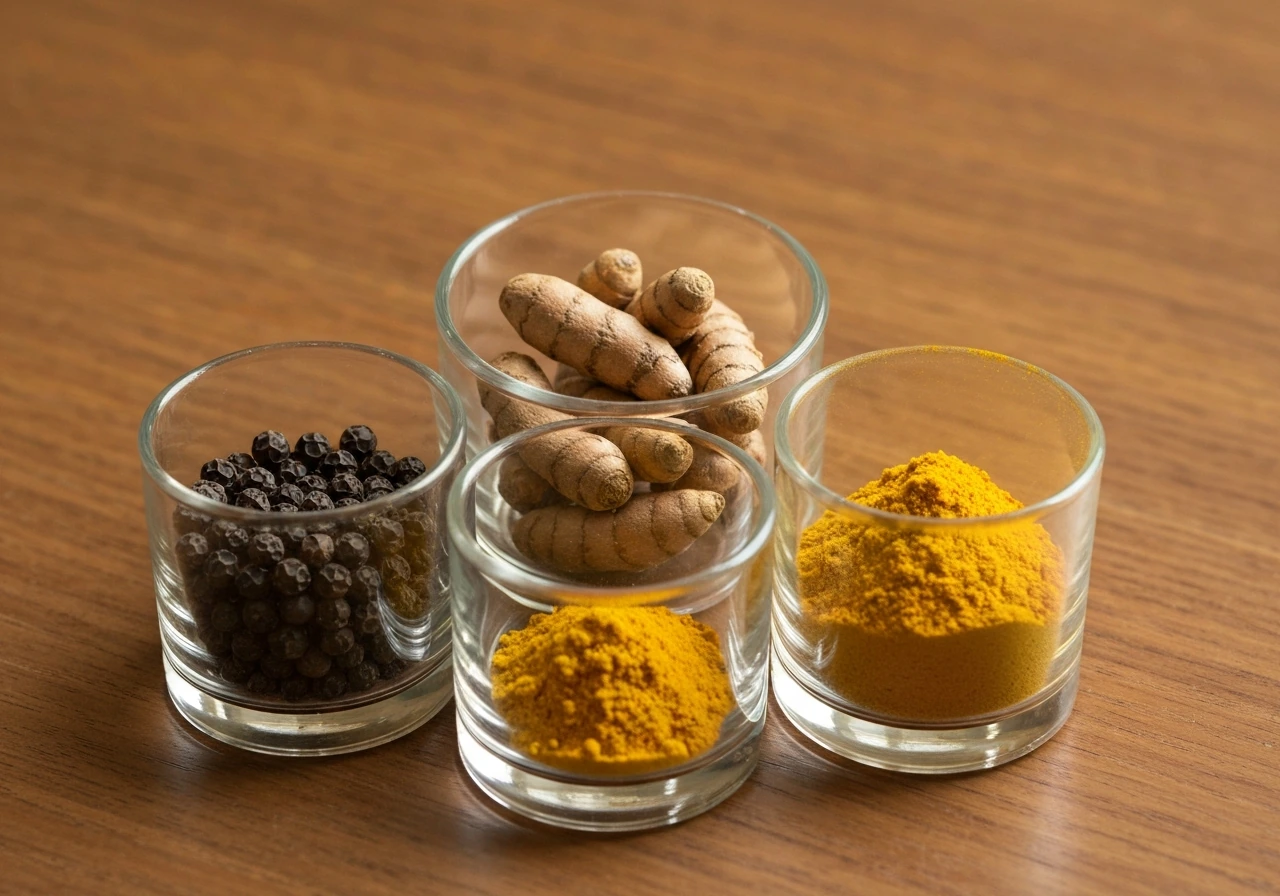
This is the category where ancient India really stood apart from its contemporaries. Black pepper (Piper nigrum) was native to the Western Ghats of southwestern India and became arguably the most traded spice in the ancient world. The Periplus of the Erythraean Sea, a first-century CE Greek merchant's guide to the Indian Ocean trade, mentions pepper explicitly among Indian exports. The Periplus of the Erythraean Sea explicitly mentions blank" rel="noopener noreferrer">pepper among Indian exports in its description of the Indian Ocean trade. If you are also comparing this with the Greek side, you may wonder what crops did ancient Greece grow and how their farming differed by region. By that period, the trade was massive and well-organized. But pepper cultivation and use in India itself was ancient long before the trade documentation catches up.
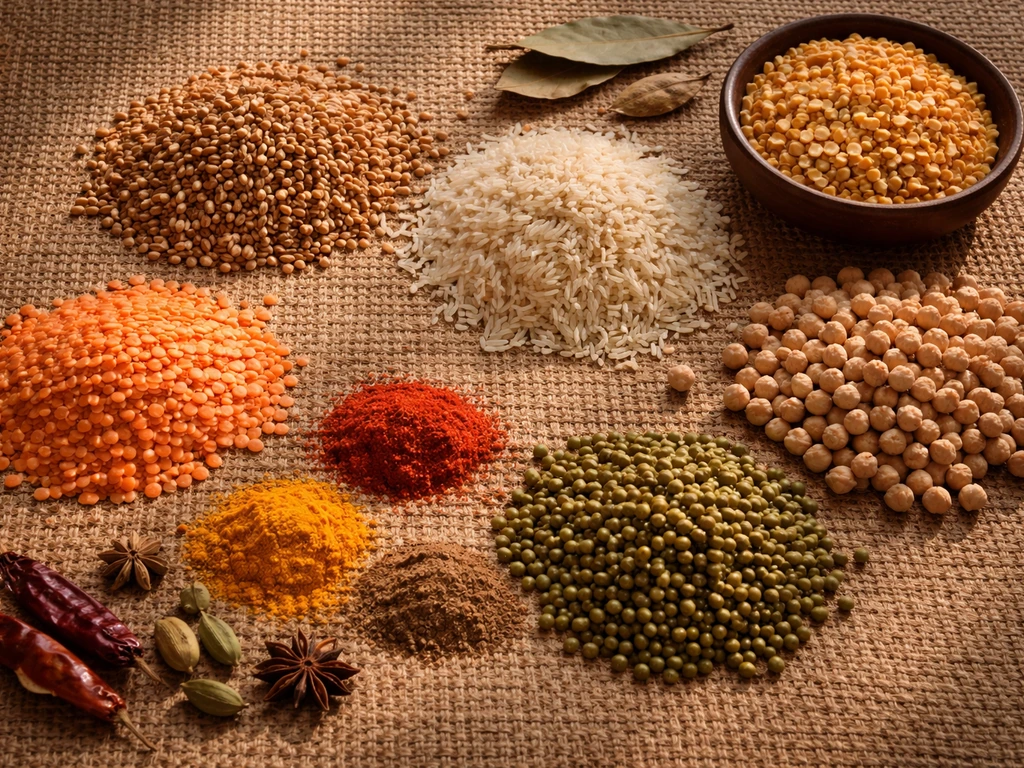
Turmeric (Curcuma longa) is native to southern India and Indonesia and has been used from antiquity as a condiment, textile dye, and medicinal plant. Coriander, cumin, ginger, cardamom, and long pepper also appear in ancient Indian textual sources and trade records. These weren't just kitchen crops; they were economic drivers that shaped long-distance trade networks from the Mediterranean to Southeast Asia.
Indigo (Indigofera tinctoria) served as a dye crop and trade commodity. Sandalwood, though not a food crop, was harvested and traded extensively. The spice and condiment sector is where ancient India's agricultural knowledge connected most directly to global commerce, and the Periplus remains one of the most useful primary texts for documenting what commodities were moving out of Indian ports and what regions they came from.
- Black pepper (Piper nigrum): Western Ghats, southwestern India; major ancient export
- Turmeric (Curcuma longa): southern India; condiment, dye, and medicine from antiquity
- Coriander (Coriandrum sativum): widely cultivated; appears in ancient texts and trade contexts
- Cumin (Cuminum cyminum): northwest India and beyond; winter crop
- Ginger (Zingiber officinale): southern and eastern India; traded across Asia
- Cardamom (Elettaria cardamomum): Western Ghats; native and traded widely
- Indigo (Indigofera tinctoria): widespread; major dye crop and export
How We Know: Evidence and How to Verify It
The evidence for ancient Indian crops comes from two main streams: archaeobotany (physical plant remains) and historical texts. On the archaeobotanical side, the most reliable data comes from charred seeds and phytoliths recovered from excavated sites. Charred seeds survive because burning carbonizes them without destroying their morphology. Phytoliths are microscopic silica bodies that form in plant tissues and persist in sediment long after the plant itself is gone. Combining both methods, as researchers have done at Indus Valley sites, gives stronger regional and seasonal interpretations than either alone.
The textual evidence includes Vedic Sanskrit texts (the Rigveda, Atharvaveda, and later samhitas), which mention crops like sesame, barley, and rice explicitly. Later Sanskrit agronomic literature (the Arthashastra of Kautilya, dated roughly to the Mauryan period around 300 BCE, and the Brihat Samhita) provides more systematic crop lists. The Periplus of the Erythraean Sea gives a trader's-eye view of what Indian regions were producing and exporting around the first century CE. Accounts from Chinese pilgrims like Faxian and Xuanzang, though focused on Buddhism, contain incidental observations about Indian agriculture and material culture that scholars use as cross-checks.
If you want to verify specific crop claims more rigorously, here's how to approach it practically:
- Check which site or region the claim is based on. Wheat-barley claims rooted in Indus Valley sites are well-supported. Claims about rice in the early Indus period should be treated cautiously until you can confirm the dating methodology used.
- Look for peer-reviewed archaeobotanical reviews rather than general history books. The best ones will specify identification criteria, charred vs. waterlogged preservation, and whether the evidence indicates gathered vs. cultivated plants.
- Cross-reference archaeobotanical data with textual mentions when possible. A crop that appears in both charred seed assemblages and Vedic texts has much stronger support than one that appears only in one source type.
- Be precise about the time period. 'Ancient India' can span more than 4,000 years. A crop attested in the early historic period (around 300 BCE–200 CE) may not have been present at Harappan sites a thousand years earlier.
- Use the Periplus of the Erythraean Sea as a primary source for trade-linked crops in the first century CE. It names specific Indian ports and their exports, making it a useful anchor for regional crop production.
- For regional specificity, separate the northwest (Indus zone), the Ganges Plain, the Deccan Plateau, and peninsular/southern India as distinct agricultural zones. Each had a different baseline crop package driven by climate, soil, and water access.
One broader point worth keeping in mind: the scholarship is still evolving. Radiocarbon redating of sites like Mehrgarh continues to shift what we think we know about when agriculture started in different parts of South Asia. That means any confident claim about the 'earliest' occurrence of a crop in ancient India should be held lightly, and checking publication dates on sources matters. A 2025 study may substantially revise a claim made in a 1990s textbook, as happened with Mehrgarh's founding date.
FAQ
Why do some lists say rice was common, but others treat it as secondary in the Indus region?
Use crop-season terminology. In the northwest Indus zone, the dominant cereals were typically winter (rabi) crops like barley and wheat, while rice aligned with summer (kharif) conditions tied to monsoon-fed water. That season split can explain why some farms show certain staples more strongly than others in archaeobotanical layers.
How reliable are ancient texts for answering what crops ancient India grew?
Text claims can be real but still reflect later or idealized practice. Vedic and agronomic sources provide crop names, but they do not always prove which crops were grown in every region or year. To verify a specific crop claim, combine text references with site-level seed evidence and, when possible, dated layers.
What’s the biggest reason crop lists based on seeds can be misleading?
Ask what kind of “evidence” is being used. For charred seeds, identification depends on preserving diagnostic seed features and using consistent morphology criteria. If a crop is reported from only a few fragile fragments, it may indicate limited cultivation, trade, or even misidentification rather than widespread farming.
Did ancient India grow the same pulses everywhere?
South Asia has multiple independently domesticated legume lineages, so “the same pulse package everywhere” is usually wrong. For example, the northwest record emphasizes lentils and peas, while Deccan and southern records show indigenous pulses like horse gram and black gram. Region matters as much as time.
Is it possible to have strong evidence for cotton without equally strong evidence for cotton seed cultivation?
Yes, but with a caveat. Cotton and other fibers can show up via textile fragments, spindle whorls, and mineralized fibers, which are not identical to grain-seed evidence. So you may see clear cotton industry signs even where direct cotton cultivation evidence is harder to document.
How can I tell whether early evidence for a crop means domestication or wild collection?
Be cautious with “first appearance” claims. Earlier occupation layers or re-dating can shift when a crop appears in the archaeological record, and some supposed early finds may reflect wild harvesting rather than full cultivation. Treat early dating as provisional and check whether the identification was based on charred seeds, phytoliths, or other indicators.
How much do irrigation and local water availability affect which crops appear in “ancient India” lists?
Look for irrigation and water-supply context. Crops like rice and sugar cane depend heavily on reliable water access, so their prominence should rise in zones where river systems and planned water management were feasible. Without that environmental context, crop lists can overgeneralize from textual mentions or coastal trade.
If a fruit is native and long-cultivated, why does the date in sources vary so much?
Pomegranate and mango are excellent examples of long-lived horticultural continuity, but the historical record can still be uneven across centuries and regions. A plant can have local cultivation for a long time and still appear in surviving texts at different dates, so it’s best to treat “mentioned in texts” as one datapoint, not the whole timeline.
Does strong evidence of spice exports prove that those spices were widely grown throughout India?
Trade commodities can be present in texts and ports even if local farming was limited. Pepper and other spices show up strongly because they were high-value exports, but that does not automatically mean every region of India cultivated them at scale. To judge cultivation versus export, compare inland site evidence with coastal port export descriptions.
Next Articles
What Crops Did the Sumerians Grow? List and Evidence
Attested Sumerian crops list with grains, legumes, oils, fibers, fruits, plus evidence types and regional irrigation con
What Crops Did Ancient Greece Grow by Region and Climate
Region by region crops in ancient Greece, climate fit, and modern equivalents for today’s Mediterranean gardening.
What Crops Did the Mesopotamians Grow? Staple List and Evidence
Staple grains, legumes, oilseeds, fibers, fruit and orchard crops, plus how irrigation shaped Mesopotamian farming and e