Medieval peasants across Europe grew wheat, rye, barley, oats, beans, and peas as their core crops, with the exact mix shifting based on where they lived and what their soil and climate could support. In colder northern regions, rye and oats dominated because they tolerated frost and poor soils better than wheat. In milder areas like southern England or Mediterranean Europe, wheat became more central. Beyond the grains and legumes, peasants also kept garden plots with vegetables, herbs, and useful plants like flax and hemp. None of this was uniform, though, and that's the key thing to understand before you dive into a specific region or century.
What Crops Did Medieval Peasants Grow? A Region Guide

Samuel Rourke
27 May 2026
The core staples: what nearly every medieval peasant grew
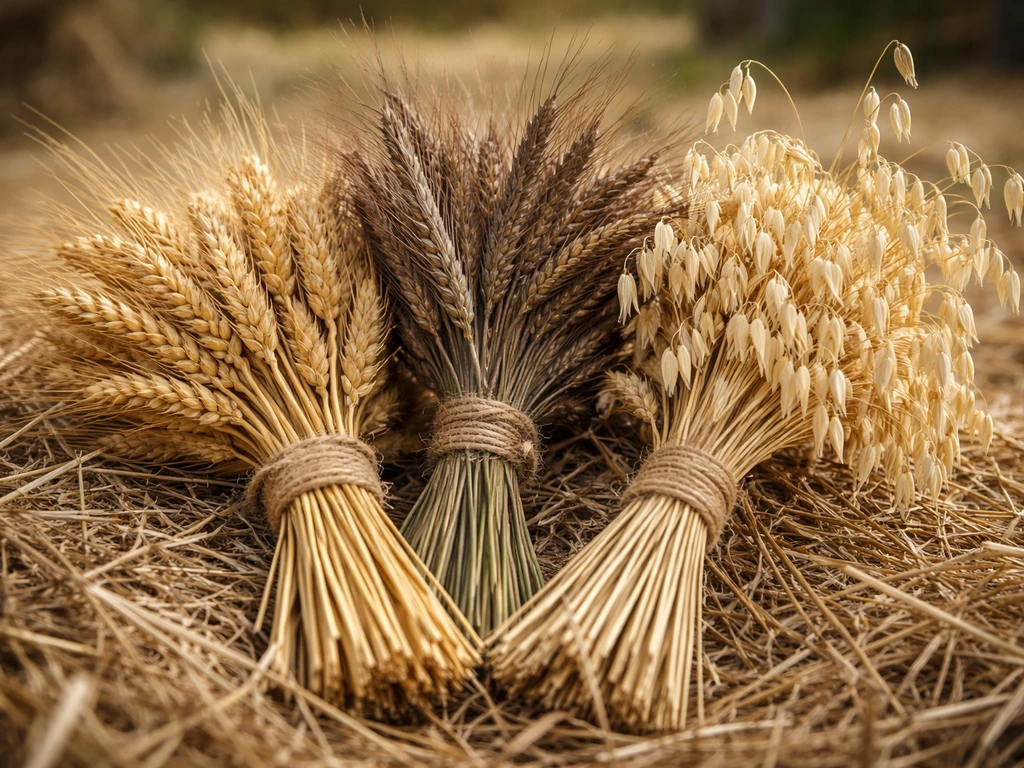
Cereals were the backbone of the medieval diet and economy. Nearly every peasant household, regardless of location, organized their farming year around at least two or three of the main grain crops. The standard lineup across England and much of northern Europe, documented in Saxon and Norman records, included rye, barley, oats, millet, beans, and peas. Manorial account rolls from places like Morden in Surrey record exactly these crops by name: wheat, rye, beans, peas, vetches, barley, and oats. These weren't just food crops either. They were currency, rent, and seed stock all at once.
Wheat was the prestige grain. Peasants grew it where soil and climate allowed, but in much of northern Europe it was a smaller part of the overall picture. In medieval Denmark, for instance, barley and winter rye were the dominant cereals and wheat was treated more like a luxury grown in modest quantities. In Herefordshire, barley was the principal cereal crop, with oats as the strong second and wheat grown in smaller amounts. That pattern, barley as workhorse and wheat as aspirational crop, holds across a lot of the medieval north.
| Crop | Sowing Season | Main Use | Where It Dominated |
|---|---|---|---|
| Wheat | Winter | Bread (quality loaves) | Southern England, Mediterranean Europe |
| Rye | Winter | Bread (especially dark bread), fodder | Northern Europe, sandy/poor soils |
| Barley | Spring | Ale, bread, animal feed | England, Scandinavia, most of northern Europe |
| Oats | Spring | Porridge, animal fodder, bread | Scotland, northern England, Scandinavia |
| Peas | Spring | Pottage, protein, soil nitrogen | Widespread across Europe |
| Beans (field beans) | Spring | Pottage, protein, soil nitrogen | Widespread across Europe |
| Millet | Spring | Porridge, bread | Continental Europe, southern regions |
Vegetables, herbs, and legumes in the peasant garden
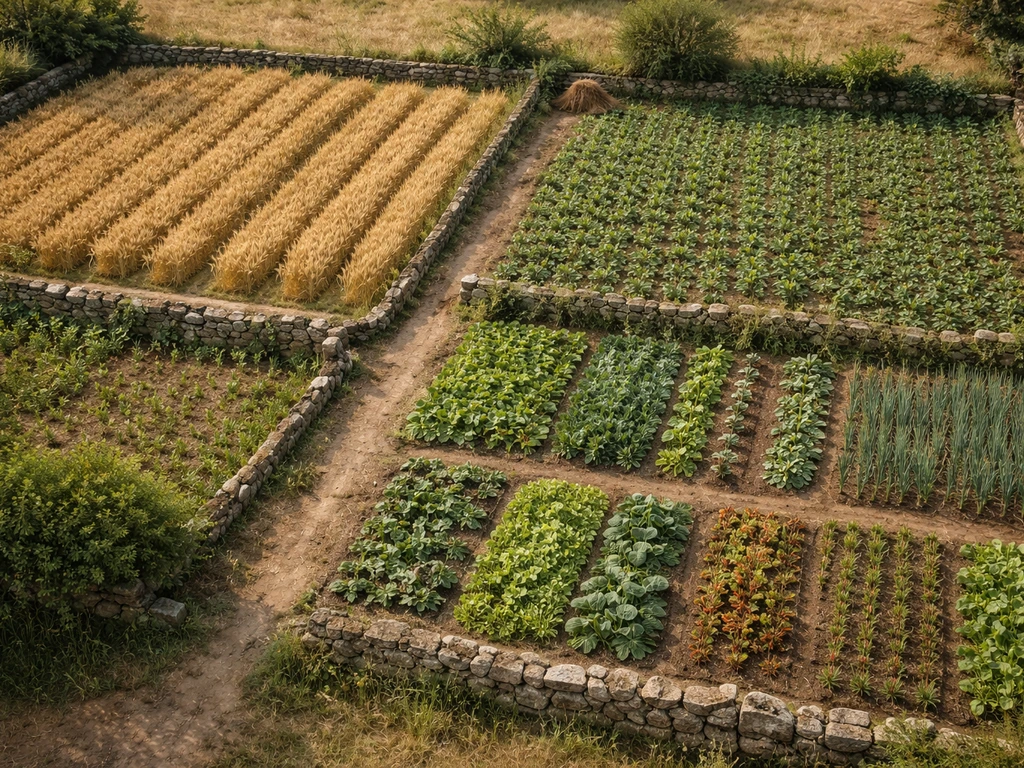
Beyond the open fields, most peasant households kept a kitchen garden, sometimes called a toft or croft, right next to their home. This was where the vegetables and herbs lived. The legumes, especially peas and beans, did double duty: they appeared both in the open arable fields as field-scale crops and in the garden as household vegetables. Other common garden vegetables included onions, leeks, garlic, cabbages, parsnips, and turnips. These were hardy, storage-friendly crops that could sustain a family through a long winter, which is exactly what a peasant needed.
Herbs were taken seriously in medieval households, used for both cooking and healing. A 15th-century manuscript tradition documented at the Metropolitan Museum captures this well: parsley, sage, mint, fennel, and hyssop were all household staples. Vetches, which appear in manorial records alongside beans and peas, were grown partly for fodder and partly as a legume rotation crop. Clover also shows up in records at Laxton in Nottinghamshire as a spring-sown crop alongside barley and oats, pointing to its role in both animal fodder and soil management even in the medieval period.
- Onions, leeks, and garlic: grown in garden plots, used fresh and stored
- Cabbages and kale: hardy brassicas suited to cool climates
- Parsnips and turnips: root crops for winter storage
- Peas and beans: both garden vegetables and field-scale legume crops
- Vetches: fodder and rotation crop, documented in manorial accounts
- Herbs like parsley, sage, mint, fennel, and hyssop: cooking and medicinal use
- Clover: spring-sown fodder and soil improvement crop
Oil, fiber, and other crops that weren't just about food
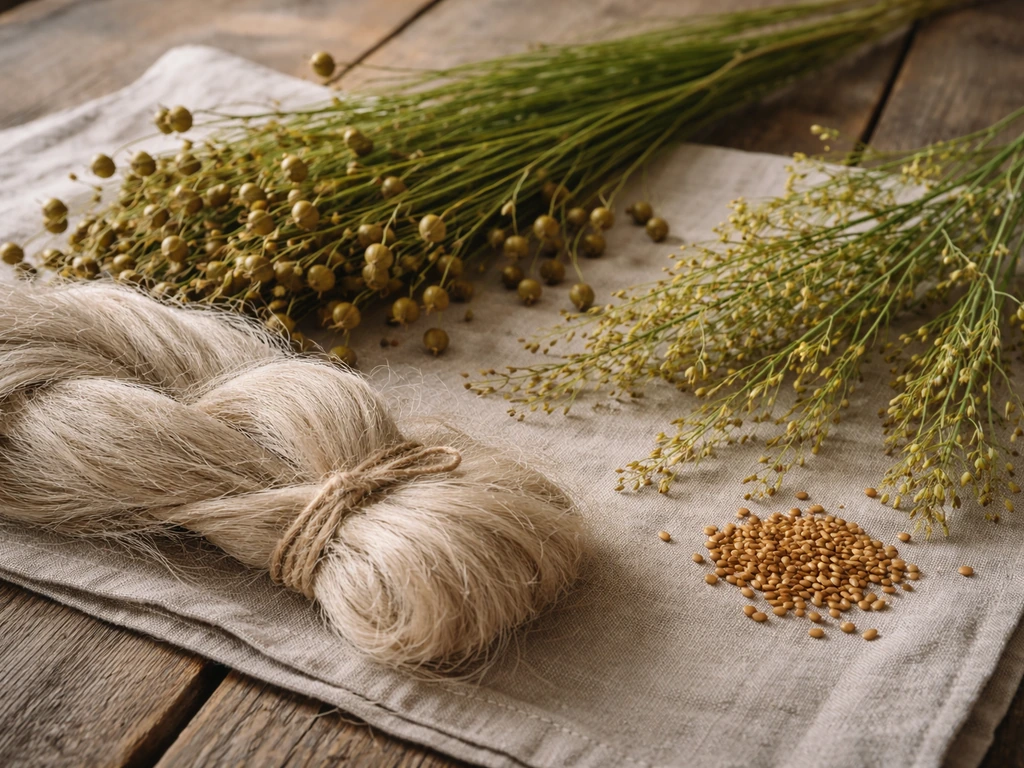
Flax was one of the most important non-food crops a medieval peasant could grow. Oxford Archaeology's work on medieval flax cultivation makes clear it served two purposes: the stems were retted and processed into linen fiber for cloth, and the seeds were pressed for linseed oil. Flax was essentially a two-for-one crop, which made it a smart choice for households that needed both fabric and oil. Hemp was another fiber crop grown for rope, sacking, and coarse cloth.
Camelina, sometimes called gold-of-pleasure, was cultivated as an oilseed crop across parts of medieval Europe. It's a cold-tolerant plant that fits well into northern European farming systems, and its seed cake had value as animal feed after oil extraction. Hops became increasingly important as the medieval period progressed. Documentary evidence shows hops were under cultivation by the tenth century and were used for brewing, as fodder, and as a dye plant. Imported hops reached London in the 15th century to produce bittered beer, with oast houses built to dry the crop appearing soon after, but hop cultivation itself predates that by centuries.
How region and climate changed what peasants actually grew
This is where the 'medieval peasants grew X' answer gets genuinely complicated, and it's worth slowing down here. Pioneers and early settlers generally relied on the same core field staples like wheat, rye, barley, oats, beans, and peas, with crop choices shifting by local climate and soil. A peasant farming in Scandinavia in the 13th century and a peasant farming in Provence at the same time were operating in completely different agricultural worlds. Climate and soil drove most of those differences.
In cold, northern regions with short growing seasons and heavy or sandy soils, rye was indispensable. It tolerates frost and germinates in poor soils where wheat simply fails. Oats were the go-to in Scotland and northern England for similar reasons. Barley, being hardier than wheat and essential for ale production, dominated across most of England and Scandinavia.
Wheat required better drained, more fertile soils and a longer frost-free season, so it was grown more reliably in the south and east of England, in northern France, and into the Mediterranean. Further south, Mediterranean Europe added crops like olives, grapes, and sorghum that northern peasants never saw. The comparison with what Anglo-Saxon farmers grew reveals that this north-south gradient was already well established before the Norman period and persisted throughout the medieval centuries.
| Region | Climate/Soil Type | Dominant Cereals | Notable Differences |
|---|---|---|---|
| Northern England / Scotland | Cold, short seasons, heavy/poor soils | Oats, rye, barley | Little wheat; oats primary staple |
| Midland / Southern England | Temperate, mixed soils | Barley, wheat, rye, oats | Classic three/two-field system; barley principal |
| Scandinavia / North Germany | Cold continental, sandy soils | Barley, rye | Wheat a luxury; rye bread dominant |
| Northern France / Low Countries | Temperate maritime | Wheat, rye, oats, barley | Wheat more accessible than in northern England |
| Mediterranean Europe | Warm, dry summers | Wheat, millet, barley | Olives, grapes, sorghum added; legumes year-round |
How medieval farming systems shaped crop choices
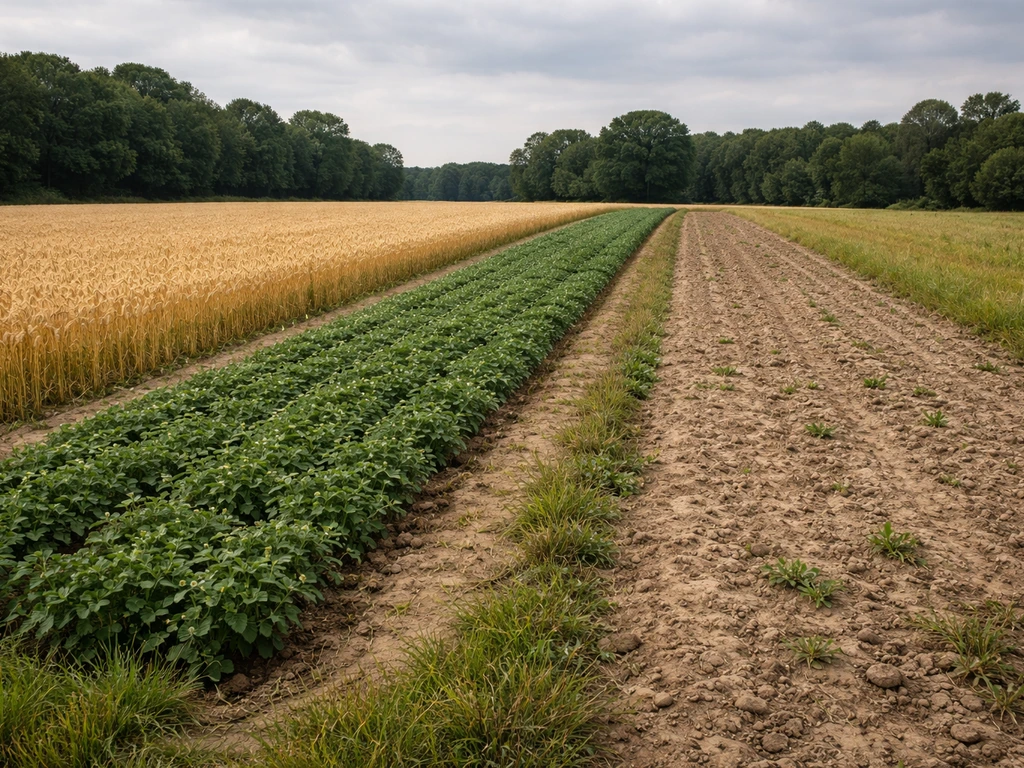
Understanding what drove crop selection means understanding the rotation system, because peasants didn't just grow whatever they wanted. The land was organized, and what you planted depended on which field was in which phase of the rotation that year.
The three-field system is the one most people learn about, and it was genuinely widespread. In classic open-field farming like that documented at Laxton in Nottinghamshire, the fields rotated through a winter-sown phase, a spring-sown phase, and a fallow phase. Winter-sown crops were wheat and rye, going in after autumn plowing. Spring-sown crops were barley, oats, beans, peas, and clover. The fallow year allowed soil recovery and grazing, which put animal manure back into the ground.
But here's a point worth knowing: the two-field system, where half the land lay fallow each year instead of a third, persisted throughout the medieval period and was not simply an early or primitive practice. An Oxford Academic analysis of medieval crop rotation is explicit that two-course rotation continued alongside three-field farming, and that systematic rotation records only become reliable from the 12th and 13th centuries onward. In practice, what peasants grew was shaped by which system their manor operated under, what the lord required as rent in kind, and what the local soil could realistically sustain.
The legumes, beans and peas above all, weren't just food. They fixed nitrogen and improved the soil for the following cereal crop. That biological function is why they appear so consistently in the spring-sown field alongside barley and oats, not just in gardens. Peasants may not have had the scientific language for it, but they knew from experience that land following a bean crop grew better grain.
How to figure out the likely crops for a specific place and time
If you're trying to pin down what crops a specific medieval community grew, whether for a history project, a novel, a heritage garden, or genuine agricultural research, the general lists above are just the starting point. Pilgrims in particular would have followed similar regional constraints, so the grains and legumes they planted tended to match what local climates allowed what crops a specific medieval community grew. Here's a practical method for narrowing things down.
Step 1: Establish the climate and soil baseline
Start with geography. Find out the modern climate zone of your location and look at the soil type if you can. Sandy, acidic soils in a cold region point strongly toward rye and oats. Heavier loam in a temperate zone opens the door to wheat and barley. This climate-to-crop matching works as a first filter because medieval peasants were working with the same basic agronomic constraints we understand today. The research on early-modern crop adaptation confirms that under climate pressure, the realistic options collapsed down to wheat, rye, barley, and oats anyway, so the regional dominant crop pattern you identify is likely the right one.
Step 2: Check manorial records for that specific place
For England specifically, manorial account rolls (compotus rolls) are the gold standard. Cambridge Core notes that English manorial accounts of the compotus or Pipe Roll type can document annual crop yields, crop acreage, and livestock heads across roughly 1208 to 1529 manorial account rolls (compotus rolls) are the gold standard.
The British Agricultural History Society's crop yields database is built from surviving medieval manorial accounts and contains crop-by-crop data including quantities sown and harvested, typically covering the period from around 1208 to 1529. The UK National Archives lets you search manorial records by manor or place name. For early medieval England, Domesday Book (1086) is a starting point for understanding landholding, though it gives less crop-level detail than later compotus records.
If a manorial account roll survives for your location, it will tell you exactly what was grown there, not just what was typical.
Step 3: Look at archaeological plant evidence
For sites where written records don't survive, archaeobotanical evidence fills the gap. Analysis of charred and waterlogged plant remains from excavations can identify crop residues, garden weeds, and even specific herb species associated with a site.
A report on relict plants at medieval castles explains that analyses of charred and waterlogged plant remains can reveal garden-associated weeds and herbs, helping narrow down likely garden-plant candidates for specific sites, including examples such as thistles and Herb robert Analysis of charred and waterlogged plant remains from excavations can identify crop residues, garden weeds, and even specific herb species associated with a site. .
If an excavation report exists for the location or a nearby comparable site, it's worth checking for plant macrofossil data. This method works especially well for identifying garden plants and herbs that rarely appear in written accounts.
Step 4: Cross-reference with regional agricultural histories
Regional agricultural histories and county-level studies often synthesize both documentary and archaeological evidence. For England, resources like Herefordshire Through Time describe the specific crop mix for a county during the medieval period, which is far more useful than a general European overview. For other countries, equivalent regional studies exist in national archives and university libraries.
The comparison with what Vikings grew or what Roman farmers cultivated can also help you set the boundaries, since medieval peasant agriculture in many areas evolved directly from earlier farming traditions in the same landscape. Roman farmers are often associated with expanding wheat and other grain-based cultivation across parts of Britain and the wider empire Roman farmers cultivated.
To answer what crops did Vikings grow, use the same regional approach: compare climate and soil, then check local records or archaeobotanical finds where possible Vikings grew.
The bottom line is that you can get from a general crop list to a confident, place-specific answer in a few steps: match climate and soil to the likely cereal dominant, check whether manorial accounts survive for that place, and supplement with regional archaeological or historical studies. The crops were not random, and with a little digging, the pattern for almost any medieval European location becomes clear.
FAQ
Did medieval peasants grow vegetables, or was everything just grain?
They did grow vegetables. In many households there was a kitchen garden (often a croft or toft) beside the home for storage-friendly produce like onions, leeks, cabbage, parsnips, and turnips, while the open fields were mainly dominated by cereals and legumes under the local rotation system.
Were peasants ever growing fruit trees or grapes?
Fruit crops were possible but were not the typical peasant field staple. Grapes and olives were much more tied to warmer regions and specialized land use, whereas most peasant communities relied on grains, legumes, and small-scale gardens that could be sustained by the local growing season and soil.
If the “three-field system” was common, did peasants always use it?
No. Many manors used either a three-field or a two-course approach, and the system could vary by landlord and locality. The most important detail for “what crops did they grow” is which rotation their manor actually operated, plus what rent-in-kind and local soil conditions required.
What should I conclude if my region had poor soils or a short growing season?
Expect rye and oats to rise in importance. Rye can germinate and tolerate poor soils better than wheat, and oats handle frost and shorter seasons reasonably well, so a marginal climate often shifts the crop balance away from wheat toward hardier cereals.
Did peasants grow wheat everywhere in medieval Europe?
No. Wheat needed better drainage, more fertile soils, and a longer frost-free window. That is why it often had a smaller share in colder northern farming, where barley, rye, and oats could be more dependable choices.
Were beans and peas only for eating, or did they have other roles?
They had more than a dietary function. Legumes were central in rotation, helping maintain soil productivity for the next cereal phase, and they also served as feed resources (for example, vetches were used partly for fodder), even if households did not describe the benefit in modern scientific terms.
Why does it matter whether I’m researching the 11th century versus the 13th or later?
Because record quality and rotation documentation change over time. Systematic rotation detail is more reliable from the 12th and 13th centuries onward, and early periods can be harder to pin down precisely at crop level even when the overall crop set was similar.
How can I avoid mixing up “what was typical” with “what was grown on that specific manor”?
Use place-specific evidence when available. Manorial account rolls can list crops by name with quantities sown and harvested, while broad European summaries can mislead if your manor’s rent requirements, local soil, or rotation system differed from the regional norm.
If there are no written records for my site, what evidence is most useful?
Look for archaeobotanical results, especially charred or waterlogged plant remains that can identify specific crops, weeds, and garden herbs. Garden plants and herbs often leave clearer traces in excavations than in some documentary sources, so excavation reports near the site can be especially informative.
Did medieval peasants plant clover, or is that a later crop?
Clover shows up in medieval contexts in some regions as a spring-sown crop used for fodder and soil management alongside cereals. If you are narrowing down crops for a specific locality, check local records or archaeological syntheses rather than assuming all fodder crops appear only later.
Did hops, flax, or hemp count as peasant crops, or were they grown only for specialized industries?
They could be grown by households or manors, not only by specialist producers. Flax and hemp were valuable for fiber and household needs (cloth, rope, coarse textiles), and hops became increasingly important for brewing over time, with cultivation documented by at least the 10th century in documentary traditions.
What crops were peasants likely to grow in the Mediterranean compared with northern Europe?
The baseline grains and legumes still mattered, but warmer regions often added crops suited to local conditions, such as olives, grapes, and sorghum. Cooler northern systems generally did not include those crops because the climate constraints and growing seasons were different.
Where do “imported crops” fit into the question of what medieval peasants grew?
They usually appear later and more selectively than staple cereals and legumes. For example, hops reached major brewing centers like London in the 15th century even though hop cultivation existed earlier elsewhere, so the timing and location of adoption can differ from the overall medieval period.
Next Articles
What Crops Did the Pilgrims Grow in Plymouth Colony
Learn which crops Plymouth Colony Pilgrims grew, when and where, plus how they adapted English farming to New England.
What Crops Did Vikings Grow? Grain and Field Crops Explained
Discover key Viking crops by region: barley, oats, wheat or rye, plus legumes and roots, and why they fit Scandinavia.
What Crops Did the Romans Grow? A Practical Guide
Discover the main crops Romans grew by region and climate, plus how to map them to today’s farms