In Medieval Dynasty, crops don't grow on a per-day timer. Growth is season-based: you sow in one season, and your crop becomes harvestable one or two seasons later when the season changes. At the default setting of 3 in-game days per season, most crops take just one season change (3 days) to mature, though a few span two season changes (6 days). That's the core answer. The rest of this guide breaks down every crop's exact sow-to-harvest window, how to schedule around the year, and how to squeeze the most out of your fields.
Medieval Dynasty: How Long for Crops to Grow

Samuel Rourke
24 Jun 2026
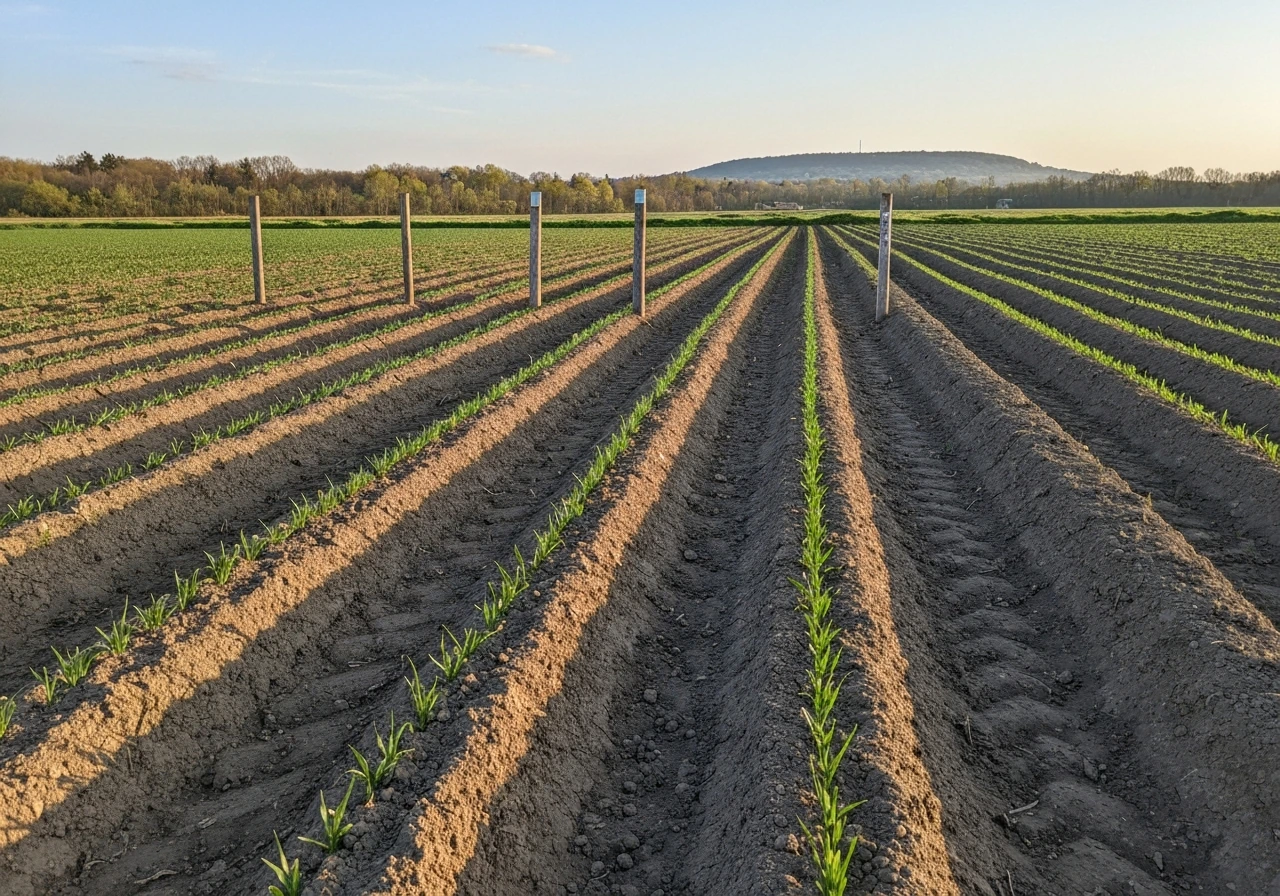
Crop Growth Timing Cheat Sheet (Days to Harvest)

Because growth is driven by season changes and not a real-time day counter, 'days to harvest' depends entirely on your season length setting. The default is 3 days per season. If you've changed it (you can set it anywhere from 1 to 30 days), just multiply the number of seasons until harvest by your chosen season length. Here's the full breakdown at the 3-day default:
| Crop | Sow Season(s) | Harvest Season | Seasons Until Harvest | Days at Default (3-day seasons) |
|---|---|---|---|---|
| Flax | Spring | Summer | 1 | 3 |
| Onion | Spring | Summer | 1 | 3 |
| Cabbage | Spring | Summer | 1 | 3 |
| Cabbage | Summer | Autumn | 1 | 3 |
| Wheat | Autumn | Summer (next year) | 2 (via Winter) | 6 |
| Wheat | Spring | Autumn | 2 | 6 |
| Carrot | Winter | Summer | 2 (via Spring) | 6 |
| Carrot | Spring | Autumn | 2 (via Summer) | 6 |
| Beetroot | Spring | Autumn | 2 | 6 |
| Rye | Autumn/Winter | Spring/Summer | 1–2 | 3–6 |
Fruit trees work on a much longer scale. Cherry tree seedlings, for example, take around blank" rel="noopener noreferrer">5 seasons to fully mature before they produce any harvest at all. Trees are a long-term investment and follow a completely separate growth logic from field crops.
Planting-to-Harvest Timeline by Crop Type
Fast one-season crops (sow and harvest within two adjacent seasons)
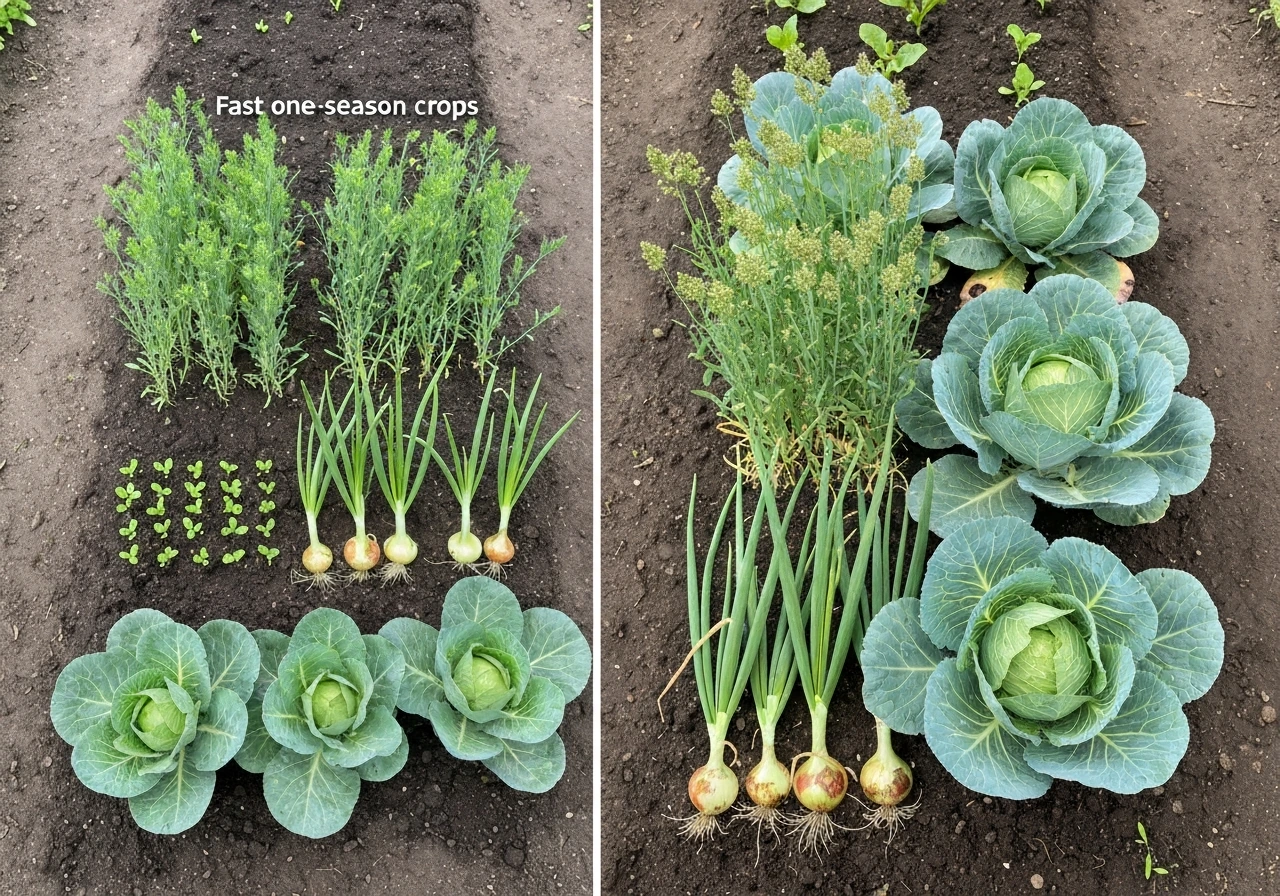
Flax, onion, and cabbage are your quickest turnaround crops. Sow them in spring and you're harvesting in summer, just one season later. Cabbage has a bonus sow window in summer as well, giving you an autumn harvest. These are the crops to lean on early when you need fast returns on food or materials.
Two-season crops (sow early, wait two season changes)
Wheat, carrot, and beetroot all take two season changes to reach harvest. Beetroot goes in spring and comes out in autumn. Carrots sown in spring are ready in autumn, or sow them in winter for a summer harvest. Wheat is flexible: plant it in spring for an autumn harvest, or sow it in autumn and let it overwinter for a summer harvest the following year. That autumn-sown wheat is the game's closest analog to real-world winter wheat, which farmers in temperate climates across Europe and the American Midwest have grown for centuries because it uses cold dormancy to prime yield.
Rye
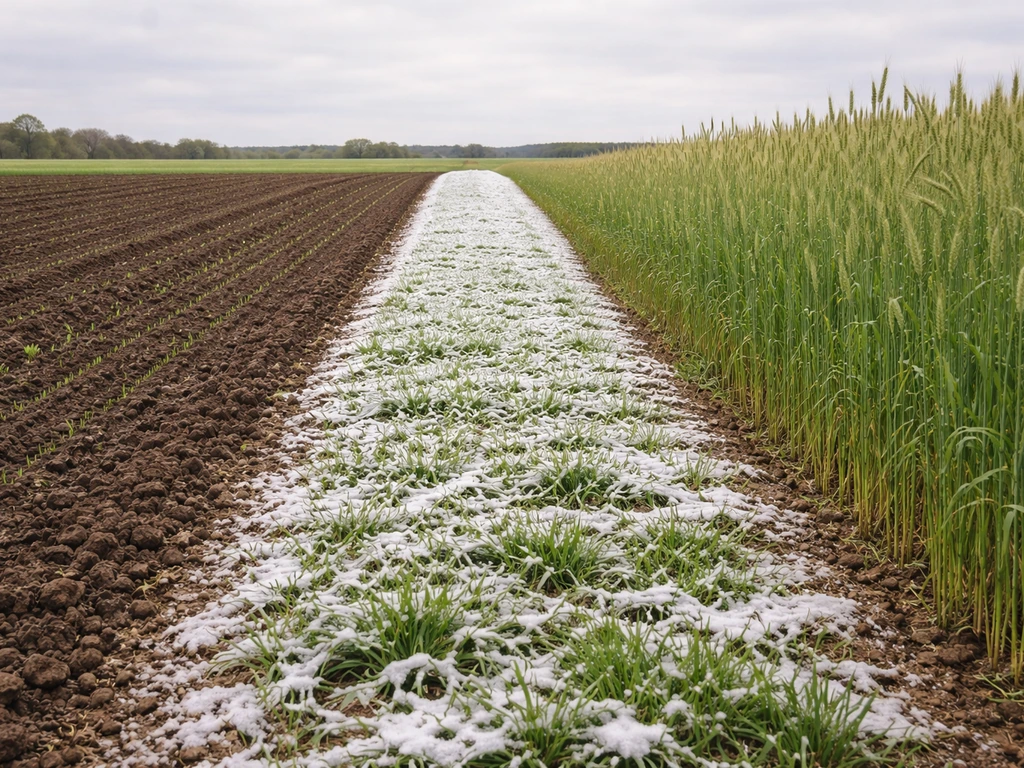
Rye follows a similar overwintering pattern to wheat. It can be sown in autumn and winters over before becoming ready in spring or summer. Historically, rye was one of the hardiest grains grown in medieval Northern and Eastern Europe precisely because it tolerates cold soils and poor conditions far better than wheat. In-game, its timing reflects that same agricultural logic.
Season and Year Effects: How to Schedule Around the Calendar
The game's year runs Spring, Summer, Autumn, Winter, then loops back. Every season ends when you sleep through the last night, and that transition is when crops become harvestable or advance their growth stage. This means the most important rule in Medieval Dynasty farming is: sow before the season ends, or you miss the window entirely and wait a full year.
Planting too late in a season is the most common beginner mistake. If you try to sow cabbage on the last day of spring, you might not finish fertilizing, ploughing, and sowing before you're forced to sleep, which pushes everything to summer. That cabbage now hits an autumn harvest instead of summer, and you've lost a season of time. Plan to start field prep at the beginning of each sow season, not the end.
Season length customization (1 to 30 days) doesn't change how many seasons a crop takes to grow. This is why a farmer's dynasty crops to grow schedule is measured in season transitions rather than real-time days. A carrot still needs two season transitions whether each season lasts 1 day or 30 days. But longer seasons give you more real-time days to complete field prep, which matters a lot for large farms or when you're managing multiple crops at once.
What Actually Changes Growth Time in Practice
The season-change mechanic means crop growth speed itself doesn't change based on what you do. There's no fertilizer bonus that makes a spring cabbage ready before summer, and watering doesn't speed up the timer. What fertilizer and field prep actually affect is whether your crop grows at all, and your yield when it does.
- Fertilizer is required before you can plough and sow. Each field tile needs one unit of fertilizer, made from 2 Manure or 10 Rot at the Barn workbench. Skipping fertilizer means you can't plant.
- Manure comes from pigs, making a pig pen an essential early farming investment if you want to keep fields productive each year.
- Rot is produced when food spoils, and you can speed this up using a Compost Bin, which generates rot at each season change.
- The correct order is always: fertilize the tiles, then plough, then sow. Getting that sequence wrong wastes your season window.
- Assigning a Farmer villager to a Farm or Farm Shed lets them handle field tasks automatically, but they still need the right tools, seeds, and fertilizer in supply storage to do the work.
- If you planted the wrong crop or need to change fields, use a Hoe to remove what's in the ground. You can't just oversow.
- The Management screen shows field status, letting you track whether crops are ready to harvest.
The practical upshot: growth time is fixed by crop type and season, but your ability to hit those windows reliably depends on having a steady fertilizer supply, the right tools, and starting field prep at the beginning of each relevant season.
Multiple Harvests vs. Single Harvest Crops
Most crops are single-harvest per year, but cabbage is the notable exception with a built-in double-sow window. Because cabbage can be sown in both spring (harvest in summer) and summer (harvest in autumn), you can run back-to-back plantings on the same field within a single year. Harvest your spring cabbage in summer, then immediately replant in summer for an autumn harvest. That's two cabbage harvests from the same plot in one year, which is a meaningful food and trade advantage early on.
Wheat and carrot have two sow windows too, but those windows are staggered across different parts of the year rather than back-to-back, so they don't support two harvests in one year on the same field. You'd need separate plots planted in different seasons to double your output.
For automated fields, if you leave a field's designation unchanged, your assigned farmers will replant and harvest the same crop automatically each year when the correct season comes. This is great for set-and-forget grain production, but it means you need to manually change the field designation if you want to shift to a double-sow crop like cabbage.
High-Efficiency Planting Schedules
Small farm plan (1–3 fields, early game)
When you're just getting started, prioritize crops that give you the fastest return and the most versatility. If you're wondering what is the hardest crop to grow, focus on crops with the longest and most timing-sensitive sow-to-harvest windows. Here's a simple year schedule that keeps at least one harvest coming every season:
| Season | Action | Crop |
|---|---|---|
| Spring | Fertilize, plough, sow Field 1 | Cabbage (harvest in Summer) |
| Spring | Fertilize, plough, sow Field 2 | Flax or Onion (harvest in Summer) |
| Summer | Harvest Field 1, immediately replant | Cabbage again (harvest in Autumn) |
| Summer | Harvest Field 2 | Collect flax fiber or onions |
| Autumn | Harvest Field 1 (second cabbage crop) | |
| Autumn | Fertilize, plough, sow Field 2 | Wheat (harvest next Summer) |
| Winter | Fertilize, plough, sow Field 1 | Carrot (harvest in Summer) |
This keeps you harvesting in summer and autumn every year, with wheat coming in the following summer to bridge the gap. Flax is worth growing for the fiber even if food isn't the priority, since it's one of the fastest craft-material crops in the game.
Large field plan (4+ fields, mid to late game)
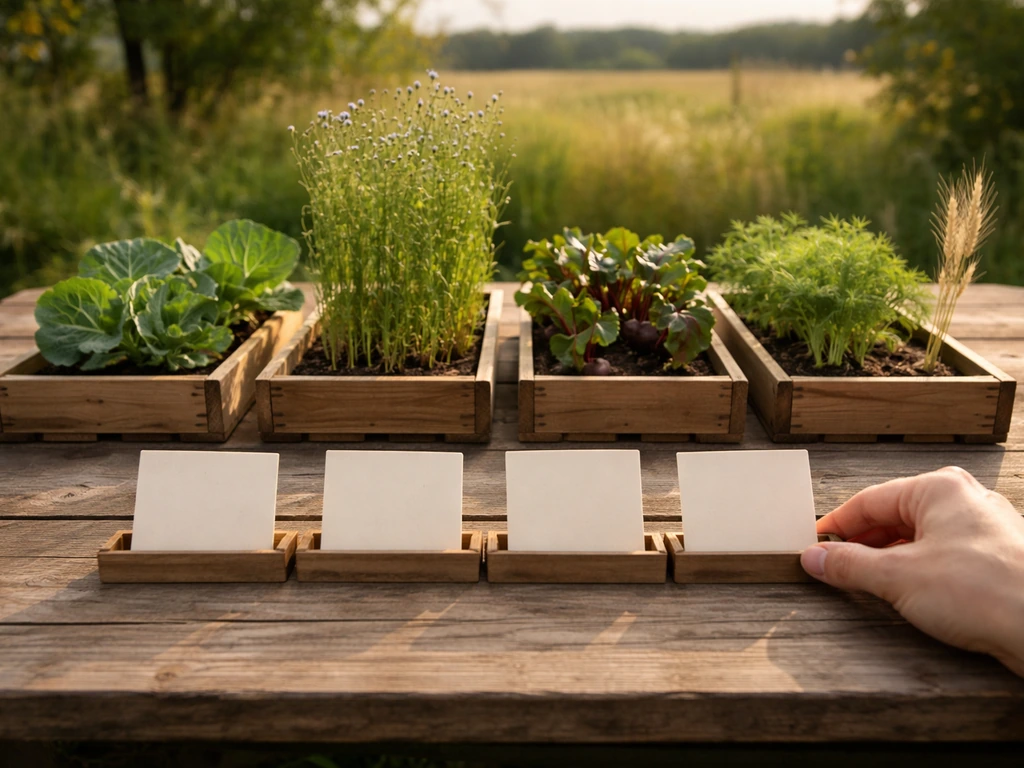
With more fields and assigned farmers, you can stagger crops so that every season produces a harvest from at least one field. The goal is to always have something ripening:
- Spring: Sow Field A (cabbage), Field B (flax), Field C (beetroot or carrot), Field D (wheat if it wasn't autumn-sown).
- Summer: Harvest A (cabbage), harvest B (flax), immediately resow Field A with summer cabbage. Autumn-sow Field E with wheat if you have a fifth plot.
- Autumn: Harvest Field A (second cabbage), harvest Field C (beetroot/carrot), harvest Field D (spring wheat).
- Winter: Sow Field B with carrot (summer harvest incoming). Let wheat fields rest or fertilize for spring planting.
- Year 2 Spring: Repeat the cycle, now with better fertilizer supply from your pig pen and compost bin.
The key to scaling up is having enough manure (keep at least a few pigs) and enough rot via compost bins to fertilize all your tiles at the start of each season. Running out of fertilizer mid-season is the biggest bottleneck on large farms.
Real-World Crop Analogs by Climate (for Better Intuition)
Medieval Dynasty is set in a temperate Central European climate, and the crop calendar mirrors real medieval agricultural practice surprisingly well. Understanding the real-world parallels can help you remember the in-game timing without constantly checking a reference.
- Wheat: Real winter wheat (planted in fall, harvested the following summer) was the backbone of medieval European farming from France to Poland. The game's autumn-sown wheat follows this exactly. Spring wheat is also historically accurate as a secondary option in shorter-season regions.
- Rye: Historically the hardiest of the medieval grains, rye was essential in Northern Europe (Germany, Scandinavia, Russia) because it grows on poorer soils and tolerates cold better than wheat. In-game rye following an overwintering pattern reflects this agricultural heritage.
- Flax: A spring-planted, fast-maturing crop in temperate Europe, historically grown in Belgium, the Netherlands, and Eastern Europe for linen fiber. The game's spring-to-summer timing (one season) matches a real 90–100 day flax cycle in a temperate climate.
- Cabbage: In historical European kitchen gardens, fast-maturing cabbage varieties could produce two crops in a long enough growing season. The game's double-sow window for cabbage (spring and summer) reflects this flexibility.
- Carrot and beetroot: Both root vegetables historically grown as autumn crops in medieval gardens, planted in spring or early summer and harvested before the first frost. The game's spring-to-autumn timeline is accurate.
- Onion: Spring-planted, summer-harvested onions are standard across temperate European agriculture and have been since antiquity. The in-game timing matches what you'd expect from historical garden records.
If you're curious about how crop timing works in broader historical and geographic contexts, the patterns in Medieval Dynasty align closely with what agricultural historians document for medieval Central Europe. Crops that take longer to grow in-game, like two-season roots and overwintering grains, generally correspond to crops that required the most careful seasonal management in real pre-industrial farming as well. The same logic applies when comparing fast-growing crops like flax and cabbage to slower ones like beetroot: in real temperate agriculture, that ranking holds too.
FAQ
If I sow a crop at the start of a season, can I harvest it the same season if I have enough fertilizer and tools?
No, fertilizer and field prep help you grow and improve yield, they do not shorten the required season transitions. A crop becomes harvestable only when the game advances through the necessary number of season changes.
What happens if I start planting late in the sow season but finish sowing after the season ends?
The game effectively treats that as missing the planting window, because the season transition is what moves crops forward. Your next opportunity is usually the next matching sow season, which can delay harvest by about a full year.
Do I need to fertilize every day before harvest, or just around the sow window?
Fertilizer is tied to keeping your plants eligible and getting them started properly for the season cycle, so you should aim to have fertilizer and manure ready when the sow season begins. Waiting until later in the same season is a common reason fields underperform even if you technically planted.
How do I adjust my schedule if I changed season length from the default 3 days per season?
Count in season transitions, not days. For example, a two-season-change crop still takes two transitions, but real time becomes (two transitions) multiplied by your chosen days-per-season setting.
Can watering speed up crops or cause them to mature earlier?
No. Watering does not move the crop along the same kind of timer that real-world irrigation would. Its main role is helping plants function, but maturity still depends on the season-change progression.
Is there any advantage to harvesting earlier than the “ready” moment?
Harvesting only works when the crop has reached the harvestable stage. If you try too soon, you cannot get a harvest, so the practical strategy is to wait for ripeness rather than rushing field work near the end of a season.
Do automated fields replant exactly on the first day of the correct season transition?
They replant when the season changes and the crop designation matches. If the field is missing fertilizer or the wrong crop is selected, you can end up with gaps, so verify fertilizer availability at each transition rather than assuming automation guarantees smooth output.
If cabbage can be harvested twice, why don’t I automatically get two harvests from the same field every year?
You only get the double-sow flow if you use the second sow window correctly, and you need to have the field set up for replanting in summer after the spring harvest. If you leave automation on a single crop designation, it may not switch you to the second sow window.
Can I get two harvests per year from wheat or carrots by choosing different sow dates?
Usually not on a single plot. Wheat and carrot have multiple sow windows, but they are staggered, meaning you typically need separate plots planted in different seasons to stagger harvests rather than getting a true double harvest from one field.
Are fruit trees affected by the same season-change logic as field crops?
Fruit trees follow a much longer maturation timeline and do not behave like the season-transition crops. Treat them as long-term investments, plan field rotations for annual food first, and avoid expecting tree seedlings to produce on the normal 1 to 2 season cadence.
Next Articles
Farmer’s Dynasty: How Long Crops Take to Grow
Crop grow-time guide with planting to harvest timelines, plus what changes durations by climate, season, and conditions.
Which Crops Grow the Fastest: Quick Harvest Guide by Climate
Fastest crops by climate with harvest timelines, frost-based planning tips, and a quick checklist to plant for first yie
What Is the Hardest Crop to Grow? A Region-Based Guide
Discover the hardest crop to grow by region using climate, soil, pests, and growing season limits, plus mitigation tips